Now Reading: What automation means for middle management roles
-
01
What automation means for middle management roles

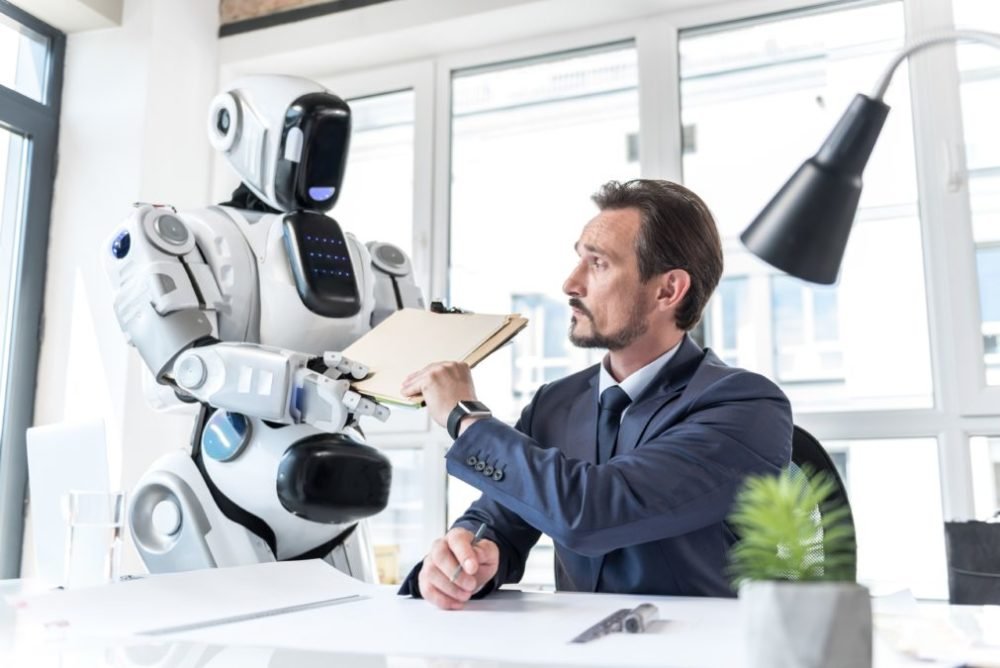

For decades, middle management has been the backbone of organizations. These roles translated strategy into action, supervised teams, monitored performance, and ensured compliance with processes. Today, automation is steadily absorbing many of those functions, reshaping what it means to manage from the middle.
Unlike previous technological shifts that primarily affected manual or clerical work, automation now targets decision-making, reporting, scheduling, and performance tracking. This shift does not signal the end of middle management, but it does demand a fundamental transformation of the role.
Routine oversight is disappearing
Many traditional middle management responsibilities were built around coordination and control. Tasks such as approving expenses, tracking productivity, generating reports, and monitoring compliance are increasingly handled by software.
Automated dashboards now provide real-time performance data. Workflow tools assign tasks and flag delays. AI-powered analytics identify inefficiencies faster than manual supervision ever could. As a result, organizations are questioning the need for multiple managerial layers dedicated to oversight alone.
This shift is particularly visible in sectors such as finance, logistics, customer service, and manufacturing, where standardized processes are easier to automate. Middle managers whose value was tied mainly to monitoring activity rather than enabling outcomes face the greatest risk of redundancy.
Automation does not eliminate management, but it removes the need for managers whose primary function is to watch work happen.

Decision-making is becoming more data-driven
Automation is also changing how decisions are made. Algorithms increasingly provide recommendations on pricing, staffing, inventory, and risk. In some cases, systems execute decisions automatically within predefined limits.
For middle managers, this reduces discretionary authority. Decisions once based on experience or intuition are now expected to align with data outputs. Managers are shifting from decision-makers to decision-interpreters, responsible for understanding, validating, and communicating automated insights.
This transition creates tension. Some managers feel their judgment is being replaced or undermined by machines. Others struggle to challenge automated recommendations, even when context suggests caution.
The emerging value lies not in competing with algorithms, but in knowing when not to follow them blindly. Human judgment remains essential in ethical considerations, employee well-being, customer relationships, and crisis situations where data may be incomplete or misleading.

People leadership becomes the core skill
As automation absorbs administrative and analytical tasks, people leadership moves to the center of middle management roles. Coaching, mentoring, conflict resolution, and team motivation are becoming primary responsibilities rather than secondary ones.
Automation can track performance, but it cannot build trust, manage emotions, or inspire commitment. Middle managers are increasingly expected to act as connectors between strategy and human experience, ensuring that employees understand organizational goals and feel supported amid constant change.
This shift requires new skills. Emotional intelligence, communication, adaptability, and change management are no longer “soft” extras. They are core competencies. Managers who fail to develop these capabilities risk being seen as obsolete, regardless of their technical expertise.
Organizations that invest in leadership development rather than simply cutting managerial layers are better positioned to retain talent and maintain culture during automation-driven transitions..
Career paths are becoming less predictable
Automation is flattening organizational structures. With fewer layers of management, traditional promotion paths are narrowing. This creates uncertainty for professionals who viewed middle management as a stable long-term destination.
In response, some organizations are redesigning roles around expertise rather than hierarchy. Middle managers may evolve into product owners, process specialists, or cross-functional leaders without large teams reporting to them.
This shift challenges long-held assumptions about career progression. Success is increasingly measured by impact rather than title. Managers who adapt by developing specialized knowledge or strategic influence can remain relevant, even as formal authority declines.
For individuals, the lesson is clear: career security now depends less on position and more on the ability to learn, adapt, and add value beyond routine management tasks.
Automation reshapes, not removes, middle management
The impact of automation on middle management is often framed as a threat. In reality, it is a filter. Roles built on control, repetition, and information gatekeeping are shrinking. Roles centered on leadership, judgment, and collaboration are expanding.
Organizations that treat automation purely as a cost-cutting tool risk losing institutional knowledge and human connection. Those that use it to free managers from low-value tasks can create stronger, more agile leadership layers.
For middle managers, the challenge is not to resist automation, but to redefine their relevance. The future belongs to those who can lead people through complexity, not just manage processes.
Previous Post
Next Post