Now Reading: Kenya Inflation Eases to 4.4%: What It Means for Consumers and Investors
-
01
Kenya Inflation Eases to 4.4%: What It Means for Consumers and Investors

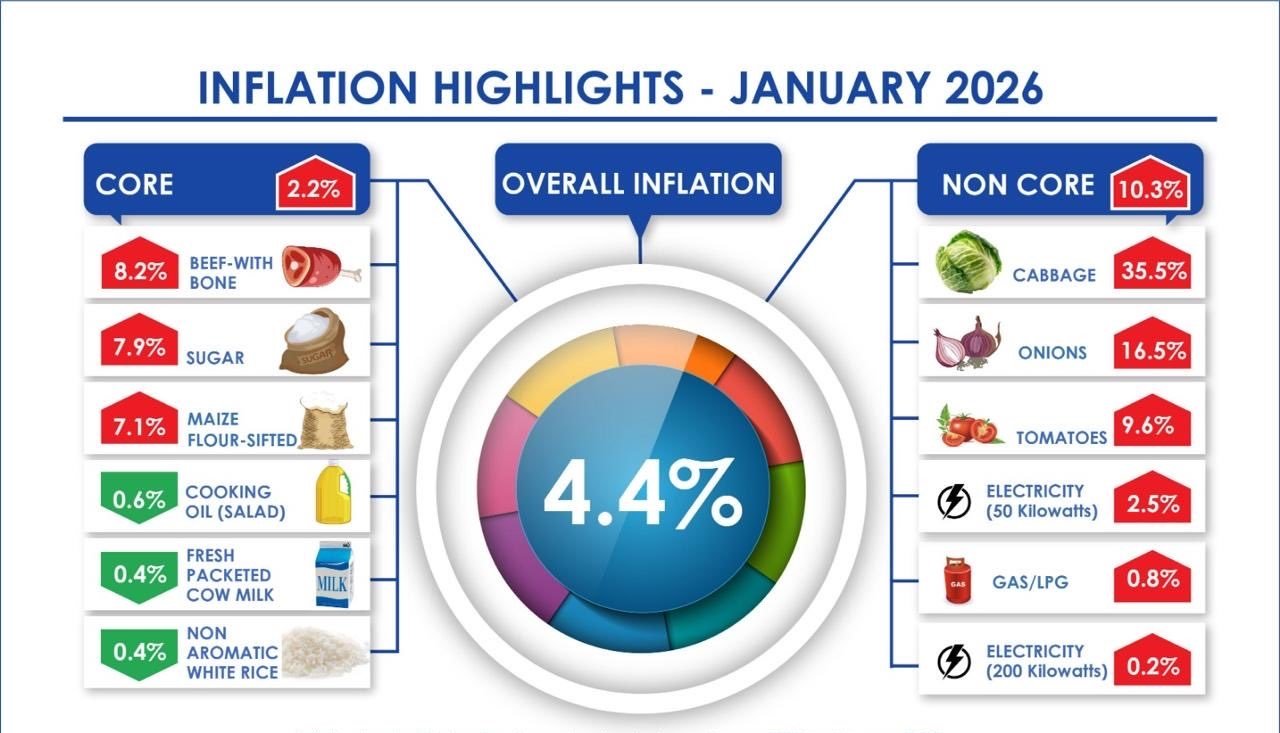

Kenya’s annual inflation rate slowed to a six-month low of 4.4% in January 2026, down slightly from 4.5% in December, signalling a modest easing of price pressures for households and businesses.
This moderation, driven by lower transportation, food, and communication costs, could reflect broader stability in the economy, bringing both relief and opportunities for market participants.
Transportation and Food Costs Drive Relief
Key cost components like food and transportation contributed to the slowdown. For instance, inter-town bus and matatu fares fell 1.9%, supported by small declines in petrol (-1.1%) and diesel (-0.6%), easing daily transport costs for millions of Kenyans.
On the other hand, food prices also moderated, with sugar (-3.0%), mangoes (-3.2%), and cooking oil (-0.1%) contributing to lower non-core inflation, which dipped to 10.3% from 11.6%.
Low- and middle-income households are especially expected to feel immediate relief as transport and food make up a large share of monthly expenses. Simultaneously, the moderation in food and transport costs helps preserve purchasing power, enabling households to maintain consumption and, in some cases, increase discretionary spending.
However,while non-core inflation eased, core inflation, which excludes volatile food and fuel prices, edged up slightly to 2.2%. Housing, water, electricity, gas, and other fuels recorded modest increases, indicating that certain essential costs remain sensitive to supply pressures.
Investors and businesses also stand to benefit from this development. Lower transport and fuel costs reduce logistics and operational expenses, particularly in trade, distribution, and service industries. The Central Bank of Kenya’s (CBK’s) careful monetary policy, including gradual cuts to the Central Bank Rate in 2025, has helped maintain liquidity while keeping inflation expectations anchored, creating a more predictable business climate.
Implications for Investors and the Economy
Stable inflation within the CBK’s target range (2.5–7.5%) signals macroeconomic predictability, which is critical for investment planning. Reduced input costs for businesses could translate into improved margins, particularly for SMEs and transport-dependent sectors. Meanwhile, the digital economy stands to benefit from declining communication and internet costs, fostering greater online participation and efficiency.
Nonetheless, challenges remain. Seasonal food supply constraints, volatility in agricultural output, and fluctuations in energy prices could still trigger short-term price spikes. Policymakers and investors alike will need to monitor these factors closely.
Overall, the easing of headline inflation offers a reprieve for consumers and supports a stable environment for investors, but vigilance will be key to sustaining this balance as Kenya navigates local and global economic uncertainties.
Related Posts



Previous Post
Next Post