Now Reading: Kenya sets new maize seed prices under subsidy to boost food security
-
01
Kenya sets new maize seed prices under subsidy to boost food security
Kenya sets new maize seed prices under subsidy to boost food security

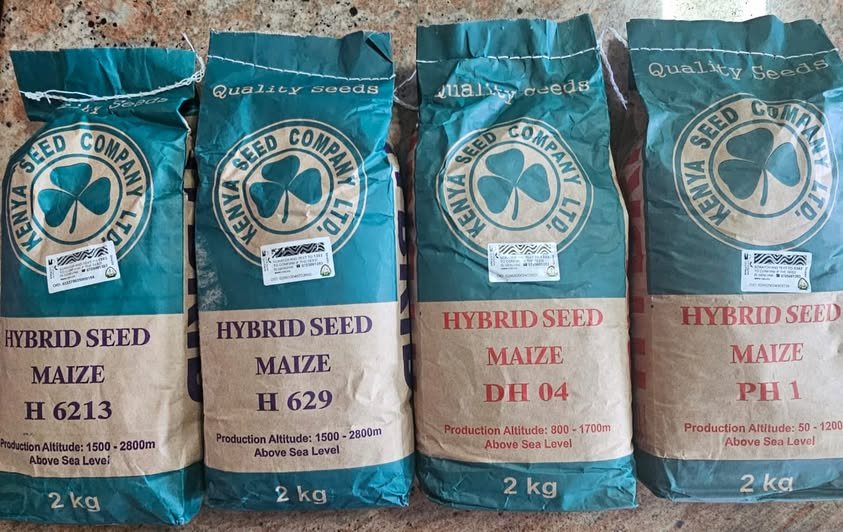

The Kenyan government has introduced new subsidised maize seed prices ahead of the planting season, setting rates as low as KSh250 per kilogram in a move aimed at lowering input costs and improving food security.
The prices were announced by Agriculture Principal Secretary Kipronoh Ronoh as part of a KSh2 billion subsidy programme for the 2025 to 2026 financial year.
Under the new pricing structure, farmers will pay KSh250 for a 1-kilogram packet, KSh500 for 2 kilograms, KSh2,500 for 10 kilograms and KSh6,000 for a 25-kilogram bag.
The government said the revised prices are intended to make certified seeds more affordable, particularly for smallholder farmers who form the backbone of Kenya’s maize production.
Officials expect the subsidy to support higher yields by encouraging farmers to plant quality seeds at the start of the long rains season.
Ronoh said the move is designed to reduce the financial burden on farmers while stabilising food supply across the country.
The programme is also part of a broader strategy to strengthen agricultural productivity and reduce reliance on costly imports during periods of poor harvest.
However, the rollout of the subsidy has raised concerns over distribution and implementation.
Lawmakers have proposed that the National Cereals and Produce Board (NCPD) take over distribution of subsidised seeds from Kenya Seed Company to ensure faster delivery to farmers.
Members of the National Assembly Agriculture Committee (NAAC) said the state agency already has an established distribution network used for fertiliser subsidies and could replicate the system for seeds.
The proposal follows delays in rolling out the maize seed subsidy despite the planting season already being underway in many parts of the country.
Kenya Seed Company has indicated challenges in implementing the programme, noting that the subsidised price is below its production cost, raising concerns over potential losses.
Lawmakers have warned that delays in accessing seeds could affect planting timelines and reduce yields, particularly if farmers miss optimal rainfall windows.
Despite these concerns, the government is pushing ahead with the pricing policy as a key intervention to support farmers and maintain stable maize supplies.
If effectively implemented, the subsidy could help improve harvests, stabilise food prices, and strengthen Kenya’s food security outlook in the coming season.
Read Also: China Grants Kenya Duty-Free Market Access for Agricultural Exports From May – Business News
Related Posts

Previous Post
Next Post