Now Reading: Digital Economy at Risk: Africa Counts Cost of Internet Disruptions
-
01
Digital Economy at Risk: Africa Counts Cost of Internet Disruptions
Digital Economy at Risk: Africa Counts Cost of Internet Disruptions

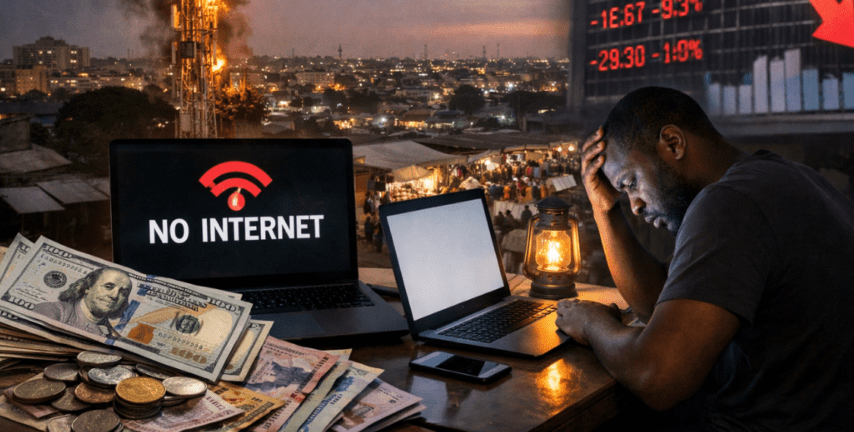

The true cost of internet shutdown is becoming impossible to ignore, as recurring digital blackouts trigger massive economic losses and business disruption across Africa. From halted financial transactions to paralyzed e-commerce platforms, internet outages are increasingly hitting the core of Africa’s growing digital economy. Experts warn that these shutdowns are not just temporary inconveniences—they carry long-term consequences for investment, innovation, and global competitiveness. As more businesses move online, the risks associated with going offline are escalating rapidly. For governments, regulators, and investors, the stakes are higher than ever in protecting digital infrastructure and ensuring uninterrupted connectivity.
Internet Shutdown Disrupts Businesses and Economic Growth
The rising cost of internet shutdown in Africa is directly impacting businesses, particularly in sectors that rely heavily on digital infrastructure such as fintech, e-commerce, and logistics. When internet access is cut, even temporarily, companies lose revenue, customers, and operational efficiency.
Digital payment systems—widely used across Africa—are among the hardest hit. Transactions stall, supply chains slow down, and customer trust erodes. Small and medium-sized enterprises (SMEs), which increasingly depend on online platforms for sales and communication, are especially vulnerable.
According to digital economy analysts, “every hour of internet disruption translates into real financial losses.” The longer the shutdown, the deeper the economic damage.
The cost of internet shutdown in Africa also extends to reduced productivity across industries, loss of investor confidence in digital markets, and disruption of cross-border trade and communication.
Organizations such as the Internet Society have consistently warned that shutdowns undermine economic progress and limit the growth of digital ecosystems.

Cost of Internet Shutdown in Africa Signals Long-Term Investment Risk
Beyond immediate losses, the internet shutdown cost is creating long-term risks for Africa’s economic trajectory. As the continent positions itself as a digital innovation hub, consistent connectivity is critical for attracting investment and supporting technological growth.
Frequent disruptions raise concerns among global investors, who prioritize stable operating environments. An unreliable internet infrastructure can deter investment in key sectors such as fintech, technology startups, and digital services.
A policy expert noted that digital reliability is now a core investment factor. Hence, countries that cannot guarantee connectivity risk being left behind.
Read: AI Regulation Crisis: Kenya Faces Data Risk from Weak Bill Provisions
The broader implications of the cost of internet shutdown in Africa include slower growth of the digital economy, reduced competitiveness in global markets, and increased cost of doing business.
At the same time, addressing this issue presents a major opportunity. Governments that invest in resilient digital infrastructure and adopt policies that protect internet access can position themselves as leaders in the digital economy.
The challenge, however, lies in balancing security concerns with economic priorities. While some shutdowns are implemented for political or security reasons, their economic impact can be severe and far-reaching.
Ultimately, the cost of internet shutdown in Africa highlights a critical reality: connectivity is no longer optional—it is foundational to modern economic activity. Protecting internet access is not just a technological issue; it is a strategic economic imperative that will shape Africa’s future growth and global competitiveness.
Previous Post
Next Post