Now Reading: Africa to become Europe’s gas lifeline amid global energy crises
-
01
Africa to become Europe’s gas lifeline amid global energy crises
Africa to become Europe’s gas lifeline amid global energy crises

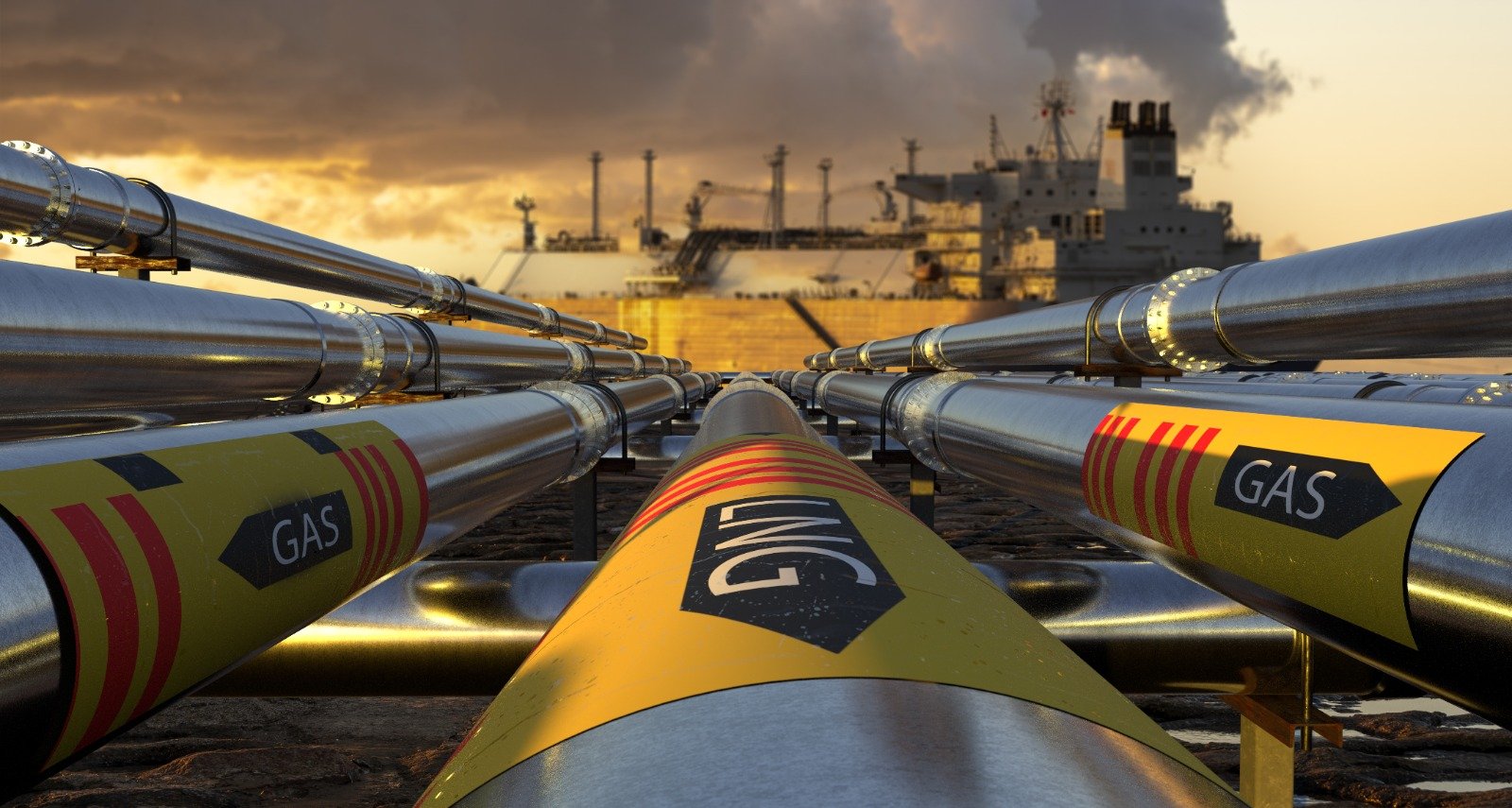

Africa is emerging as a critical supplier of liquefied natural gas (LNG) to Europe, as the continent capitalises on shifting global energy dynamics driven by instability in the Middle East and ongoing uncertainty over Russian gas supplies.
Energy ministers from Senegal, Equatorial Guinea, Nigeria, and the Republic of Congo are expected to meet European stakeholders in Paris next month at the Invest in African Energy Forum.
The gathering aims to position Africa as a reliable long-term partner for Europe as the region intensifies efforts to reduce dependence on traditional, increasingly volatile energy sources.
Europe’s energy landscape has undergone a major shift since the disruption of Russian pipeline gas supplies, forcing countries to diversify imports.
While suppliers such as the United States and Qatar have filled much of the immediate gap, African producers are steadily gaining traction due to their geographical proximity and relatively secure shipping routes.
Nigeria remains Africa’s leading LNG exporter and a key supplier to southern Europe. Portugal sources more than half of its LNG imports from Nigeria, while Spain continues to receive significant volumes.
The expansion of the Nigeria LNG Train 7 project, with a total cost of $10 billion, is expected to further strengthen the country’s export capacity. Nigeria currently supplies 14 per cent of the EU’s gas imports, while 60 per cent of Nigeria’s LNG shipments go to Europe.
Elsewhere on the continent, other producers are scaling up output. Equatorial Guinea continues to export from its established Punta Europa facility and recently reached an agreement with Chevron to increase state involvement in the Aseng Gas Project.
State-owned oil company GEPetrol will boost its ownership in the Chevron-led Aseng project from 5 per cent to 32.55 per cent, reinforcing government influence and supporting next-stage development under the country’s Extended Gas Mega Hub initiative.
The Republic of Congo is advancing the Congo LNG project, operated by Italian energy company Eni.
The project’s second phase, anchored by floating LNG technology, began exports in early 2026 from the new Nguya FLNG facility and lifts total project capacity to approximately 3 million tons per year.
Floating LNG systems offer advantages, including faster deployment, modular expansion, and lower upfront capital requirements, allowing producers such as Congo to enter the global LNG market more quickly.
Senegal has also joined the ranks of LNG exporters with the Greater Tortue Ahmeyim project developed jointly with neighbouring Mauritania.
Located on the maritime border of the two countries, the GTA project is one of Africa’s deepest offshore gas developments, with reserves estimated at over 15 trillion cubic feet.
The project delivered its first gas and began exports in 2025, marking a major milestone for West Africa’s entry into the global gas market. Phase 1 is designed to produce 2.3 million tons of LNG per year, with future phases expected to significantly expand capacity.
European utilities have shown particular interest in shorter-route shipments from West Africa, as cargoes from the region reach European terminals faster and with lower freight and insurance costs than many Middle Eastern shipments that must pass through conflict-prone routes like the Strait of Hormuz.
The strait handles roughly one-fifth of the world’s energy shipments, making it one of the most strategically sensitive maritime chokepoints in global energy trade.
Analysts note that Africa’s proximity to Europe provides a logistical edge, particularly as shipping routes from other regions face potential disruptions linked to geopolitical tensions.
This advantage is increasingly attractive to European buyers seeking stable and diversified energy supplies.
Companies such as Italy’s Eni, France’s TotalEnergies, and Britain’s BP have expanded investments in LNG and upstream gas projects across West and Central Africa, reflecting Europe’s broader strategy of diversifying supply sources as the continent gradually reduces reliance on Russian energy imports.
At the Paris forum, African leaders are expected to convert this growing demand into concrete investment deals and long-term supply agreements.
Participants are expected to discuss new upstream gas investments, export infrastructure, and long-term offtake agreements that could anchor African LNG more firmly within Europe’s energy supply mix.
African producers will not replace Russian or Gulf supplies overnight. But with operational LNG capacity already flowing and new projects coming online, the continent’s role in strengthening European gas security is steadily expanding.
Read Also: Africa Doubles Down on Foreign Oil and Gas Investments as Libya Taps Chevron and Eni – Business News

Previous Post
Next Post
Previous Post
Next Post