Now Reading: Britam Launches AI-System That Settles Motor Claims in Two Hours
-
01
Britam Launches AI-System That Settles Motor Claims in Two Hours

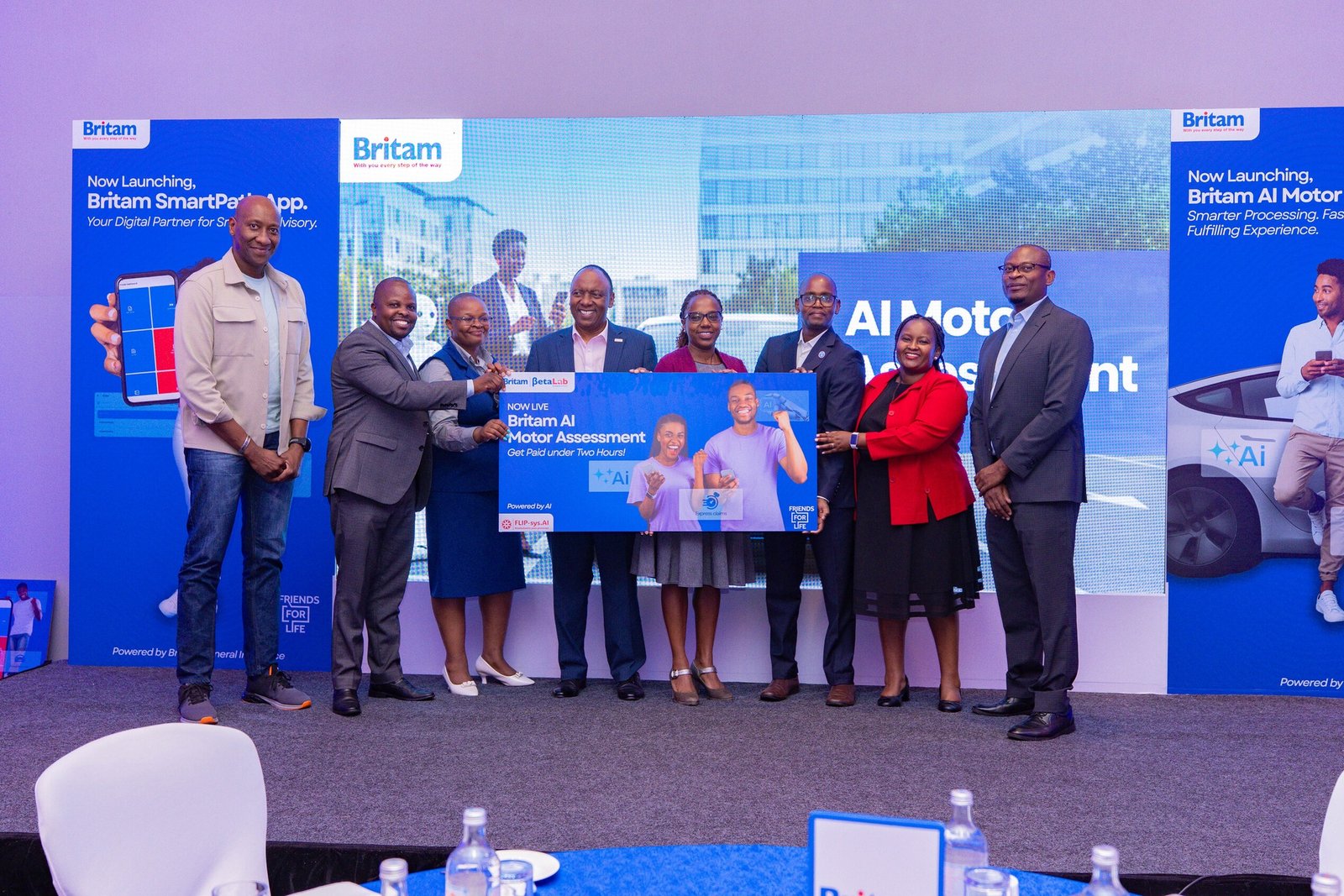

Britam General Insurance has unveiled an artificial intelligence-driven motor claims service that processes and pays eligible claims within two hours, slashing the typical five-day industry turnaround that has long frustrated Kenyan motorists.
The Britam AI Motor Assessment Service, located at Britam Centre in Nairobi, targets comprehensive motor insurance customers whose vehicles have sustained minor damage and remain drivable.
The drive-through facility was developed at BetaLab, the company’s innovation hub, and represents a fundamental shift in how claims are handled.
How It Works
Upon arrival, a customer’s vehicle is photographed and assessed using AI technology in approximately 15 minutes.
The system analyses damage severity, validates image authenticity, and generates real-time repair cost estimates.
A digital claim form is then sent directly to the customer’s phone for completion, eliminating the paperwork, scanning, and manual submissions that have traditionally slowed the process.
Once submitted, the form is reviewed internally within 30 minutes.
Payment follows within the next hour through bank transfer, M-Pesa, or issuance of a repair authority to one of Britam’s approved garages.
From arrival to settlement, the entire process is designed to take no more than two hours.
Reprieve for Kenyan Motorists
Insurance claims have long meant waiting days for assessors, endless paperwork, and frustrating delays. Britam’s AI service removes those pain points entirely.
“Five working days is not good enough for our customers,” said James Mbithi, CEO of Britam General Insurance, during the launch. “We have launched a capability that assesses accident vehicles using AI and pays the customer within two hours.”
Mbithi added that the company is already looking ahead. “In the future, we will be looking at how to scale this up so that a customer can do it at the scene of the accident, wherever they are.”
A Tool for Tackling Fraud
Britam says the technology is designed not only to accelerate settlements but also to reduce fraud, a persistent challenge in the motor insurance segment.
Data from the Insurance Regulatory Authority (IRA) shows that insurers rejected 22,364 claims worth Sh658.9 million in the first quarter of 2025 alone, with some cases linked to suspected fraud, exaggerated damages, and documentation issues.
Britam’s AI platform addresses these vulnerabilities through three integrated models.
A vehicle object detection model validates image authenticity and confirms the correct side of the vehicle is being photographed.
A damage detection model uses computer vision to classify damage type, severity, and affected components.
A price discovery engine aggregates real-time data from parts suppliers and repairers to generate localised cost estimates.
Together, these tools reduce the scope for manipulated photographs, inflated repair quotes, and inconsistent assessments, the most common vectors for motor claims fraud in Kenya.
Limited Rollout with Big Ambitions
For now, the service is available only to comprehensive motor policyholders with driveable vehicles that have suffered minor damage.
Customers must visit the Britam Centre in Nairobi to access the drive-through facility.
Overall, the AI service forms part of a broader strategy to digitise claims processing, cut fraud, and improve efficiency across Britam’s operations.
The technology was incubated at BetaLab, demonstrating how internal innovation hubs can deliver tangible customer solutions.
Industry Implications
Kenya’s insurance penetration remains below three per cent of GDP, according to industry reports.
Long settlement periods and disputes over rejected claims have historically discouraged motorists from taking up or renewing policies.
Britam’s two-hour settlement promise sets a new benchmark. If successful, the model could pressure competitors to accelerate their own digital transformation and force the entire industry to reconsider what customers should reasonably expect.
For the motorist who has just endured a minor accident, the difference is stark: no more waiting days for an assessor, no more chasing paperwork, no more uncertainty. Drive in, get assessed, and receive payment before lunch.
Read Also: Kenya Airports Authority (KAA) Plans JKIA Taxi App to Compete With Uber and Bolt – Business News
Related Posts



Previous Post
Next Post