Now Reading: Costly Blow: CMA Annual Fee Could Hit Fund Managers With Sh339 Million Burden
-
01
Costly Blow: CMA Annual Fee Could Hit Fund Managers With Sh339 Million Burden

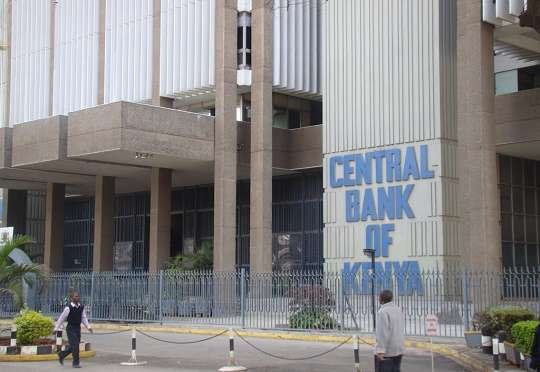

Kenya’s fund management industry is bracing for a significant financial impact as proposed changes to the CMA annual fee structure threaten to push some firms’ yearly regulatory payments to as high as Sh339 million. The new framework by the Capital Markets Authority (CMA) is set to recalibrate how fund managers are assessed, potentially increasing compliance costs for large asset managers overseeing billions in client funds. Industry players warn that the revised CMA annual fee could materially affect profitability, investor returns, and the overall competitiveness of Kenya’s capital markets. While regulators argue the move strengthens oversight and market development, stakeholders are urging careful calibration to avoid unintended consequences.
Revised CMA Annual Fee Structure Raises Industry Concerns
Under the proposed structure, the CMA annual fee will be pegged more directly to assets under management (AUM), meaning the larger the fund manager, the higher the regulatory bill. For top-tier asset managers handling substantial institutional and retail portfolios, this could translate into annual payments approaching Sh339 million — a sharp escalation compared to previous fixed or capped structures.
The CMA maintains that the changes are intended to align supervisory resources with market growth and complexity. As Kenya’s asset management industry expands — driven by pension funds, unit trusts, and collective investment schemes — regulatory oversight demands have also intensified.
However, fund managers argue that the scale of the increase could squeeze margins in an already competitive market. Many firms operate on management fees that have gradually declined due to competition and investor sensitivity to costs. A steep rise in the CMA annual fee may either erode profits or be passed on to investors through higher charges.
An industry executive noted, “Regulatory sustainability is important, but the cost structure must be proportional to market realities. Excessive compliance costs risk dampening innovation and discouraging growth.”
Kenya’s fund management sector plays a critical role in mobilizing domestic savings and channeling capital into equities, fixed income securities, and infrastructure investments. The Nairobi Securities Exchange relies heavily on institutional participation from these asset managers to maintain liquidity and price stability. Any financial strain on fund managers could have ripple effects across the broader capital markets ecosystem.

Market Development vs. Competitiveness Debate Intensifies
The debate over the CMA annual fee is unfolding against a backdrop of efforts to deepen Kenya’s financial markets and attract both local and foreign investors. The CMA has been pushing reforms aimed at improving transparency, governance, and product diversification. Strengthened funding for the regulator is viewed as necessary to execute these mandates effectively.
From the regulator’s perspective, scaling fees in line with AUM ensures that larger firms — which require more oversight — contribute proportionately to supervisory costs. This approach mirrors practices in several global jurisdictions where regulatory levies are tied to market activity and size.
Yet critics caution that Kenya must remain mindful of regional competitiveness. Neighboring markets are also positioning themselves as financial hubs, and cost sensitivity could influence where asset managers choose to domicile funds or expand operations.
Read Also: Financial Services Regulators Consolidation Gains Traction in Kenya Reform Debate
Experts suggest a phased implementation or tiered caps could strike a balance between regulatory sustainability and industry viability. “There is room for compromise. A predictable, transparent fee framework encourages long-term investment and strategic planning,” said a Nairobi-based capital markets analyst.
The CMA annual fee proposal comes at a time when macroeconomic pressures — including high interest rates and shifting investor risk appetite — are already reshaping asset allocation decisions. Additional cost burdens may compel firms to reassess operational efficiencies, fee models, and product offerings.
Ultimately, the outcome of this policy adjustment will signal how Kenya balances regulatory strengthening with private-sector growth incentives. If carefully structured, the reforms could reinforce market integrity. If miscalibrated, they risk slowing momentum in a sector vital to economic development and capital formation.
Related Posts



Previous Post
Next Post