Now Reading: Egypt, Cyprus Strike Gas Deal as Cairo Seeks Energy Hub Status
-
01
Egypt, Cyprus Strike Gas Deal as Cairo Seeks Energy Hub Status
Egypt, Cyprus Strike Gas Deal as Cairo Seeks Energy Hub Status

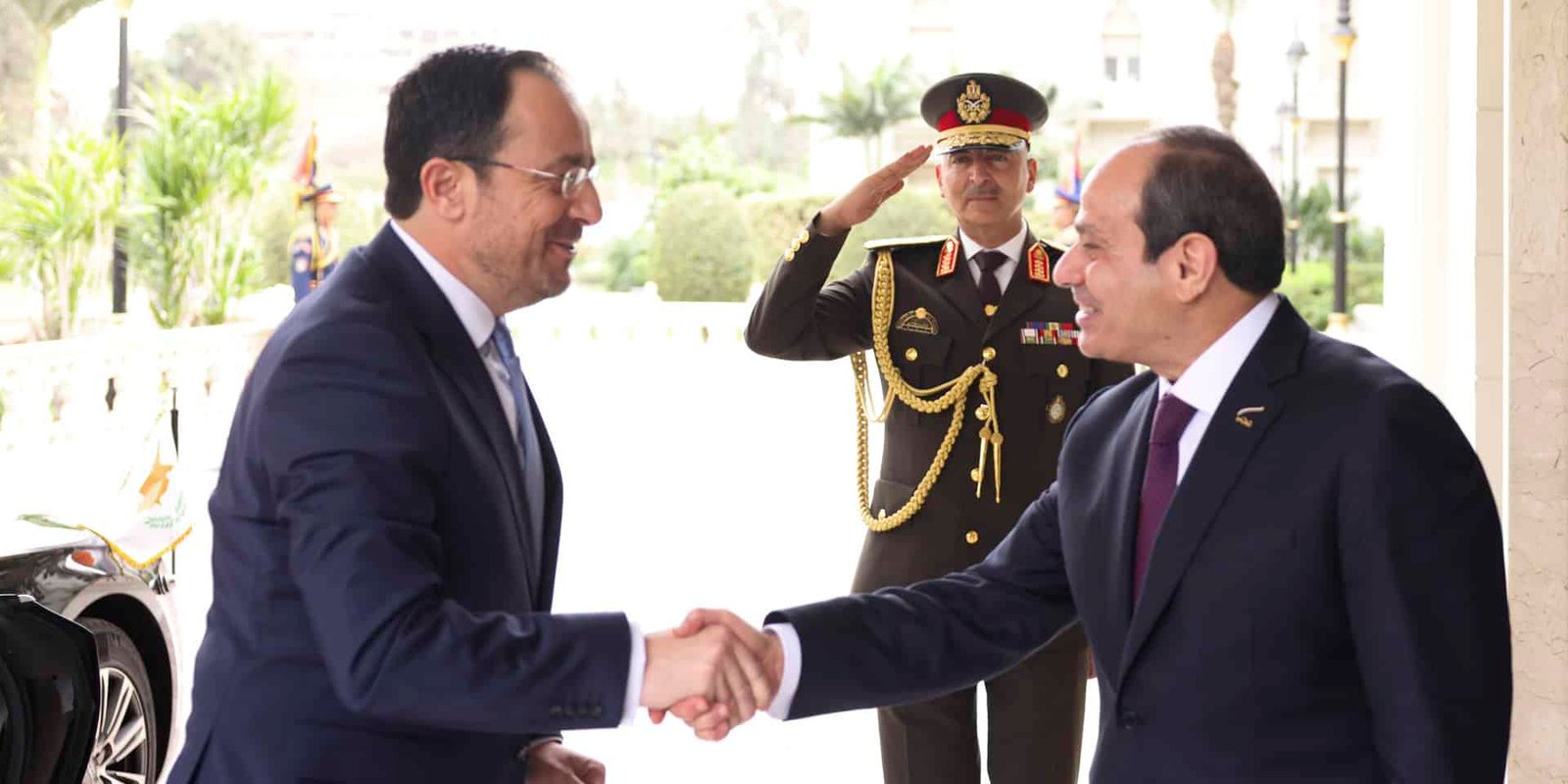

Egypt and Cyprus have signed a new framework agreement to expand cooperation in natural gas, as Cairo moves to strengthen its position as a regional energy hub amid rising global supply disruptions.
The deal, announced at the Egypt Energy Show (EGYPES 2026) in Cairo, will support the development of Cyprus’s offshore gas fields and open the door for exports to Egypt for processing and onward shipment to international markets, particularly Europe.
The agreement was signed in the presence of Egyptian President Abdel Fattah el-Sisi and Cypriot President Nikos Christodoulides, underscoring the strategic importance both countries attach to energy cooperation at a time of heightened geopolitical tension.
At its core, the non-binding framework sets the stage for negotiations on commercialising gas from key Cypriot fields, including Kronos and Aphrodite.
Cypriot officials have indicated that production from the Kronos field could begin between 2027 and 2028, marking a significant step toward unlocking new energy supply in the Eastern Mediterranean.
The agreement also allows Cyprus to supply gas directly to Egypt or its state-owned companies, reinforcing Cairo’s role as a processing and export hub.
Egypt already operates liquefied natural gas (LNG) facilities, which could be used to process Cypriot gas for re-export, particularly to Europe as it seeks alternatives to Russian energy supplies.
The move builds on earlier agreements signed in 2025, which laid the groundwork for transporting Cypriot gas to Egypt for liquefaction and export.
Together, these initiatives reflect a broader effort to position the Eastern Mediterranean as a key player in global energy markets.
However, the deal comes at a time when Egypt is grappling with rising domestic energy pressures. Increasing demand and reliance on imported fuel have left the country exposed to global price fluctuations, particularly as tensions involving Iran disrupt energy flows across the Middle East.
The impact has already been felt domestically, with the government raising fuel and transport prices and introducing energy-saving measures such as shorter business hours to manage supply constraints.
President Sisi warned that ongoing regional conflict could trigger significant global energy shocks, driving up prices for fuel, fertiliser, and agricultural commodities, with developing economies likely to bear the brunt of the impact.
Against this backdrop, the Cyprus deal is seen as a strategic move to stabilise Egypt’s energy system while advancing its long-term ambition of becoming a regional energy hub linking producers in the Eastern Mediterranean with global markets.
For Cyprus, the agreement offers a pathway to monetise its offshore gas reserves more efficiently by leveraging Egypt’s existing infrastructure, avoiding the need for costly standalone export facilities.
The partnership also reflects growing alignment between regional players and Europe, which is increasingly looking to diversify its energy sources in response to geopolitical risks.
Analysts say the deal highlights how countries are recalibrating energy strategies in response to global uncertainty, prioritising partnerships that enhance supply security and market access.
Still, challenges remain. The framework agreement is non-binding, and its success will depend on follow-through negotiations, investment commitments, and the broader geopolitical environment.
As global energy markets continue to face volatility, Egypt’s strategy signals a shift toward deeper regional integration as a means of managing risk and capturing new opportunities.
In an increasingly uncertain energy landscape, the Egypt-Cyprus partnership could prove pivotal, not only for the two countries but for the wider region’s role in global energy supply chains.
Read Also: Kenya Opens $62B Rare Earth Project in Kwale to Global Investors – Business News
Previous Post
Next Post