Now Reading: Eurobond Boost Pushes Kenya Forex Reserves to Record High
-
01
Eurobond Boost Pushes Kenya Forex Reserves to Record High


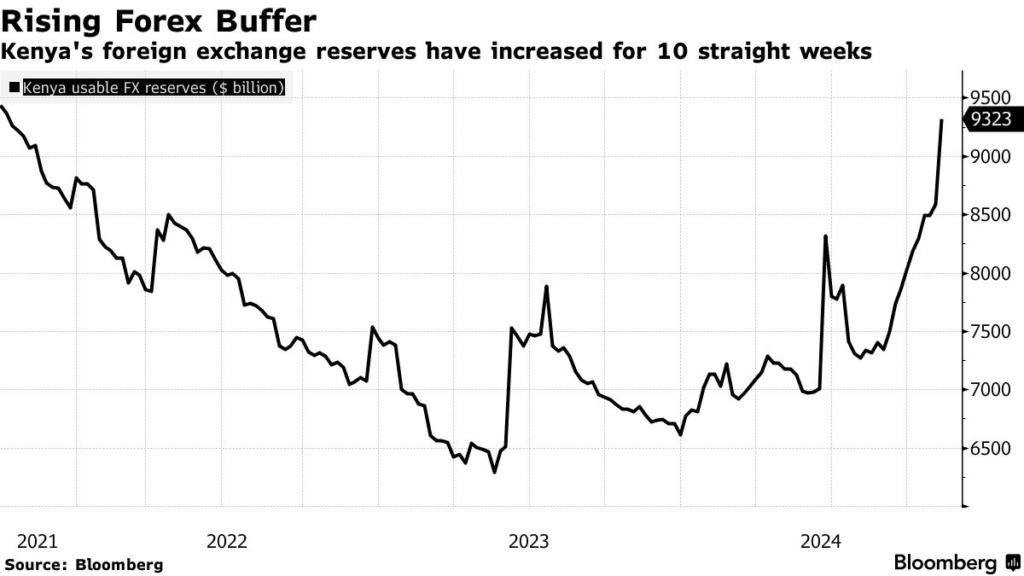
Kenya forex reserves have risen sharply by Sh266 billion, reaching $14.59 billion (Sh1.88 trillion) after proceeds from the government’s recent Eurobond issuance boosted the country’s external financial buffers. The increase strengthens Kenya’s ability to support the shilling, finance imports, and meet external financial obligations, according to the latest update from the Central Bank of Kenya. The surge signals improving stability in the country’s external position amid global economic uncertainties and rising geopolitical tensions affecting energy markets.
Eurobond Proceeds Boost Kenya Forex Reserves
According to the Central Bank, Kenya forex reserves rose to $14.597 billion as of March 5, up from $12.53 billion a week earlier, largely driven by funds received from the government’s recent Eurobond transaction.
The reserves now provide 6.2 months of import cover, comfortably exceeding the statutory requirement for the Central Bank to maintain at least four months of import cover.
The higher reserve level strengthens the country’s ability to cushion the economy against external shocks, particularly fluctuations in global commodity prices and currency volatility.
Impact on the Kenyan Shilling and Financial Markets
The rise in Kenya forex reserves has also helped stabilize the Kenyan shilling, which traded at about Sh129.20 per US dollar during the week, remaining relatively steady compared to the previous week.
A stronger reserve position typically boosts investor confidence, as it signals that the country has adequate foreign currency to support trade payments and service external debt.
At the same time, the Central Bank noted that the money market remained liquid, with commercial banks holding excess reserves above the 3.25 percent cash reserve requirement.
See Also: Pensions Equity Holdings Hit Sh312 Billion After NSE Rally
However, activity at the Nairobi Securities Exchange declined during the week, with major indices such as the NASI, NSE 25, and NSE 20 recording losses.
Global Pressures Still Pose Risks
Despite the improvement in Kenya forex reserves, global economic pressures remain a concern. The Central Bank highlighted rising inflationary pressures linked to escalating geopolitical tensions in the Middle East, which have pushed international oil prices higher.
Oil prices climbed to around $76.25 per barrel, up from $69.73 the previous week, raising concerns about potential increases in fuel import costs for Kenya.
Economists warn that sustained increases in energy prices could put pressure on the country’s trade balance and foreign exchange reserves in the long term, particularly for a net fuel-importing economy.
Still, analysts say the current boost in Kenya forex reserves provides a stronger cushion for the economy as the government continues managing external debt obligations and navigating global market volatility.
Related Posts



Previous Post
Next Post