Now Reading: Nigeria Secures Landmark Electric Vehicle Manufacturing Deal with South Korea
-
01
Nigeria Secures Landmark Electric Vehicle Manufacturing Deal with South Korea

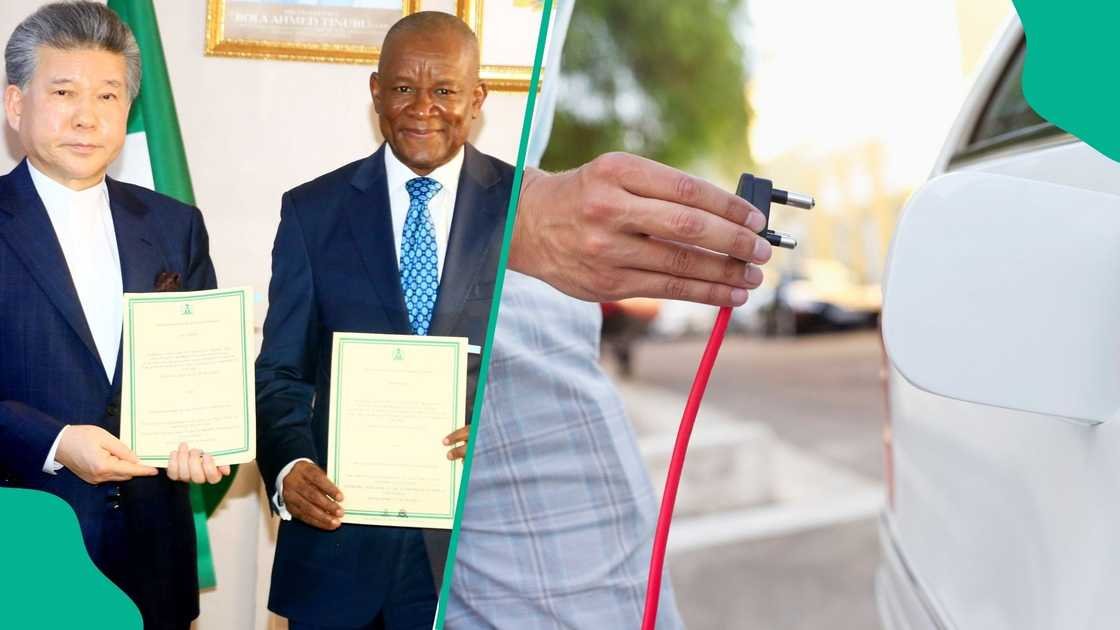

Nigeria has taken a bold and strategically positive step toward industrial transformation after signing an agreement with South Korea’s Asia Economic Development Committee to establish Africa’s first large-scale electric vehicle manufacturing plant. The deal positions the country at the center of the continent’s emerging electric vehicle manufacturing ecosystem, aligning closely with its energy transition and automotive industrialization goals as governments worldwide accelerate the shift toward cleaner mobility.
Building Africa’s first large-scale electric vehicle manufacturing hub
The agreement, signed on January 30, 2026, by Nigeria’s Minister of State for Industry, Senator John Enoh, and AEDC Chairman Yoon Suk-hun, sets out plans for a phased electric vehicle project that begins with assembly and advances toward full in-house production. According to Nigeria’s National Automotive Design and Development Council, the project will also include the rollout of nationwide charging infrastructure, a critical component for scaling EV adoption.
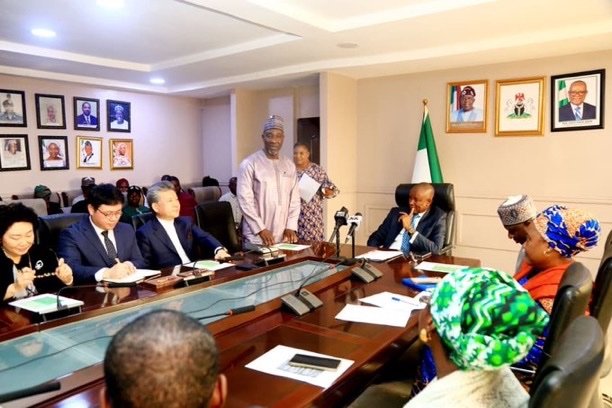
Once fully operational, the facility is expected to produce up to 300,000 vehicles annually and create approximately 10,000 jobs. For Nigeria, this represents more than a manufacturing milestone. It is an attempt to rebalance an automotive market that relies heavily on imports, particularly used vehicles. The country currently imports between 400,000 and 720,000 vehicles each year, with as much as 90 percent being pre-owned units. Passenger car imports alone were valued at over $1 billion in 2024.
Also Read: Kenyan Farmers Shift Dramatically from Banks to Customers and Family Loans
By anchoring electric vehicle manufacturing domestically, policymakers hope to reduce import dependence, strengthen local supply chains, and capture more value within the economy. The project is also aligned with Nigeria’s National Energy Transition Plan and the National Automotive Industry Development Plan, signaling a coordinated policy approach rather than a standalone industrial experiment.
Policy support and market realities shaping electric vehicle manufacturing
Nigeria’s government has paired the South Korea partnership with targeted policy incentives aimed at stimulating demand. In December 2024, authorities launched a 20-billion-naira consumer credit scheme to support the purchase of locally assembled electric vehicles, motorcycles, and tricycles. The program works with domestic manufacturers such as Innoson, PAN, Mikano, and NEV Electric, reflecting an effort to build an ecosystem rather than rely solely on foreign players.
The broader African context underscores both the opportunity and the challenge. By mid-2025, the continent had just over 30,000 electric vehicles in use, accounting for less than one percent of total vehicle sales. Ethiopia leads adoption with around 100,000 EVs, followed by Ghana, Morocco, South Africa, Egypt, and Kenya. Most of these are two- and three-wheelers, highlighting cost and infrastructure barriers for passenger EVs.

Previous Nigerian EV initiatives, including pilot collaborations with Israeli, Japanese, and Chinese partners, remained limited in scale and scope. In contrast, the AEDC-backed project is explicitly designed as a full-scale operation encompassing assembly, manufacturing, and supporting infrastructure. This distinction is central to Nigeria’s ambition to move beyond symbolic projects toward sustainable industrial capacity.
Strategic implications for Nigeria and the region
If executed effectively, the plant could reposition Nigeria as a regional hub for electric vehicle manufacturing, supplying both domestic and export markets. It could also stimulate skills development, technology transfer, and upstream industries such as battery components and charging solutions. However, success will depend on consistent policy execution, power and logistics reliability, and affordability for consumers.
The agreement reflects a broader recalibration of industrial strategy across Africa, where governments are seeking to align climate goals with job creation and manufacturing depth. For Nigeria, the deal with South Korea is not just about electric cars. It is a test of whether green industrialization can translate into durable economic gains.
Previous Post
Next Post