Now Reading: Inside JKIA Master Plan 2025-2045: Multi-Billion Upgrade to Transform Kenya’s Main Airport
-
01
Inside JKIA Master Plan 2025-2045: Multi-Billion Upgrade to Transform Kenya’s Main Airport
Inside JKIA Master Plan 2025-2045: Multi-Billion Upgrade to Transform Kenya’s Main Airport

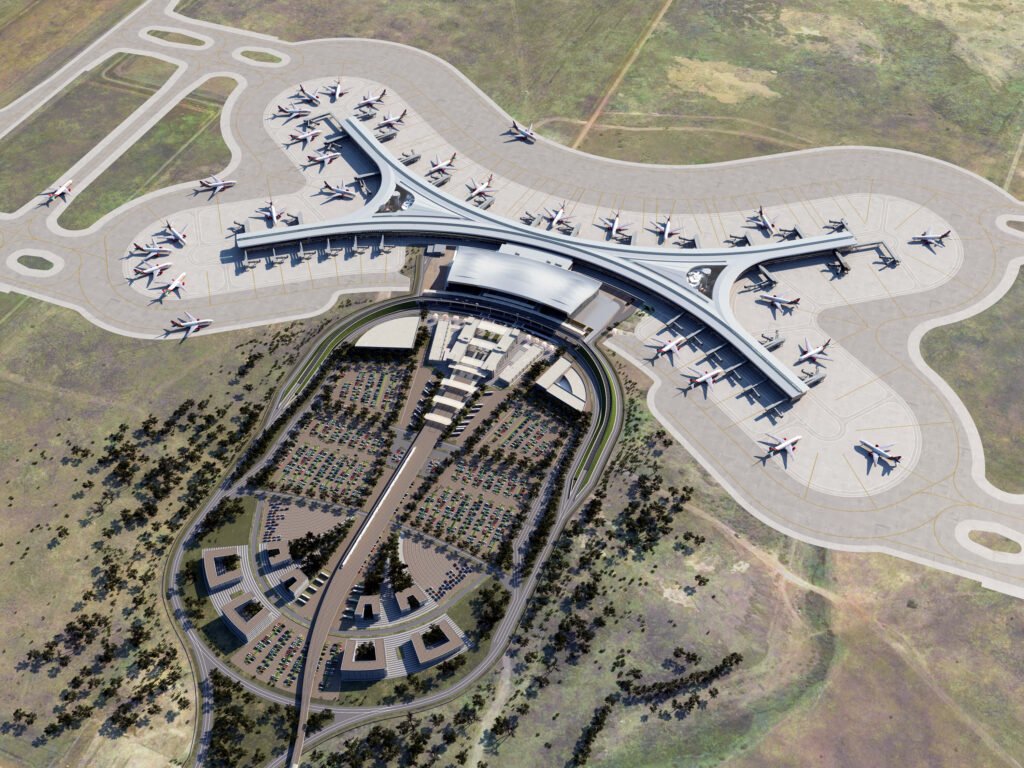

Kenya has unveiled an ambitious long-term plan to transform Jomo Kenyatta International Airport (JKIA) into one of Africa’s leading aviation hubs, with a multi-billion shilling expansion programme designed to ease congestion, increase passenger capacity and support the country’s growing travel and trade demand.
The JKIA Master Plan 2025-2045, drawn up by the Kenya Airports Authority (KAA), outlines a phased modernisation of the airport that will significantly expand its passenger and cargo handling capabilities over the next two decades.
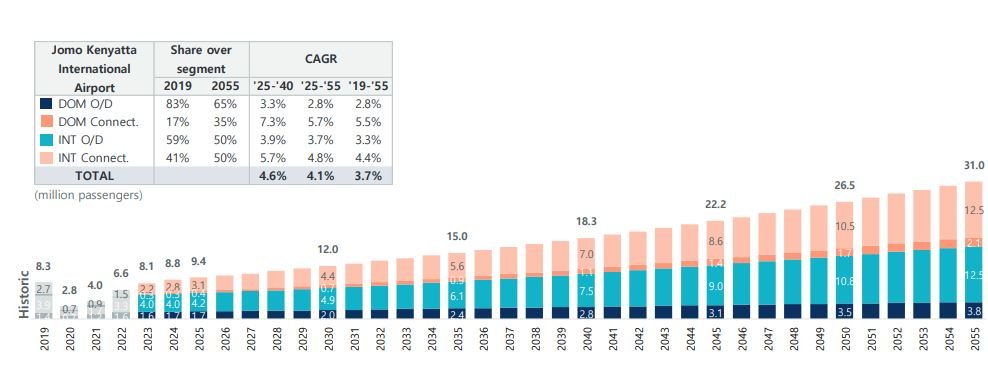
Under the plan, JKIA’s annual passenger handling capacity will increase from 7.5 million passengers to 12 million in the initial phase, with ultimate capacity projected to reach 22 million passengers and potentially 27 million by 2045.
The expansion comes as traffic at Kenya’s main international gateway continues to exceed its current infrastructure limits.
Passenger traffic already above capacity
According to KAA Managing Director Mohamud Gedi, JKIA handled about 8.6 million passengers in 2025, surpassing its original design capacity of 7.5 million.
“With traffic continuing to grow, expansion is no longer optional. The master plan provides a resilient roadmap for JKIA’s long-term growth and aligns with the country’s Vision 2030 development agenda,” Gedi said.
Passenger numbers are expected to continue rising steadily as Kenya strengthens its position as a regional aviation hub connecting Africa, Europe, Asia and the Middle East.
Traffic projections in the master plan indicate passenger volumes could reach more than 22 million travellers annually by 2045, representing an average growth rate of about 4.6 per cent per year.
Cargo volumes are also expected to expand significantly, with forecasts showing growth from about 407,000 tonnes today to more than 860,000 tonnes annually over the same period.
New terminal and runway
The centrepiece of the modernisation plan is the construction of a new passenger terminal complex, which will be implemented in phases.
Phase one will deliver a terminal capable of handling 10 million passengers annually, while phase two will add an additional 5 million passenger capacity, bringing the new facility’s total capacity to 15 million passengers per year.
The existing terminal will also undergo optimisation and refurbishment to increase short-term capacity to 12 million passengers annually.
Beyond terminal upgrades, the master plan proposes a broad expansion of airside infrastructure.
Key projects include:
- Construction of a second runway to ease pressure on the airport’s single runway
- New taxiways and rapid exit taxiways to improve aircraft movement
- Expanded aircraft parking aprons and maintenance facilities
- Modernised air traffic control systems and firefighting infrastructure
The new runway is expected to increase airfield capacity significantly, allowing more aircraft movements per hour and reducing delays during peak travel periods.
Improving passenger experience

Authorities say the expansion will also improve the overall passenger experience by modernising airport systems and facilities.
Planned improvements include upgraded check-in counters, security screening systems, immigration processing, baggage handling technology, and passenger circulation areas.
The master plan also proposes expanded access roads, parking areas and improved landside infrastructure to reduce congestion around the airport.
These changes aim to streamline passenger flow and reduce waiting times, particularly during peak travel seasons.
Airport city and economic hub
Beyond aviation infrastructure, the JKIA expansion plan envisions transforming the airport into a broader aviation-led economic zone.
The master plan includes proposals for developing an Airport City and Special Economic Zone (SEZ) around the airport precinct.
This development is expected to attract businesses in sectors such as logistics and cargo distribution, agro-processing, pharmaceutical manufacturing, E-commerce fulfilment centres, and aviation services and maintenance.
Officials believe the airport-city model could unlock new economic opportunities while strengthening JKIA’s role as East Africa’s primary cargo and passenger gateway.
Financing and implementation
The project will require significant capital investment. Advisory reports estimate the total cost of the development plan at around $1.63 billion (about KSh 200 billion).
The government is expected to finance parts of the expansion while exploring public-private partnership (PPP) models for major infrastructure components such as the new passenger terminal.
Consultants have recommended an open international tender process to ensure transparency and attract experienced airport operators and investors.
The expansion will be delivered in phases to ensure that the airport continues operating during construction.
Supporting Kenya’s aviation growth
Industry leaders say the JKIA modernisation programme is critical for sustaining Kenya’s growing aviation sector.
According to the Kenya National Bureau of Statistics, the air transport and storage sector grew 6.3 per cent in 2024, supported by rising passenger numbers and expanding cargo trade.
Passenger traffic through Kenyan airports surpassed 12 million travellers in 2024, nearly reaching pre-pandemic levels.
Officials argue that without expansion, JKIA risks losing competitiveness to other regional hubs such as Addis Ababa’s Bole International Airport and Kigali International Airport.
Skills and workforce development
As the expansion programme moves forward, authorities have also highlighted the need to develop technical expertise within Kenya’s aviation workforce.
Principal Secretary for Aviation Teresia Mbaika recently noted that the government intends to leverage local engineering talent in the construction and modernisation projects.
The upgrades will involve advanced communication, navigation and surveillance systems, as well as the integration of sustainable aviation fuel frameworks and new drone regulations.
Industry leaders have warned that infrastructure expansion must go hand in hand with investment in human capital.
The president of the Institution of Engineers of Kenya, Shammah Kiteme, said the country’s aviation future will depend as much on skilled professionals as it does on new terminals and runways.
A long-term vision for Kenya’s aviation hub
The JKIA Master Plan represents one of the most significant aviation infrastructure projects in Kenya’s history.
By nearly tripling its capacity and introducing modern facilities, the expansion aims to position Nairobi as a leading aviation gateway for Africa.
For travellers, airlines and logistics companies, the project promises smoother operations and improved connectivity.
For the wider economy, officials say the upgraded airport could help boost tourism, strengthen trade links and create thousands of jobs across Kenya’s aviation and logistics sectors over the coming decades.
Read Also: Kenya Airports Authority (KAA) Plans JKIA Taxi App to Compete With Uber and Bolt – Business News
Previous Post
Next Post