Now Reading: Kenya Airports Authority (KAA) Plans JKIA Taxi App to Compete With Uber and Bolt
-
01
Kenya Airports Authority (KAA) Plans JKIA Taxi App to Compete With Uber and Bolt
Kenya Airports Authority (KAA) Plans JKIA Taxi App to Compete With Uber and Bolt

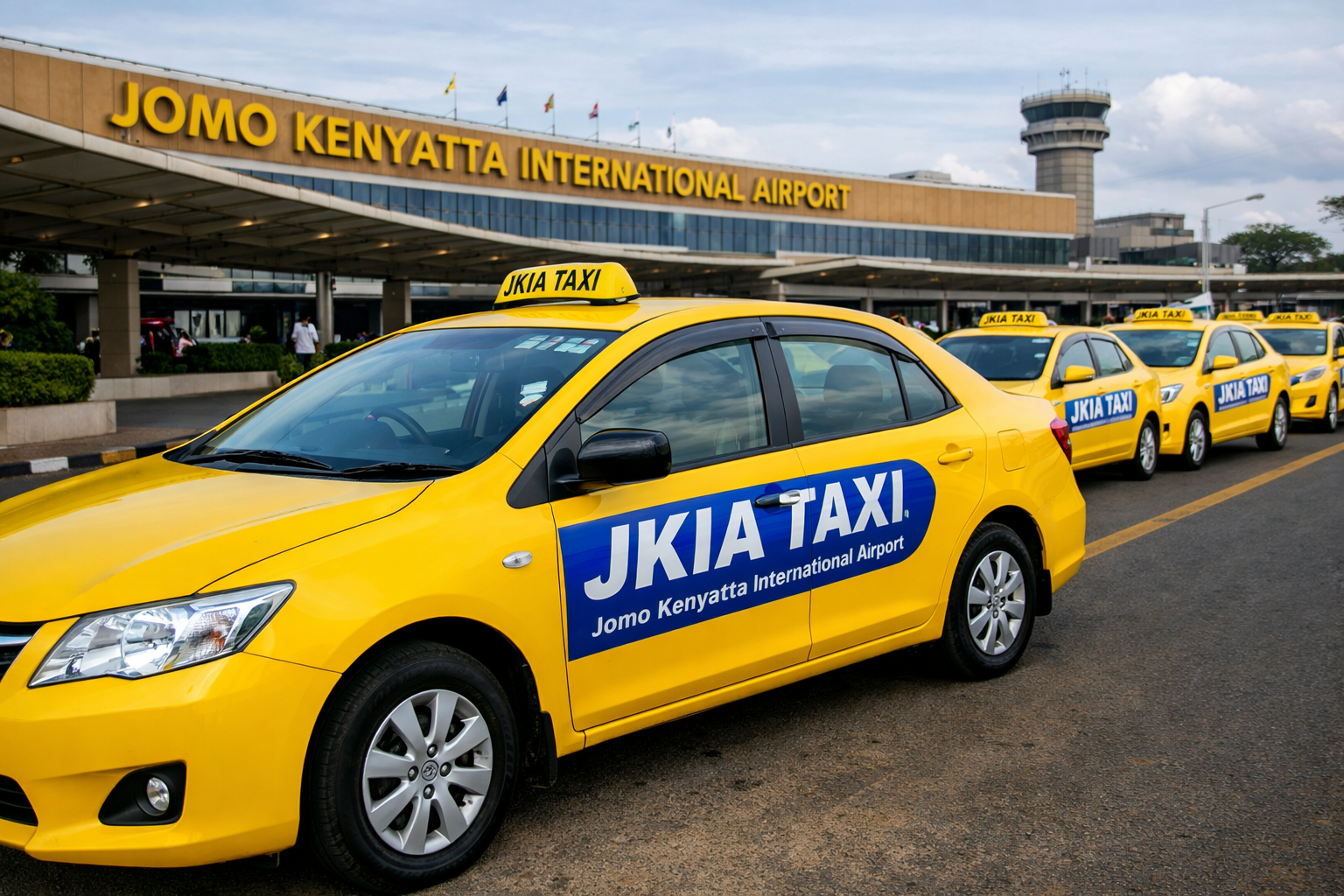

The Kenya Airports Authority (KAA) is preparing to enter the ride-hailing market at Jomo Kenyatta International Airport (JKIA) with a state-backed taxi application designed to regulate airport pickups, improve passenger safety and create a new revenue stream from ground transport.
According to tender documents, KAA has invited technology firms to design, develop and operate a mobile and web-based taxi dispatch platform under a public-private partnership (PPP) model.
The selected firm will run the system on KAA’s behalf and remit an agreed percentage of passenger fares to the authority each month.
The planned KAA-branded app will operate exclusively with licensed and vetted yellow taxis authorised to pick up passengers at JKIA.
Travellers will be able to book rides through Android and iOS mobile apps, a web portal or physical kiosks installed within the airport terminals.
The platform will include features common to global ride-hailing services, such as real-time fare estimates, vehicle tracking, trip notifications and an automated dispatch engine that assigns drivers and manages queues across terminals.
The system will also support advance bookings and surge pricing.
A key component of the design is the use of GPS-based geofencing to control where taxis can wait, pick up and drop off passengers within the airport precinct.
KAA says this will help curb unauthorised pickups, enforce operational rules and improve order at busy arrival areas.
JKIA handled 6.8 million international passengers and 2.1 million domestic travellers in 2024, according to official figures.
Ground transport linked to that traffic represents a significant commercial opportunity that has largely been captured by private ride-hailing platforms such as Uber and Bolt.
Currently, KAA’s revenues are concentrated around passenger service charges, aircraft landing fees and commercial concessions within the terminal.
Ride-hailing companies pay access or compliance fees where applicable, but the bulk of fare revenue remains outside the airport’s direct control.
By taking ownership of the digital booking layer for airport taxis, KAA aims to capture value at the trip level. Under the proposed model, passenger fares would be collected through the platform, with a portion transferred to KAA regularly.
The tender documents indicate that the system must generate detailed operational and financial data, including trip records, fare summaries, driver performance reports and daily revenue statements.
This data will be accessible to both KAA and the National Transport and Safety Authority (NTSA).
KAA has given the winning bidder three months from contract signing to deploy the system, signalling a rapid rollout timeline.
The authority is seeking a vendor with experience in large-scale transport platforms, payment integration and high-availability systems.
The move places KAA in direct competition with established ride-hailing firms that already have deep market penetration in Kenya and strong brand recognition among international travellers.
Uber and Bolt benefit from existing user accounts, integrated payment options and familiarity across multiple countries.
However, KAA’s proposal leverages its position as airport landlord and regulator. By embedding taxi access, dispatch and fare collection into a single airport-controlled platform, the authority gains influence over curbside operations and passenger choice without banning private platforms outright.
The initiative also reshapes the role of traditional airport taxis. For yellow cab operators, inclusion in the platform could mean more consistent demand, digital payments and structured dispatch.
At the same time, it introduces tighter oversight, automated compliance and revenue-sharing obligations.
Beyond taxi services, the tender documents describe the platform as modular and expandable.
KAA plans to eventually integrate additional airport services such as parking reservations, lounge bookings, duty-free shopping, digital advertising and indoor navigation linked to flight information systems.
This points to a broader strategy of building a consolidated digital ecosystem around JKIA, allowing the authority to extend passenger engagement beyond check-in and boarding while diversifying non-aeronautical revenue.
Globally, airports have increasingly turned to digital platforms to improve passenger experience and monetise services beyond aviation.
KAA’s approach stands out for its emphasis on direct revenue capture from ground transport and the use of technology as a regulatory tool.
Related Posts

Previous Post
Next Post