Now Reading: Kenya Expands Vocational Training to Tackle Youth Unemployment
-
01
Kenya Expands Vocational Training to Tackle Youth Unemployment

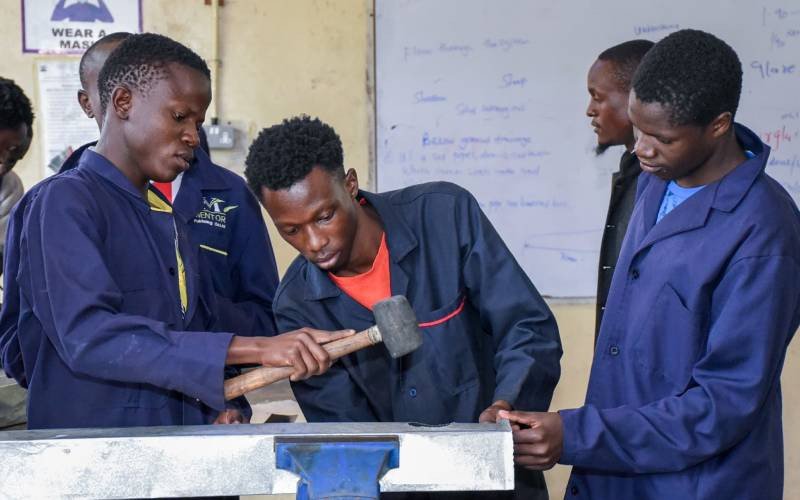

The government is accelerating investment in Technical and Vocational Education and Training (TVET) as part of a broader strategy to build a skilled workforce capable of competing in both local and global labour markets.
Interior Principal Secretary Raymond Omollo said the expansion of TVET institutions reflects a deliberate shift toward vocational training as a key driver of employment and economic growth.
“The Government is investing heavily in Technical and Vocational Education and Training (TVET) to produce a skilled workforce for both the national and global labour markets,” he said.
Kiharu Technical and Vocational College in Murang’a County has emerged as a standout example of this push, highlighting the growing role of vocational institutions in Kenya’s skills development agenda.
Opened in September 2023, the college has rapidly grown into a major training centre, enrolling more than 1,800 students from across the country in just two years. The surge in enrolment underscores rising confidence in vocational education as a viable and competitive alternative to traditional academic pathways.
The institution offers a broad range of programmes aligned with industry demand. These include courses in Building and Construction, Business, Electrical Engineering, Mechanical and Automotive Engineering, Information and Communication Technology (ICT), Cosmetology, Hospitality, and Liberal Studies.
Officials say the diversity of programmes is designed to equip learners with practical skills that are directly applicable in the job market, addressing long-standing gaps between education and employment.
To support this goal, the college has invested in modern training infrastructure. It features a fully equipped ICT laboratory alongside specialised workshops for plumbing, mechanical, and electrical training, ensuring students gain hands-on experience in real-world environments.
The government is also moving to address accommodation challenges that often limit access to training institutions. Through the Affordable Housing Programme (AHP), a student hostel is currently under construction at the college to cater to learners from different parts of the country.
Omollo said the additional infrastructure will play a critical role in improving retention rates and expanding access, particularly for students from rural and underserved areas.
Beyond education, the project has involved coordination across multiple government agencies. The State Department for Internal Security and National Administration has supported implementation by facilitating local administrative processes, ensuring compliance with regulatory requirements, and maintaining security standards throughout the project.
Authorities say this multi-agency approach is helping to fast-track infrastructure delivery while ensuring projects meet national standards.
The expansion of TVET institutions comes at a time when Kenya is seeking to align its workforce with evolving labour market demands, including opportunities in construction, manufacturing, technology, and services.
Policymakers increasingly view vocational training as central to reducing youth unemployment and driving inclusive economic growth, particularly as the country invests in large-scale initiatives such as infrastructure development and housing.
Kiharu Technical and Vocational College, officials say, represents a model for future institutions, combining modern facilities, industry-relevant training, and government-backed infrastructure to create pathways into employment.
As enrolment continues to grow and new facilities come online, the government expects the TVET sector to play an even larger role in shaping Kenya’s workforce and supporting long-term economic transformation.
Related Posts

Previous Post
Next Post