Now Reading: Kenyan Tycoon Darshan Chandaria Opens Family Empire to Outside Investors for First Time
-
01
Kenyan Tycoon Darshan Chandaria Opens Family Empire to Outside Investors for First Time
Kenyan Tycoon Darshan Chandaria Opens Family Empire to Outside Investors for First Time

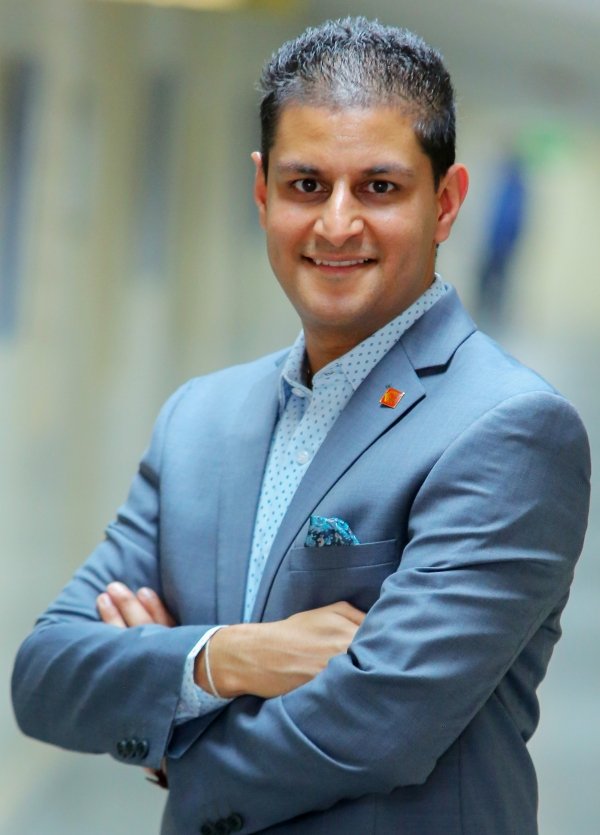

Darshan Chandaria, the 40-year-old chief executive of Chandaria Industries, is establishing a formal family office to strengthen governance, attract new capital, and position the sprawling conglomerate for its next phase of growth.
For more than six decades, the Chandaria Group has built its empire quietly from Nairobi. Now, for the first time, it’s creating a structured pathway for outside investors to participate.
“We’ve done a lot of what we’ve done to this point on our own,” Chandaria said in an interview. “The shareholding, the equity has been the family. I think we’ll see more collaboration in our diversification.”
Why a Family Office?
A family office is a private investment structure used by ultra-wealthy families to manage assets, oversee investments, and forge partnerships with institutional investors.
Globally, there are an estimated 8,000 to 10,000 family offices, but Africa has only around 30 to 60, despite having roughly 1,500 to 2,000 families with wealth large enough to support such structures, according to industry estimates cited by Deloitte.
Experts say formal family offices are becoming more common across the continent as multigenerational businesses seek greater governance, transparency, and structured access to capital.
For Chandaria Industries, the family office will serve as a platform to improve governance across the group’s expanding portfolio, create a structured entry point for external investors, manage wealth across multiple sectors and geographies, and support larger investment partnerships and acquisitions.
“The family office is already set up; we now need to further strengthen its governance, mandate, and efficiency,” Chandaria said.
A New Phase for a Historic Family Business
Founded in 1964, Chandaria Industries has grown into one of the largest tissue and hygiene product manufacturers in East and Central Africa.
The company produces a wide range of consumer goods, including tissues, sanitary products, disinfectants, and cotton products, under well-known brands such as Velvex, Nice & Soft and Toilex.
The company operates manufacturing facilities in Kenya, Tanzania, and Uganda and sells its products across multiple African markets. Annual revenues were estimated at $486 million in 2025.
Beyond consumer goods manufacturing, the Chandaria Group has expanded into real estate development, financing, and venture investments, reflecting a broader shift among African family businesses toward diversified investment portfolios.
Expanding Beyond Manufacturing
While hygiene product manufacturing remains the core business, the Chandaria Group has been steadily expanding into new sectors.
Its real estate division currently manages more than one million square feet of industrial warehouse space, with plans for further development in logistics and industrial property.
The group has also entered the venture capital space through a startup investment portfolio valued at roughly $25 million, backing early-stage companies across sectors such as technology, logistics, and fintech.
These investments reflect a broader effort to position the conglomerate for long-term growth beyond traditional manufacturing.
“Some of the investments we’re exploring will be fairly large, whether undertaken independently or in partnership,” Chandaria said.
A New Generation of Leadership
Darshan Chandaria represents the third generation of leadership in the family business.
Under his leadership, the group has moved into venture capital, renewable energy, and diversified asset management, while maintaining its core manufacturing operations.
The Chandaria family itself traces its business roots in Kenya to the mid-20th century, when the founder established a small tissue converting operation in Nairobi.
Over decades, the company expanded into one of East Africa’s leading manufacturing groups, employing thousands of workers directly and supporting tens of thousands more through its recycling supply chain.
Chandaria Industries is also known as East and Central Africa’s largest paper recycler for tissue manufacturing, having recycled enough paper to save more than 22 million trees over three decades.
A Broader Trend in African Business
The decision to formalise a family office reflects a wider trend among African business dynasties as their companies mature and expand.
Family offices allow conglomerates to transition from informal family ownership structures to professionally managed investment platforms, making it easier to attract global investors and institutional partners.
Africa’s family office sector is expected to grow significantly over the next decade, driven by a new generation of business leaders educated internationally and increasingly familiar with global capital structures.
Also Read: Nice & Lovely Enters Kenya’s KES 5 Billion Deodorant Market With New Roll-On Range – Business News
Previous Post
Next Post