Now Reading: Kodak Invented the Future but Refused to Embrace It and Paid the Ultimate Price
-
01
Kodak Invented the Future but Refused to Embrace It and Paid the Ultimate Price
Kodak Invented the Future but Refused to Embrace It and Paid the Ultimate Price

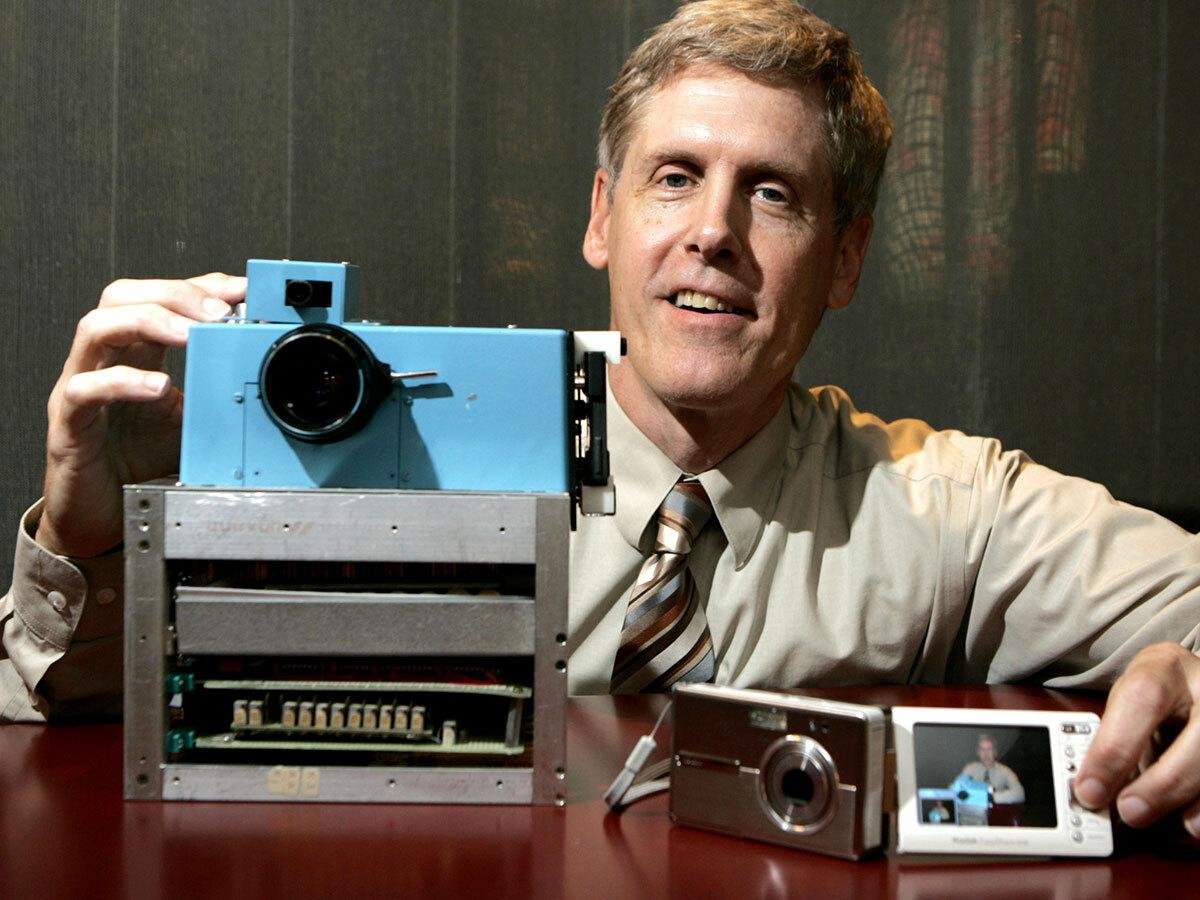


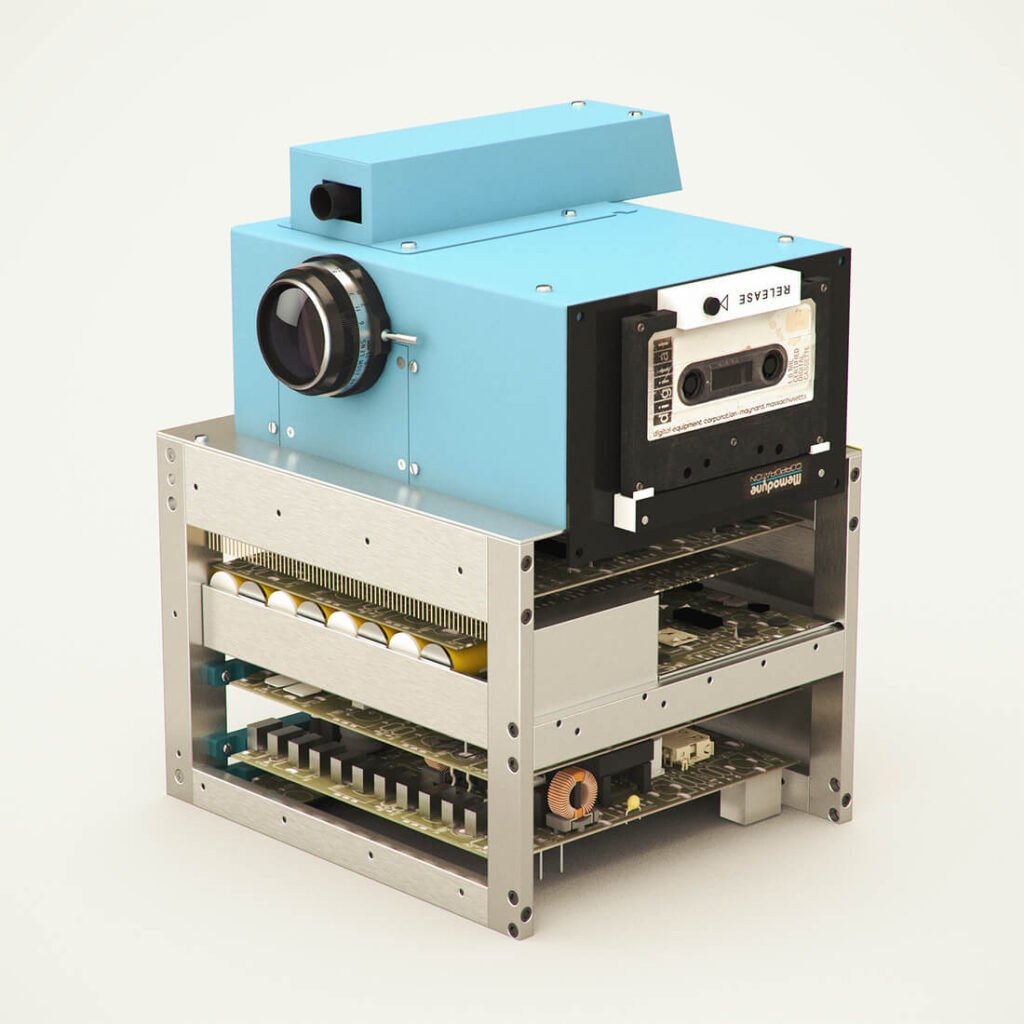
In 1975, inside a laboratory at Eastman Kodak, engineer Steven Sasson developed a device that was clunky, bulky, and imperfect — but revolutionary. It recorded black-and-white images and stored them on cassette tape. With a resolution of just 0.01 megapixels, it was crude by today’s standards, but it worked. It was the world’s first digital camera — a technology that would reshape visual communication forever.
When Sasson demonstrated the prototype to company leadership, the reaction was cautious. Executives recognised its potential, but they also saw the threat it posed to Kodak’s core film business. Film rolls, chemical processing, and photo paper sales accounted for the majority of Kodak’s revenue — and executives feared cannibalising that cash cow. Rather than embracing digital as the future, Kodak chose to protect its dominant present.
A Giant Teetering on the Edge
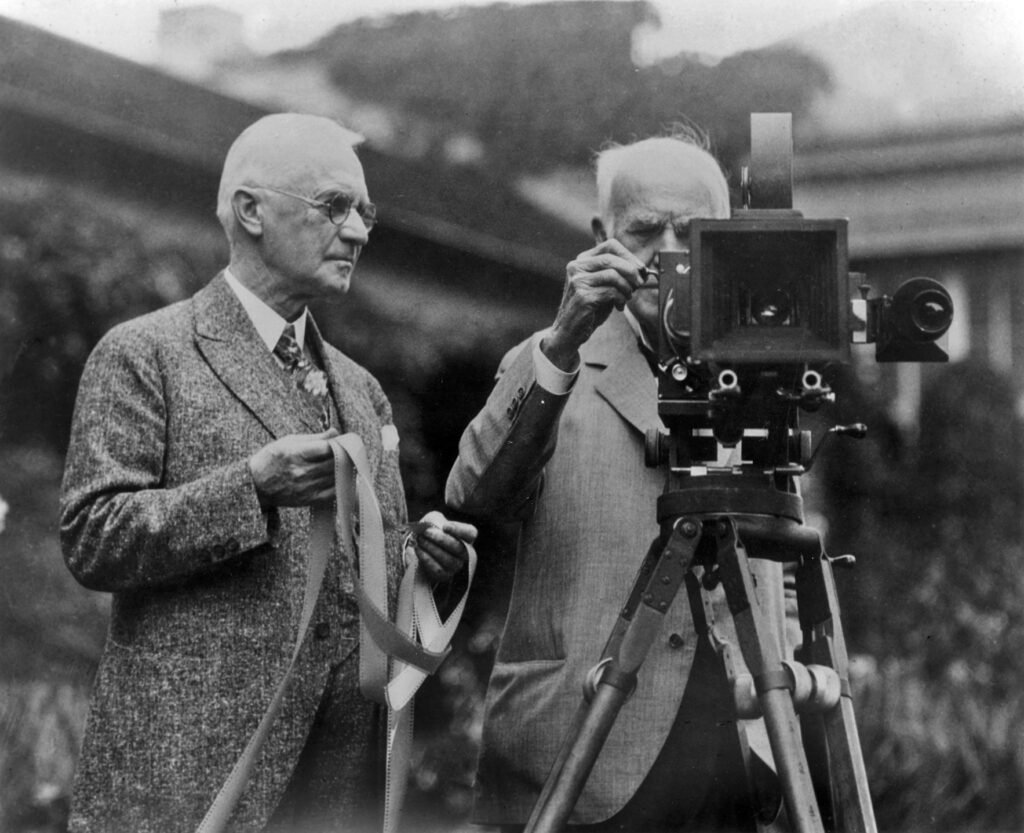
Throughout the 20th century, Kodak was synonymous with photography. By the late 1990s, it employed over 140,000 people globally and controlled approximately 90% of film sales in the U.S. alone. In 1996, Kodak reported annual revenues of over $16 billion, much of it from film and processing services. Advertisements, brand recognition, and global distribution channels reinforced its dominance.
Yet beneath the surface, investors and analysts saw storm clouds forming. From 1999 to 2004, global shipments of digital cameras skyrocketed from under 1 million units to more than 30 million, while demand for photographic film began declining sharply. By 2002, film sales revenues had dropped almost 10% year-on-year, signalling a structural shift in consumer behaviour.
Meanwhile, digital cameras were emerging not just as novelties, but as mainstream products. The market was moving faster than Kodak’s strategy.
Innovation without Commitment
Kodak was not blind to digital technology. The company invested significantly in research and development and accumulated over 1,000 patents in digital imaging by the late 1990s. Its engineers built prototypes and tested digital products internally. The problem was not technological capability; it was strategic hesitation.
Kodak leadership feared that fully commercialising digital cameras would undermine film sales — the company’s primary profit engine. Film and development services had generated consistent recurring revenue for decades, and executives believed that gradual adoption would protect cash flow. They treated digital as an adjunct, not a core future business.
This cautious approach meant that Kodak was often a fast follower rather than a first mover in the consumer digital market. While the company eventually released digital cameras, it did not do so with the urgency or scale necessary to capture market leadership.
Also Read: Kenya’s Economy in 2026: Are We Heading in the Right or Wrong Direction?
Competitors Capitalise, Kodak Hesitates
While Kodak hesitated, competitors moved decisively. Firms such as Sony and later Canon Inc. and Nikon Corporation leveraged digital cameras to win over consumers. Without legacy film businesses to protect, these companies embraced innovation with full force, improving digital sensor technology, reducing costs, and expanding global distribution.
By 2003, global digital camera sales had soared to more than 40 million units annually, while traditional film camera sales declined by two-thirds over the previous decade. Apple’s launch of the iPhone in 2007, which integrated high-quality cameras into a multipurpose pocket device, accelerated the disruption even faster.
Kodak’s market share in cameras and imaging devices shrank rapidly. What once felt like a future trend became an immediate reality.

The Financial Slide
By the mid-2000s, Kodak’s earnings reflected the competitive pressure it had ignored. Annual revenue peaked around $19 billion in 2004 but then began a downward spiral. By 2010, revenue had fallen to under $10 billion, a decline of nearly 50% in less than a decade. Costs associated with maintaining outdated manufacturing infrastructure and unsold film inventory weighed heavily on margins.
Kodak tried repositioning itself as a digital services and printing company, publishing glossy ads and promoting new products. Yet these efforts were too little, too late. Shareholders, frustrated by stagnation and declining dividends, began divesting. Between 2005 and 2011, Kodak’s market valuation plummeted by more than 80%, wiping out billions in shareholder wealth.
These figures illustrate more than a business slowdown; they represent the economic cost of hesitation.
The Bankruptcy That Shocked an Industry
In 2012, Kodak filed for Chapter 11 bankruptcy protection. The company’s collapse marked the end of an era for an organisation once valued as one of America’s most dominant brands. The bankruptcy process forced massive restructuring, thousands of layoffs, and the sale of patents and assets to stay afloat.
Kodak was not destroyed by competitors. It was undone by its own reluctance to transform decisively. The firm had invented the digital future but chose to defend the past.
What Today’s Leaders Must Learn
Kodak’s downfall offers a stark lesson for modern executives and entrepreneurs confronting digital disruption in fields like AI, fintech, e-commerce, and renewable energy. Innovation without commitment is not innovation at all — it is survival theatre.
Many organisations today face choices similar to Kodak’s: protect legacy products or invest boldly in disruptive change. Some cling to profitable business lines while treating emerging technologies as experimental. Others adopt new tools only after competitors have proven them indispensable.
Leadership requires more than curiosity about future trends. It demands the courage to shift resources, even when it threatens short-term revenue. It requires prioritising long-term relevance over temporary comfort.

Bold Transformation Beats Hesitation
Sustainable success does not come from holding on to what once worked. It comes from inventing what comes next. Kodak’s story proves that when companies prioritise incremental adaptation over radical reinvention, they risk losing everything.
Today’s most resilient companies channel disruption — they do not evade it. They reposition resources toward strategic growth areas early, test boldly, and pivot quickly when market signals demand it. Whether it is artificial intelligence transforming customer service or digital platforms reshaping finance, leadership must anticipate change rather than react to it.
In a world where technology cycles compress rapidly, hesitation is costly. And as Kodak demonstrated, the price of waiting is often far higher than the price of acting.
Previous Post
Next Post