Now Reading: Nigeria Suspends Petrol Import Licences, Monopoly Now With Dangote
-
01
Nigeria Suspends Petrol Import Licences, Monopoly Now With Dangote
Nigeria Suspends Petrol Import Licences, Monopoly Now With Dangote



Nigeria has suspended the issuance of gasoline import licences for a second consecutive month as regulators move to prioritise domestic fuel production and reduce reliance on imported petrol.
Data from the Nigerian Midstream and Downstream Petroleum Regulatory Authority shows that no new petrol import licences were issued in February, while the Crude Oil Refineries Association of Nigeria confirmed that none have been granted so far in March.
The decision signals a stronger push by Nigerian authorities to enforce provisions of the Petroleum Industry Act, which allows petrol imports only when domestic refining capacity cannot meet national demand.
Regulators say current supply from local refineries is sufficient to meet consumption levels, effectively removing the need for new import permits.
The shift represents a significant win for Africa’s largest refinery, owned by Nigerian billionaire Aliko Dangote.

The massive Dangote Refinery has steadily increased production since beginning operations and now supplies a substantial share of Nigeria’s petrol demand.
According to industry data, the refinery supplied about 36.5 million litres of petrol and roughly 8 million litres of diesel to the domestic market in February alone.
Regulators concluded that these volumes, combined with existing imported stock, were adequate to meet the country’s needs.
Nigeria’s average petrol consumption also declined slightly to about 56.9 million litres per day in February, down from 60.2 million litres in January, easing pressure on supply.
For years, Africa’s largest oil producer relied heavily on imported petrol due to limited domestic refining capacity and repeated shutdowns at state-owned refineries.
The Dangote facility, with the capacity to process 650,000 barrels of crude per day, was designed to reverse that dependency and transform Nigeria into a net exporter of refined petroleum products.
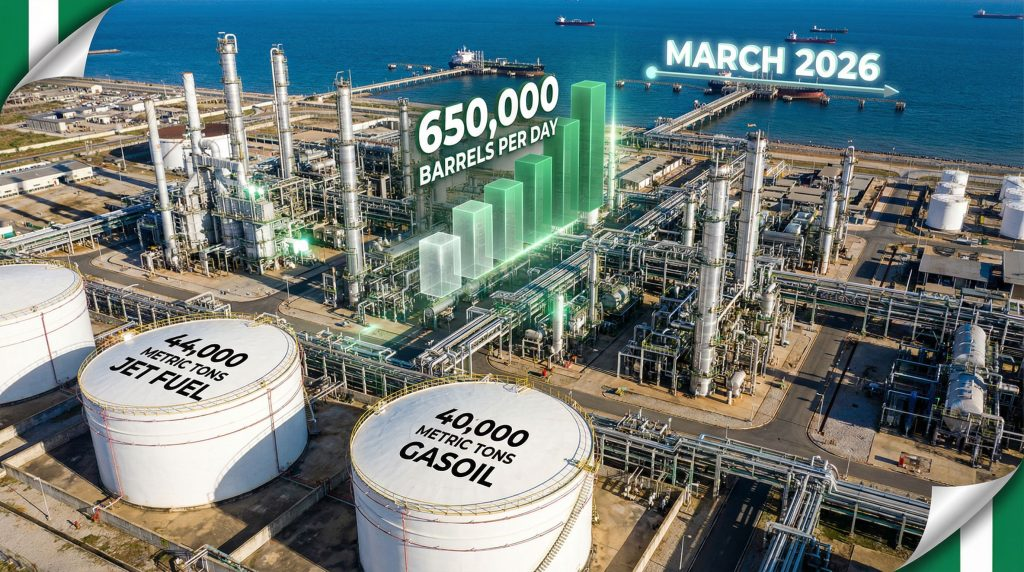
Industry stakeholders have long argued that continued fuel imports undermine local refining investments by squeezing profit margins for domestic producers.
Eche Idoko, spokesperson for the Crude Oil Refineries Association of Nigeria, welcomed the regulator’s stance, saying the move would help protect local refining operations.
“For us, anything that protects local production is a good move. The challenge now is to sustain the momentum,” Idoko said.
However, the policy shift has also raised concerns among some analysts who warn that limiting imports could reduce competition in the downstream fuel market if domestic supply becomes dominated by a small number of refiners.
Meanwhile, petrol prices in Nigeria have come under pressure from global market volatility. Fuel pump prices have surged by more than 50 per cent following recent geopolitical tensions in the Middle East, which pushed global oil prices higher.
Officials say the government will continue monitoring domestic supply levels and may reissue import licences if local production falls short of national demand.
Read Also: Africa Doubles Down on Foreign Oil and Gas Investments as Libya Taps Chevron and Eni – Business News
Related Posts


Previous Post
Next Post