Now Reading: Rising Food and Electricity Costs Push Kenya Inflation to 4.4 Per cent in March
-
01
Rising Food and Electricity Costs Push Kenya Inflation to 4.4 Per cent in March
Rising Food and Electricity Costs Push Kenya Inflation to 4.4 Per cent in March



Kenya’s annual inflation rose to 4.4 per cent in March 2026, driven largely by sharp increases in food prices, electricity costs, and transport expenses, according to the latest data from the Kenya National Bureau of Statistics (KNBS).
The Consumer Price Index increased from 149.20 in February to 150.00 in March, translating to a monthly inflation rate of 0.5 per cent, while the year-on-year rate stood at 4.4 per cent.
The rise highlights growing pressure on household budgets, particularly as essential goods and services continue to dominate consumer spending.
Food and non alcoholic beverages, transport, and housing-related costs account for more than 57 per cent of the total consumer basket, making them key drivers of inflation trends.

Food prices recorded the steepest increase, rising by 7.7 per cent compared to March last year.
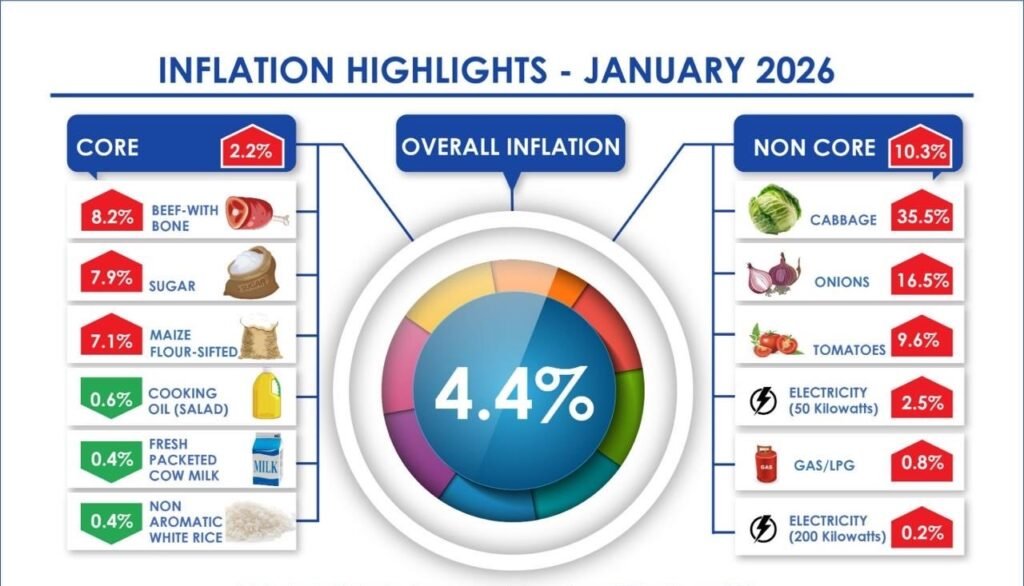
Tomatoes saw one of the sharpest spikes, with prices climbing 23.2 per cent year on year to an average of Ksh 99.60 per kilogram.
Potatoes also surged by 18.8 per cent over the same period, reflecting persistent supply and cost pressures in the food sector.
On a monthly basis, tomato prices rose by 13.3 per cent, underscoring the volatility in fresh produce markets that continues to affect household spending patterns.
Despite the upward trend, some food items provided limited relief. Prices for sugar, maize grain, and cabbage declined slightly in March, though these reductions were not enough to offset the broader increase in food costs.
Transport costs rose by 3.8 per cent over the year, although fuel prices remained unchanged during the review period. Analysts say this stability in fuel costs helped prevent a sharper increase in overall inflation, even as other categories recorded upward pressure.

Housing and utility costs also contributed to inflation, with the category covering housing, water, electricity, gas, and other fuels rising by 2 per cent annually.
Electricity prices increased month on month, with the cost of 50 kilowatt hours rising by 2.5 per cent and 200 kilowatt hours by 2.2 per cent, adding to the financial burden on households.
Other sectors recorded moderate increases. The health index rose by 2.7 per cent over the year, while education costs increased by 3.3 per cent.
Prices for personal care items and services also edged higher, reflecting broad-based cost pressures across the economy.
While the headline inflation figure remains within the Central Bank’s target range, economists note that underlying pressures, particularly in food and utilities, continue to shape the cost of living for many households.
The data also highlights a growing disconnect between official inflation figures and consumer experience. Even where some prices have stabilised or declined on a monthly basis, year-on-year increases remain significant, meaning households are still adjusting to higher overall costs.
For many Kenyans, the impact is most visible in daily spending. Rising prices of staple foods and electricity directly affect household budgets, while increases in transport and healthcare costs add further strain.

Looking ahead, analysts warn that inflation risks remain, particularly in the context of global uncertainty. Ongoing geopolitical tensions, including disruptions in global energy markets, could push up input costs and feed into domestic prices in the coming months.
For policymakers, the challenge will be to balance price stability with economic growth, ensuring that inflation remains contained while supporting household purchasing power through targeted measures.
As Kenya navigates these pressures, the March inflation data offers a clear signal that while price growth may appear moderate on paper, the cost of living remains a central concern for households across the country.
Read Also: Why Kenya’s Cost of Living Remains Stubbornly High – Business News
Previous Post
Next Post