Now Reading: Tea Sector Poised for Major Policy Reforms Under KTDA and KIPPRA Partnership
-
01
Tea Sector Poised for Major Policy Reforms Under KTDA and KIPPRA Partnership
Tea Sector Poised for Major Policy Reforms Under KTDA and KIPPRA Partnership



The Kenya Tea Development Agency (KTDA) has entered into a strategic partnership with the Kenya Institute for Public Policy Research and Analysis (KIPPRA) to conduct a comprehensive review of its institutional policy framework to ensure consistency with evolving regulatory and market realities.
The collaboration, formalised during a high-level meeting at Majani Plaza in Nairobi, brought together KTDA leadership led by National Chairman Chege Kirundi and Acting Group Chief Executive Officer Francis Miano, alongside a team of policy experts from KIPPRA headed by Executive Director Eldah Onsomu.
KTDA said the initiative is designed to strengthen governance structures, update outdated institutional policies, and ensure the organisation remains aligned with Kenya’s evolving regulatory framework and global market realities.
The move comes at a time when Kenya’s tea sector, one of the country’s most important export industries, is grappling with regulatory changes, geopolitical disruptions in key markets, and growing scrutiny over governance and farmer returns.
Strengthening Governance in a Farmer-Owned Institution
KTDA manages tea processing factories on behalf of hundreds of thousands of smallholder farmers across Kenya, making it a central pillar of the country’s agricultural economy.
The organisation oversees the production, processing, and international marketing of tea from farmer-owned factories.
According to KTDA’s chairman, Chege Kirundi, stronger institutional policies will help reduce operational risks and improve accountability across the agency’s network of factories.
“Clear governance structures and well-defined marketing and trade policies are essential in reducing institutional risk and improving oversight,” Kirundi said.
He added that stronger policies will also help prevent disputes within the sector while promoting transparency and compliance throughout KTDA’s operations.

Under the partnership, KIPPRA will conduct a comprehensive, evidence-based audit of KTDA’s existing policies. The review will identify gaps, update outdated provisions, and recommend new frameworks where necessary.
The exercise will also assess whether current policies adequately support KTDA’s strategic objectives, particularly in marketing, trade, and governance.
Navigating Market Volatility
The policy review comes amid mounting pressure on Kenya’s tea exports from geopolitical tensions affecting several of the country’s key export markets.
Tea remains Kenya’s leading agricultural export and a major source of income for rural households. The country is the world’s largest exporter of black CTC tea and consistently ranks among the top global producers by volume.
However, the industry’s heavy reliance on a small number of international markets has exposed it to external shocks.
Data from the Mombasa tea auction shows that about ten countries account for more than 80 per cent of Kenya’s tea exports, with Pakistan remaining the single largest buyer.
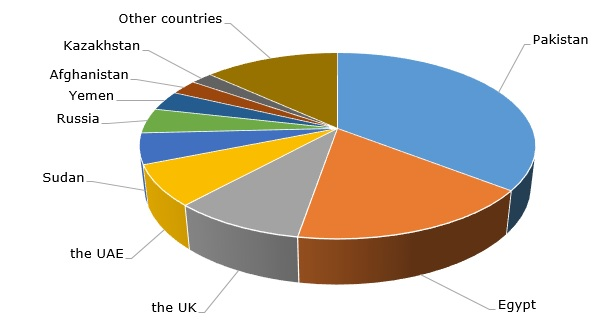
Pakistan alone imported more than 21 million kilograms of Kenyan tea in a single month in late 2025, representing roughly 40 per cent of exports during that period.
Other major destinations include Egypt, the United Kingdom, Russia, Kazakhstan, the United Arab Emirates, India, Iran, Oman, and Yemen.
Many of these markets are currently affected by political instability, economic pressures, or geopolitical tensions that threaten trade routes and payment channels.
Conflict and Trade Risks
The escalating conflict in the Middle East has added new uncertainty to tea exporters who rely heavily on the region for sales.
Security concerns around the Strait of Hormuz, one of the world’s most critical maritime shipping corridors, have increased insurance costs and freight charges for vessels operating in the Gulf.
Shipping companies have already begun rerouting some vessels away from the Red Sea and Gulf routes due to the risk of missile or drone attacks linked to regional conflicts.
For tea exporters, such disruptions translate into longer shipping times, higher logistics costs, and potential contract delays.
Iran, once a major consumer of Kenyan tea, has also been an unpredictable market. In recent years, the country suspended imports following disputes over licensing and foreign exchange management.
Negotiations aimed at reopening the market remain uncertain amid broader geopolitical tensions.
Policy Reform to Support Market Strategy
Against this backdrop, KTDA is seeking to strengthen its marketing strategies and international trade policies to help Kenyan tea remain competitive globally.
Acting Group CEO Francis Miano said the policy review forms part of a broader reform programme aligned with KTDA’s long-term strategic plan.
The reforms aim to improve operational stability, enhance governance oversight, and ultimately safeguard returns for smallholder farmers.
By working with KIPPRA, KTDA hopes to bring independent research and policy expertise to its transformation agenda.
KIPPRA, a government think tank specialising in economic policy analysis, will evaluate KTDA’s policy framework against international best practices and Kenya’s regulatory requirements.
The findings are expected to guide future structural and operational adjustments within the agency.
Protecting Farmer Livelihoods
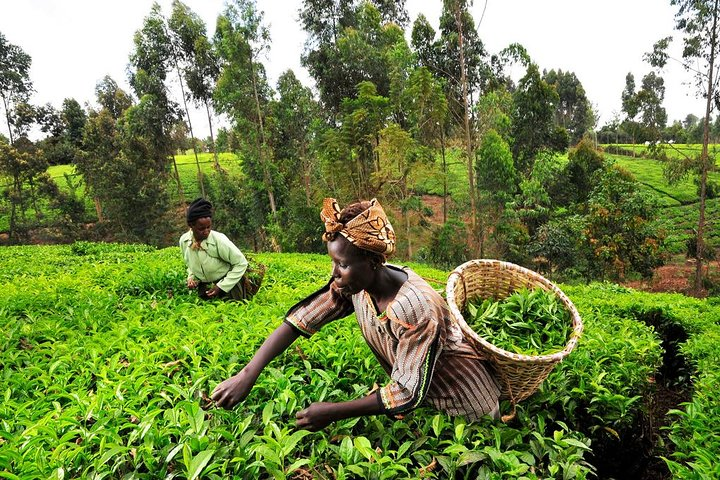
The outcome of these reforms carries significant implications for Kenya’s tea-growing zones.
Hundreds of thousands of smallholder farmers depend on tea production as their primary source of income, and the sector remains one of the country’s largest employers.
KTDA says the policy review is ultimately aimed at delivering measurable benefits for these farmers, including improved revenue management, stronger marketing performance, and greater institutional transparency.
By aligning governance reforms with market intelligence and global trade realities, the agency hopes to strengthen Kenya’s position in the global tea industry while protecting the livelihoods of farmers who form the backbone of the sector.
As geopolitical uncertainties continue to shape global commodity markets, policymakers and industry leaders are increasingly recognising that strong governance and adaptable strategies will be essential to sustaining Kenya’s tea exports in the years ahead.
Read Also: Mombasa Tea Sale Rules Tighten for KTDA Operations – Business News