Now Reading: The 2026 WRC Safari Rally Is Becoming an Economic Institution, Not Just an Event
-
01
The 2026 WRC Safari Rally Is Becoming an Economic Institution, Not Just an Event
The 2026 WRC Safari Rally Is Becoming an Economic Institution, Not Just an Event



The World Rally Championship (WRC) Safari Rally Kenya has evolved into a powerful economic engine for the country, serving as a long-term driver of tourism, finance, and regional enterprise, in addition to the promise of a motorsport spectacle.
Recently, the Kenya Commercial Bank (KCB) invested approximately Sh227 million in the 2026 Safari Rally, positioning the rally as a structured economic platform that channels capital into local businesses, talent development, and sustainability initiatives.
The 2026 sponsorship brings KCB’s total investment in the WCR Safari Rally since 2021 to nearly Sh1 billion.
Large-scale sponsorships such as KCB’s increasingly function as quasi-infrastructure funding.
Unlike traditional sponsorship models that concentrate on advertising returns, the Safari Rally’s financial ecosystem disperses money across multiple economic layers that include hospitality, transport, retail trade, media, logistics, and informal enterprise.
This year’s rally is expected to attract tens of thousands of local and international visitors, with Naivasha remaining the operational hub.
This concentration creates a predictable seasonal economic cycle, allowing businesses like hotels, Airbnb operators, food vendors, tour guides and transport providers to plan investments, staffing and inventory months in advance.
Such predictability is critical in an economy where volatility often constrains long-term planning.
Importantly, the rally has also catalysed private capital investment. Serviced apartments, boutique hotels, fuel stations and supermarkets that have sprung up since 2021 are not temporary responses to a one-off event, but fixed assets that continue generating economic returns long after the engines fall silent.
Deepening Financial Inclusion Through the WRC Rally Economy
One underappreciated impact of the Safari Rally is its role in accelerating financial inclusion.
Cashless payments, largely driven by mobile money, have become the backbone of rally commerce, enabling thousands of micro-traders to transact efficiently in remote locations.
For vendors operating pop-up stalls along rally routes, digital payments reduce risks associated with cash handling while increasing transaction volumes. Banks and fintechs benefit indirectly as high transaction density provides real-world testing grounds for payment systems under pressure, improving reliability and user trust.
This intersection between sports, mobile money and micro-enterprise makes the rally a living laboratory for Kenya’s digital economy.
Additionally, KCB’s continued backing of regional rally drivers highlights another long-term economic lever of talent development.
Supporting drivers from Kenya, Rwanda and Uganda does more than diversify the competition field; it positions East Africa as a motorsport talent hub.
This matters economically because talent retention within the region reduces dependence on imported expertise while opening pathways for sponsorship, engineering, mechanics training and motorsport-related education. Over time, this can nurture auxiliary industries such as vehicle engineering services, motorsport media production and sports event management.
The result is skills transfer that extends well beyond rally driving itself.
Sustainability Moves from the Periphery to Core Strategy
Environmental sustainability, once treated as a peripheral concern, is now central to the rally’s economic legitimacy.
Corporate sponsors increasingly link their support to measurable environmental outcomes, such as tree planting, waste management and youth climate education.
This alignment is not accidental. As global sporting bodies tighten sustainability requirements, Kenya’s ability to host the Safari Rally beyond 2026 will hinge on demonstrating credible environmental stewardship.
Investments in sustainability are therefore not just ethical choices but strategic ones, safeguarding future hosting rights and protecting tourism revenues tied to wildlife and natural landscapes.
Why 2026 Matters More Than Previous Editions
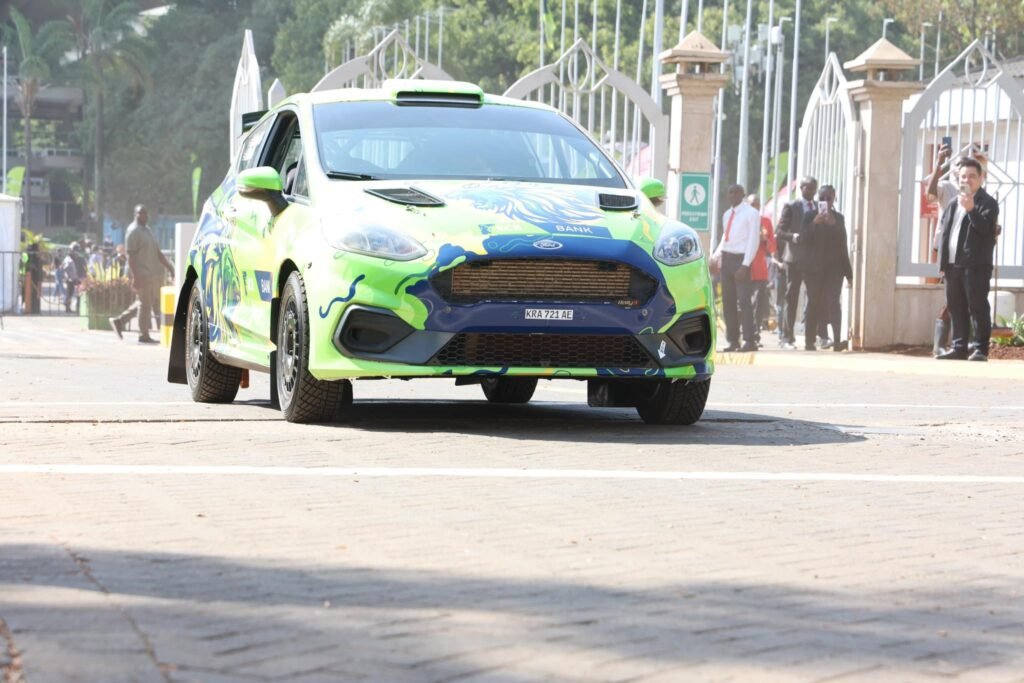
The 2026 rally represents a turning point. With hosting rights under negotiation and discussions around privatisation gaining momentum, the event is transitioning from state-supported spectacle to commercially anchored enterprise.
Privatisation could unlock efficiency, reduce fiscal pressure on the government and attract diversified private capital.
If executed carefully, it would allow the rally to operate year-round as a tourism brand rather than a once-a-year event, driving conferences, training camps, and motorsport tourism packages beyond rally week.
At its core, the Safari Rally mirrors Kenya’s broader economic trajectory: private-sector-led growth, digital-first transactions, sustainability-driven investment and regional integration.
The Sh227 million sponsorship headline may capture attention, but its true significance lies in what it sustains, a growing ecosystem where sport, finance, tourism and community livelihoods intersect.
By 2026, the Safari Rally will not just showcase Kenya to the world; it will quietly underpin economic activity that lasts well beyond the roar of rally cars.
In that sense, the Safari Rally is no longer just revving engines; it is revving the economy.
Read Also: Why Electric Buses Are Becoming Profitable Transport Assets – Business News
Previous Post
Next Post