Now Reading: Watchdogs Flag Potential Abuse Loopholes in the Proposed KSh 5 Trillion Infrastructure Fund Bill
-
01
Watchdogs Flag Potential Abuse Loopholes in the Proposed KSh 5 Trillion Infrastructure Fund Bill
Watchdogs Flag Potential Abuse Loopholes in the Proposed KSh 5 Trillion Infrastructure Fund Bill



The proposed National Infrastructure Fund Bill 2026 is facing mounting opposition from key financial watchdogs who warn that the KSh 5 trillion fund, as currently structured, offers loopholes for potential abuse and financial leakage.
In a rare convergence of concern, the Controller of Budget, the Auditor General, the Institute of Certified Public Accountants of Kenya (ICPAK), and the Institute of Public Finance have all submitted strongly worded memoranda to the National Assembly Finance Committee, flagging fundamental flaws in a bill that seeks to create one of the most powerful financial entities in the country’s history.
A Fund Outside Public Finance Rules
The most explosive concern comes from Controller of Budget, Margaret Nyakang’o, whose office has questioned the legality of establishing the infrastructure fund as a corporate entity rather than a public fund, a distinction that could exempt it from standard public finance safeguards.
“The Fund has been established as a corporate entity and not a public fund, making it prone to abuse,” Nyakang’o’s office stated in its submission to Parliament.
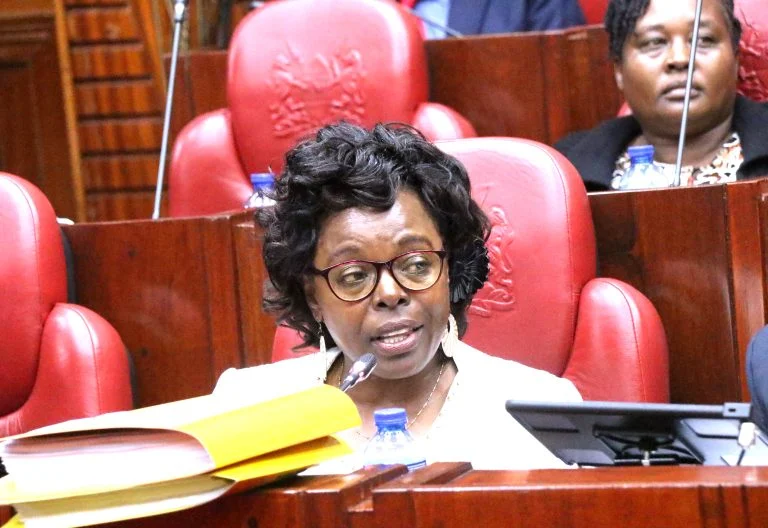
Even more alarming, the bill explicitly excludes the Controller of Budget from authorising withdrawals and expenditure from the fund, a direct contradiction of constitutional mandates.
Under Article 206 of the Constitution and the Public Finance Management Act, the Controller of Budget must authorise all withdrawals from public funds.
“This creates a legal loophole where funds could be moved without the constitutional and PFM Act thresholds,” the Auditor General’s office warned in its detailed analysis of the bill.
The KICC Question: Where Do Sale Proceeds Go?
The Institute of Public Finance raised a practical concern that cuts to the heart of the ambiguity.
“If we are to sell KICC, how do we ensure that the money goes to the National Infrastructure Fund and not the Consolidated Fund?” the institute posed.
The bill does not explicitly provide for the exclusion of money from the Consolidated Fund, meaning proceeds from asset sales or other revenue streams would legally have to pass through the Consolidated Fund first, where they would be subject to the very oversight mechanisms the bill appears designed to bypass.
Borrowing Without Constitutional Guardrails
The Auditor General’s office flagged Clause No.5 of the bill, which empowers the Fund to borrow money but lacks explicit alignment with Article 206 of the Constitution and the Public Finance Management Act.
“This may lead to loopholes in the management and oversight of public funds,” the office warned, suggesting that billions could be borrowed without the usual constitutional scrutiny applied to public debt.
Procurement Nightmares Ahead
Perhaps the most technical but consequential concern relates to procurement.
Clause No.12 empowers the Fund’s board to invest in projects through equity and debt, and to dispose of assets, but fails to specify procedural safeguards.
The Auditor General noted that the clause does not require competitive bidding or public auction as mandated by the Public Procurement and Asset Disposal Act.
This omission could allow assets to be sold or contracts awarded without transparency, opening doors for corruption and kickbacks.
Similarly, Clause No.24 tasks the Cabinet Secretary with developing standards for competitive tender processes and public participation, areas already comprehensively covered by existing procurement law.
“There is a potential risk of overlap and/or conflicts between the laws,” the Auditor General cautioned.
Board Independence and Remuneration Concerns
ICPAK has called for the Fund to be managed by an independent entity, not the National Treasury, to enhance credibility and transparency.
“We want oversight and credibility… which must be enhanced through funds management by an independent body,” said ICPAK council member Hesbon Omollo.
The Auditor General further flagged that Clause No.6 on board constitution needs redesigning to include independent directors with infrastructure expertise. Currently, the board composition leans heavily toward government officials.
On remuneration, Clause No.13 vests the power to set director pay solely with the Cabinet Secretary for National Treasury, without requiring consultation with the Salaries and Remuneration Commission (SRC), another potential loophole for excessive compensation.
Conflicting Investment Mandates
Clause No.21 grants the board wide powers to develop investment policy and monitor agreements, but makes no reference to the Investment Promotion Act, which, through Section 27, provides similar powers to the National Investment Council. This creates potential for conflicting mandates and jurisdictional confusion.
What Experts Want Changed
The financial watchdogs have united around a clear set of amendments:
- Authorise the Controller of Budget to approve all withdrawals from the Fund
- Integrate the Fund fully into the budget cycle for parliamentary oversight
- Require quarterly and annual performance reporting to the Controller of Budget
- Clarify the governance framework and applicability of PFMA
- Align borrowing powers with constitutional provisions
- Strengthen procurement safeguards with explicit competitive bidding requirements
- Consult SRC on director remuneration
- Ensure independent directors with infrastructure expertise on the board
What the Bill’s Sponsor Says
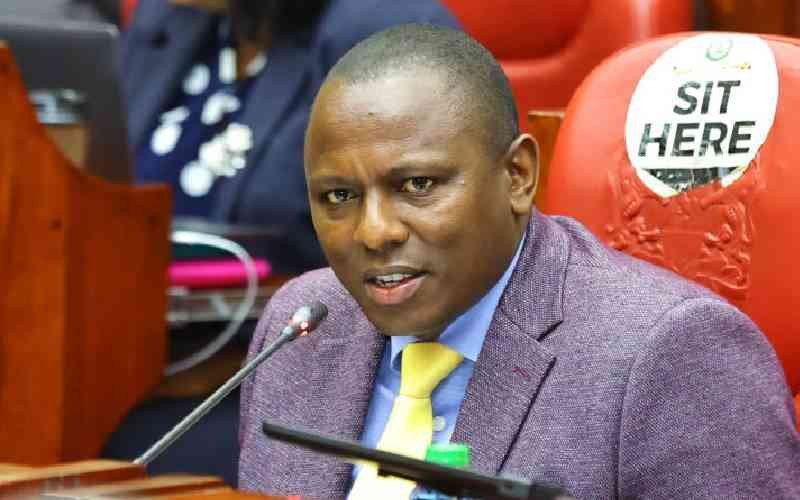
National Assembly Majority Leader Kimani Ichung’wah, the bill’s sponsor, maintains that the legislation “will unlock funding for development and fix long-standing infrastructure problems.”
He argues that allowing the Fund’s management to make investment decisions without returning to Parliament for approval each time will accelerate project delivery.
The bill allows the Fund to raise money from government sources, loans, grants, and private investors, and to partner with private companies through concessions, joint ventures, and other arrangements.
The Stakes
If passed in its current form, the National Infrastructure Fund would become one of the most powerful financial entities in Kenya, controlling trillions of shillings with significantly less oversight than standard public funds.
Supporters argue this agility is necessary to attract private investment and fast-track infrastructure development.
But critics warn that the loopholes identified create a perfect storm: a fund outside normal public finance rules, with borrowing powers unchecked by constitutional safeguards, procurement processes exempt from competitive bidding requirements, and withdrawals not requiring Controller of Budget authorisation.
“If managed well, the Fund could drive growth and create jobs. If misused, it could deepen inequality, increase living costs, and weaken public trust,” Ichung’wah acknowledged during the bill’s introduction.
Next Steps
The National Infrastructure Fund Bill 2026 has undergone its first reading in Parliament and returns for second reading next week, ahead of public participation.
The mounting concerns from financial watchdogs suggest a contentious legislative battle ahead, with amendments almost certain as stakeholders push to close what they describe as dangerous loopholes.
The outcome will determine whether trillions in public resources are managed transparently or lost to the leakage that has plagued too many public funds before it.
Read Also: Kenya ranks second most innovation-ready country in Africa, global index shows – Business News
Previous Post
Next Post