Now Reading: Debt and Fiscal Pressures Driving Kenya’s IMF Support Talks
-
01
Debt and Fiscal Pressures Driving Kenya’s IMF Support Talks

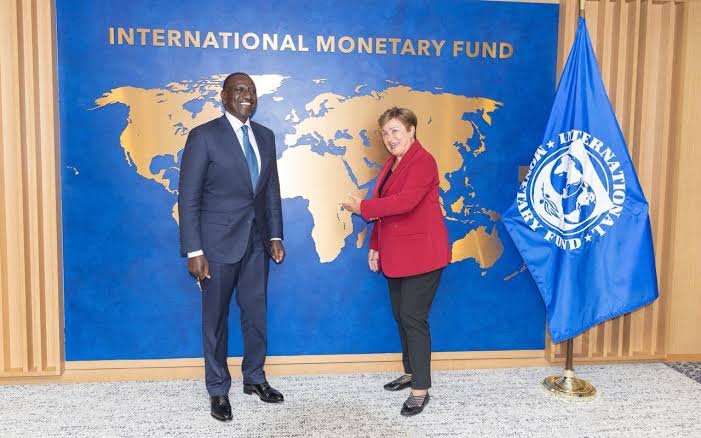

IMF support is once again in focus Kenya seeks financial backing from the International Monetary Fund (IMF) amid rising debt servicing costs, widening fiscal pressures, and slower revenue growth. With public debt climbing past KSh 11 trillion and the government preparing to reopen formal discussions on a new program, the request for IMF lifelines reflects deepening economic strains and the need for structured financing to stabilize public finances and sustain investor confidence.
Debt pressures and the push for IMF support
Kenya’s public debt has surged in recent years, driven by increased domestic and external borrowing. Total public debt stood at about KSh 11.5 trillion by March 2025, up from KSh 10.4 trillion a year earlier, with domestic borrowing rising sharply as the government filled financing gaps. Domestic debt expanded 17 percent, while external borrowing also contributed to the overall increase.
The rising debt burden has gone hand in hand with climbing debt servicing costs, which now absorb a significant share of government revenue. According to fiscal reviews, Kenya’s debt service to revenue ratio has exceeded IMF-recommended thresholds, heightening concerns about sustainability and fiscal space. Credit rating agencies have flagged these risks, noting that heavy debt obligations and weak revenue performance could undermine fiscal consolidation efforts if left unaddressed.
See Also: How AMAC NSE Stock Growth Outpaces Market Expectations
Against this backdrop, the government has signaled its intention to reopen talks with the IMF on fresh loan programs and economic collaboration. Treasury and government officials have said that engaging with the IMF will help provide a clear financing pathway, especially as existing arrangements remain inactive and successor programs have yet to be finalized.
IMF support discussions have historically tied financing to structural reforms, including fiscal discipline, governance improvements, and monetary policy frameworks designed to strengthen macroeconomic stability. Although Kenya’s previous arrangement under the Extended Fund Facility and Extended Credit Facility has expired, there is still potential for new structured financing that could assist with balance of payments stability and debt restructuring over the medium term.
Balancing financing needs with reform conditions
One key challenge in securing Kenya IMF support has been compliance with conditions attached to programs. Past negotiations stalled or slowed as the IMF pushed for transparency, tighter fiscal management, and policy reforms such as anti-corruption measures. Recent audit reports by the IMF have highlighted governance vulnerabilities as a central factor in future funding discussions.
Kenyan officials have acknowledged these concerns, stressing that talks with the IMF will aim to strike a balance between accessing crucial financing and maintaining fiscal autonomy. Some policymakers have expressed cautious optimism, pointing to the importance of fiscal consolidation and revenue-enhancing measures to improve debt sustainability. However, there has also been reluctance to over-rely on IMF programs, with some Treasury officials preferring to exclude assumed IMF funding from future budgets until formal agreements are confirmed.
In parallel with IMF discussions, Kenya is exploring alternative financing avenues, including tapping diaspora bonds, concessional loans from multilateral partners such as the World Bank, and international capital markets. These efforts aim to diversify financing sources while mitigating the risks of onerous conditionalities associated with some IMF support program.
Securing Kenya IMF support would be a significant step in stabilizing the economy, particularly in shielding the shilling, bolstering foreign exchange reserves, and reassuring investors amid global uncertainties. However, the effectiveness of such program will hinge on Kenya’s willingness to commit to structural reforms that enhance transparency, improve tax mobilization, and constrain recurrent expenditures.
If successful, a fresh IMF program could help Kenya manage its debt trajectory more sustainably and reduce vulnerability to external shocks. But failure to secure timely support or to implement necessary reforms could exacerbate fiscal pressures, constrain public investment, and dampen economic growth prospects.
Previous Post
Next Post