Now Reading: Dangote Refinery Expands Fuel Exports Across Africa Amid Global Supply Disruptions
-
01
Dangote Refinery Expands Fuel Exports Across Africa Amid Global Supply Disruptions
Dangote Refinery Expands Fuel Exports Across Africa Amid Global Supply Disruptions

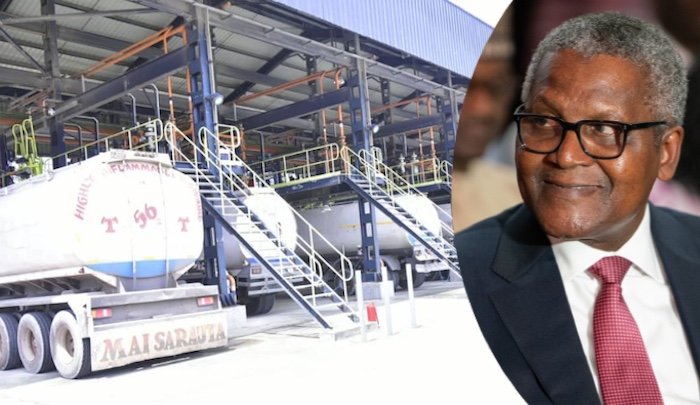

Africa’s fuel markets are undergoing a major shift as Nigeria’s Dangote Petroleum Refinery ramps up exports across the continent, stepping in to fill supply gaps created by disruptions in global oil flows linked to the ongoing Middle East conflict.
The Lagos-based refinery, owned by Africa’s richest man, Aliko Dangote, has begun exporting significant volumes of refined petroleum products, including gasoline, diesel, and jet fuel, to several African countries. The development marks a turning point for a continent that has long depended on imports from Europe and the Middle East.
With a refining capacity of 650,000 barrels per day, the Dangote refinery reached full operational capacity in February 2026 and has already shipped 12 cargoes of premium motor spirit totalling 456,000 metric tonnes. These exports have been delivered to countries including Côte d’Ivoire, Cameroon, Tanzania, Ghana, and Togo.
The surge in exports comes at a time when African nations are grappling with fuel shortages and rising prices following disruptions in global supply chains. The conflict involving Iran has significantly impacted shipping routes through the Strait of Hormuz, a critical passage that handles roughly one-fifth of the world’s oil and refined products.
As tanker traffic slows and insurance costs rise, many shipments from Gulf suppliers have been delayed or cancelled, leaving African countries scrambling for alternative sources of fuel.
Analysts estimate that up to 600,000 barrels per day of oil products that typically flow to Africa are now at risk, putting pressure on governments to secure new supply arrangements.
In this context, Dangote’s refinery has emerged as a strategic regional supplier.
Data from tanker trackers indicates that Nigeria’s exports of clean petroleum products surged to approximately 214,000 barrels per day in March, up from around 100,000 barrels per day in February. Exports specifically to other African countries more than doubled during the same period.
Several countries are now seeking long-term agreements with the refinery. South Africa is reportedly negotiating a 12-month supply contract, while Kenya, Ghana, and others have initiated discussions to secure steady fuel supplies.
The shift is particularly significant for African markets that have historically relied on distant suppliers. By sourcing fuel from a regional refinery, countries stand to benefit from shorter delivery times, reduced transport costs, and improved supply reliability.
Additionally, Dangote’s refinery produces Euro 5 standard fuels, which meet stricter environmental requirements and are better suited for modern engines compared to some imports currently used in African markets.
For Nigeria, the export drive represents a major economic opportunity. The refinery is generating foreign exchange earnings and reducing the country’s long-standing dependence on imported fuel, a paradox that has defined Africa’s largest oil producer for decades.
Officials say the facility is capable of meeting domestic demand while also supplying neighbouring countries, strengthening regional energy security and boosting intra-African trade.
However, challenges remain.
The refinery has faced criticism over fluctuating domestic fuel prices, driven by rising global crude costs and the need to import some feedstock due to insufficient local supply. Petrol prices in Nigeria have at times surged above N1,000 per litre, raising concerns about affordability.
There are also logistical and structural hurdles, including port congestion and security risks in the Gulf of Guinea, which could affect the smooth flow of exports.
Despite these issues, the broader impact of Dangote’s expansion is widely seen as positive.
For ordinary Africans, a reliable regional fuel supplier could mean fewer shortages, more stable prices, and reduced exposure to global market shocks. Countries that secure supply agreements with the refinery may be better positioned to manage the ongoing volatility in international energy markets.
The development also signals a deeper transformation in Africa’s energy landscape.
For decades, the continent has exported crude oil while importing refined products—a dynamic that has left many economies vulnerable to external disruptions. The Dangote refinery is beginning to reverse that trend, positioning Nigeria as a net exporter of refined fuels and reshaping regional supply chains.
As the Middle East conflict continues to disrupt traditional routes, more African governments are expected to turn to Dangote for supply.
Whether this shift becomes a lasting structural change or a temporary response to global instability will depend on how quickly traditional supply chains recover and how effectively the refinery can sustain production and distribution at scale.
For now, Dangote’s entry into regional fuel markets is redefining Africa’s energy dynamics, offering a closer, more reliable alternative in a time of global uncertainty.
Read Also: Africa to become Europe’s gas lifeline amid global energy crises – Business News
Related Posts


Previous Post
Next Post