Now Reading: Kenya’s fight against corruption needs more than political outrage
-
01
Kenya’s fight against corruption needs more than political outrage

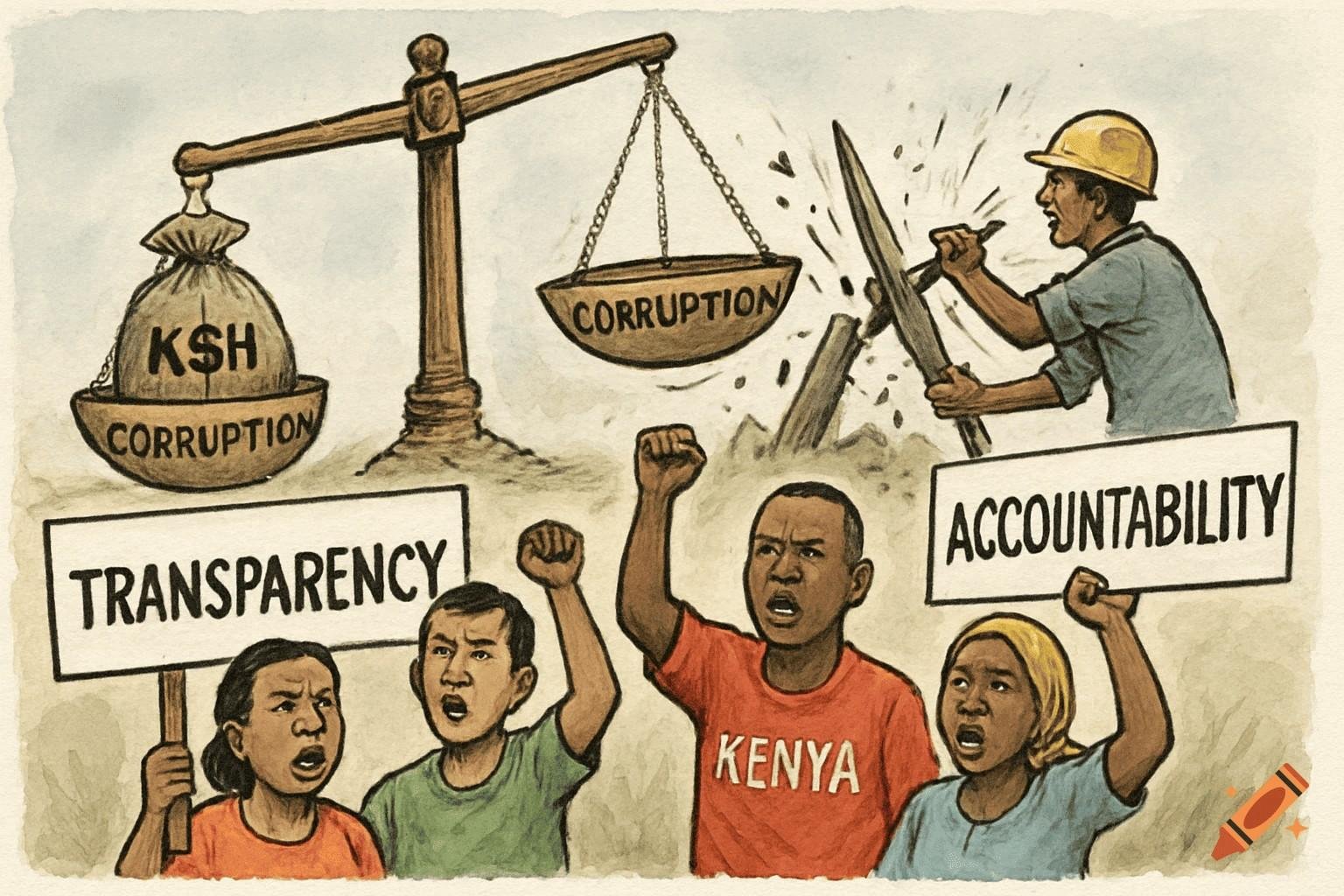

Kenya’s corruption debate is entering a more consequential phase, with concerns increasingly focused not only on stolen public money but on what happens when wealth, political influence, and weak institutions reinforce one another. Corruption in Kenya has long been associated with procurement scandals and misuse of public resources, but the deeper danger is the possibility that illicit wealth can be converted into political influence and institutional protection. The argument is that citizens, businesses, media, civil society, and oversight institutions must become more organized in resisting impunity. For the economy, the stakes are substantial because corruption can distort competition, redirect public spending, and make connections more valuable than productivity.

Corruption in Kenya threatens institutions and economic competitiveness
The most damaging form of corruption in Kenya is not necessarily the individual bribe. It is the system that allows questionable wealth to acquire legitimacy and influence.
This is because unexplained wealth can become political capital when it is used to finance campaigns, build public visibility, or purchase access to decision-makers. Also, specific allegations must be supported by evidence and due process rather than political accusation.
That distinction is essential. Fighting corruption cannot mean replacing evidence with suspicion. It requires institutions capable of investigating financial wrongdoing objectively, prosecuting proven offences, and recovering illicit assets through lawful processes.
The economic consequences reach far beyond government offices. When contracts are awarded because of political connections rather than efficiency, productive businesses lose opportunities. When public funds are diverted, taxpayers ultimately carry the cost through weaker infrastructure, services, and higher borrowing requirements.
The private sector also suffers. A company that competes on quality and price can find itself disadvantaged against an operator with political connections. Over time, that weakens investment incentives and rewards rent-seeking rather than innovation.
For Kenya, therefore, the fight against corruption is also a fight over the country’s economic model.

Corruption in Kenya requires stronger accountability from business and citizens
This article places significant responsibility on various institutions, including the Ethics and Anti-Corruption Commission, Directorate of Criminal Investigations, Financial Reporting Centre, Kenya Revenue Authority, and Office of the Director of Public Prosecutions and Registrar of Political Parties. Their credibility depends on applying the law consistently rather than selectively.
But institutional accountability cannot work without public participation.
Businesses have an interest in demanding transparent procurement and predictable regulation because a system that rewards political access eventually damages legitimate enterprise. Journalists can strengthen accountability by following ownership structures, contracts, and financial networks rather than focusing exclusively on political personalities. Young Kenyans, meanwhile, can influence outcomes through voter registration, public participation, and sustained scrutiny of elected officials.
See Also: AI is changing how Kenya sells its tourism experience
This is where corruption becomes a business story as much as a political one.
Investors need confidence that contracts will be honoured, competition will be fair and institutions will function independently. Entrepreneurs need an environment where innovation matters more than connections. Taxpayers need confidence that public revenue is being converted into productive investment rather than private wealth.
The answer is not political vengeance. It is justice, lawful investigation, due process, and democratic accountability rather than violence.
Kenya does not need another cycle in which one network replaces another.
It needs institutions strong enough that no network can capture them.
That may be the most important economic reform of all: creating a country where wealth earns influence through productive enterprise, not through access to power.
Related Posts



Previous Post
Next Post