Now Reading: Growing Turmoil: Aviation Strike Continues to Disrupt Kenya’s Airspace
-
01
Growing Turmoil: Aviation Strike Continues to Disrupt Kenya’s Airspace



Aviation strike continues to disrupt Kenya’s air transport sector, with mounting delays, cancellations, and safety warnings intensifying pressure on regulators, airlines, and unions to resolve the ongoing industrial dispute. The latest wave of disruptions has heavily affected operations at Jomo Kenyatta International Airport (JKIA), as well as other airports across the country. Passengers scheduled for early departures have faced long waits and abrupt cancellations, while airlines scramble to rework schedules amid limited operational capacity.
The industrial action involves members of the Kenya Aviation Workers Union (KAWU), including air traffic controllers — a critical component of flight coordination and airspace management. Their participation has amplified operational strain across the aviation ecosystem. In a statement issued Tuesday, the Kenya Airline Pilots Association (KALPA) described the situation as serious, warning that the ripple effects extend well beyond passenger inconvenience.
Aviation Strike Continues to Paralyse Schedules at JKIA
As the aviation strike continues, operational interruptions have intensified. Airlines are dealing with aircraft rotation challenges, crew scheduling adjustments, and growing passenger backlogs. The disruption at JKIA, Kenya’s primary international gateway, has had cascading effects on both domestic and international routes. Missed connections and rescheduled departures have compounded frustration among travelers, with airlines forced to issue advisories and manage rebooking logistics.
KALPA noted that the ongoing industrial action is affecting not just airline operations but also ground services and air traffic coordination, creating a multi-layered disruption within the sector. Beyond the immediate inconvenience, the pilots’ association has highlighted deeper systemic risks tied to prolonged uncertainty. With flight schedules compressed and operational pressure mounting, crew management has become increasingly complex.
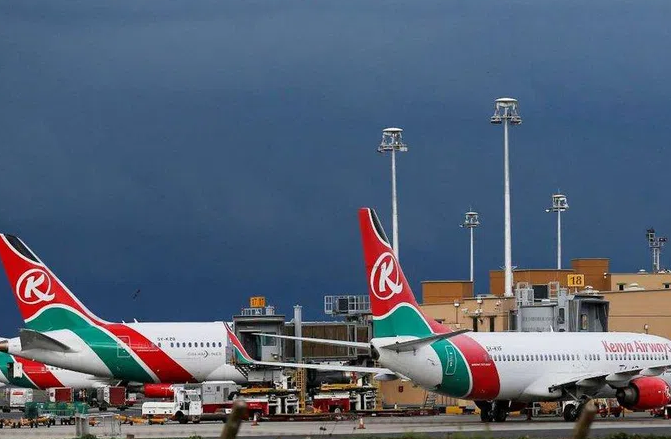
Aviation Strike Continues Amid Heightened Safety Concerns
While delays and cancellations dominate headlines, KALPA has stressed that safety remains the overriding concern as the aviation strike continues. The association warned that pressure on flight crews could interfere with scheduling and mandatory rest periods, raising the risk of fatigue. Aviation fatigue, globally recognized as a major safety hazard, can impair decision-making, reaction time, and situational awareness.
KALPA underscored the importance of strict adherence to internationally recognized Flight Duty Period (FDP) limits and mandatory rest requirements. These safeguards are embedded in aviation regulations to protect crews, passengers, and the broader integrity of the air transport system. “Aviation safety is non-negotiable,” the association stated, emphasizing that no operational pressure should justify breaching duty limits or rest protocols.
See Also: Sharp Squeeze: Banks Lending Margin Widens as Depositors Face Painful Returns
Industry analysts note that prolonged labor disputes in aviation often carry reputational and financial consequences beyond immediate service interruptions. “Sustained uncertainty can erode passenger confidence and increase operational costs for airlines,” says a Nairobi-based aviation policy expert. “Resolving the dispute quickly is critical not only for safety but also for sector stability.” KALPA has called for calm and constructive dialogue, urging unions, government agencies, and airlines to engage in good-faith negotiations. Without meaningful engagement, stakeholders warn that disruptions could intensify, potentially undermining Kenya’s standing as a regional aviation hub.
For passengers navigating crowded terminals and airline crews adjusting to compressed rosters, the message remains clear: while the aviation strike continues, safety standards must hold firm. Delays and cancellations may persist in the short term, but adherence to global safety protocols remains paramount as negotiations unfold.