Now Reading: Gulf Energy’s Sh1.9bn Rig Lease Major Milestone for Turkana Oil
-
01
Gulf Energy’s Sh1.9bn Rig Lease Major Milestone for Turkana Oil
Gulf Energy’s Sh1.9bn Rig Lease Major Milestone for Turkana Oil

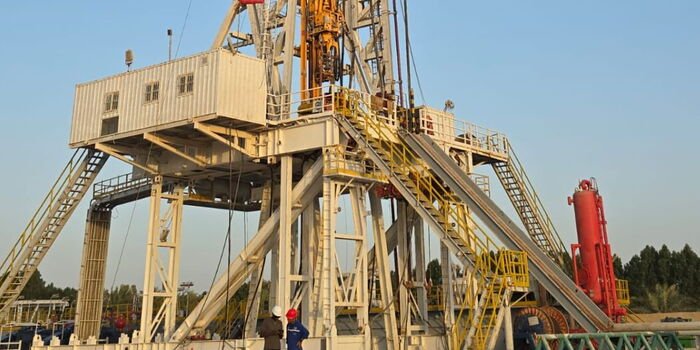
Kenya’s long-delayed journey toward commercial oil production in Turkana has entered a decisive phase after Gulf Energy secured a Sh1.94 billion (US$15 million) onshore drilling rig from the United Arab Emirates.
An oil rig is a massive, specialised structure equipped to drill, extract, and sometimes process oil and natural gas from beneath the earth’s surface or seabed.
These complex industrial units operate both on land and offshore, featuring a derrick for drilling, along with systems for safety, production, and housing crews
Gulf Energy’s rig is known as the GW70. It’s supplied by the Great Wall Drilling Company.
It is a 1,500-horsepower unit previously deployed on projects for the Abu Dhabi National Oil Company.
Gulf Energy plans to ship the rig to Mombasa by late March, complete commissioning in June, and begin drilling in July, putting December 2026 firmly in sight for initial production from the South Lokichar Basin.
Local Oversight
The rig’s acquisition has been closely monitored by regulators and county authorities.
A technical delegation drawn from the State Department for Petroleum, the Energy and Petroleum Regulatory Authority (EPRA), and Turkana County officials recently inspected the rig in Abu Dhabi, assessing safety systems, environmental safeguards, and readiness for deployment.
Beyond compliance, the lease includes performance-based provisions requiring skills transfer to Kenyan technicians.
Gulf Energy says this is aimed at building domestic oilfield expertise and reducing long-term reliance on expatriate crews, a politically sensitive issue in Turkana, where expectations for jobs and local participation are high.
The financial structure
The South Lokichar project is backed by a revised production-sharing contract that significantly reshapes risk and reward.
Under the updated terms, Gulf Energy can recover up to 85% of annual crude output as “cost oil,” up from 65%, accelerating the payback of its exploration and development spending.
Total investment over the 25-year contract period is projected at US$6.1 billion.
In return, the Kenyan government retains a minimum 20% profit share, rising to as much as 75% at peak production, with windfall taxes triggered when oil prices exceed US$50 per barrel.
Treasury estimates put potential government earnings between US$1.05 billion and US$2.9 billion at prices of US$60–70 per barrel, making the project one of the most financially consequential resource ventures in Kenya’s history.
What comes next
Operationally, Gulf awaits Parliament’s nod on its Field Development Plan for Blocks T6 and T7, covering 326 million recoverable barrels. Phase 1 ramps to 20,000 barrels/day, Phase 2 to 50,000.
Energy sector observers say the deal sends a strong signal that Kenya’s oil ambitions are entering their most concrete phase yet.
Gulf Energy now holds a full operating interest in Block T7 after acquiring upstream assets previously held by Tullow, consolidating control and simplifying decision-making.
Drilling is scheduled for July. The GW70 rig marks the first sustained step toward transforming Turkana from an exploration frontier into a producing oil basin.
Success at Lokichar would reshape the country’s energy narrative, diversify exports, and test whether large-scale resource projects can deliver on long-promised economic gains.
Also Read: Africa Doubles Down on Foreign Oil and Gas Investments as Libya Taps Chevron and Eni – Business News
Previous Post
Next Post