Now Reading: Kenya Turns to Local Market with New Treasury Bond Offer
-
01
Kenya Turns to Local Market with New Treasury Bond Offer



Kenya’s Treasury bonds April 2026 issuance marks a significant move by policymakers as the government intensifies its reliance on the domestic market to meet financing needs. The Central Bank of Kenya has announced the floatation of KSh60 billion in Treasury bonds, signaling a continued strategy to tap local liquidity while managing external debt exposure. This development comes at a time when interest rates, investor appetite, and fiscal pressures are all converging to shape borrowing decisions. As a result, Kenya’s Treasury bonds activity is emerging as a key indicator of both government financing strategy and broader market sentiment.

Treasury Bonds Attract Investor Interest Amid High Yields
The Kenya’s Treasury bonds April 2026 issuance is expected to draw strong attention from institutional investors, particularly due to the prevailing high-yield environment. Pension funds, insurance companies, and commercial banks are likely to view the bonds as attractive instruments for securing stable returns in a relatively predictable asset class.
In recent months, elevated interest rates have increased the appeal of government securities, positioning them as a preferred investment option compared to equities and other riskier assets. This trend has been reinforced by cautious investor sentiment, as global economic uncertainty and domestic fiscal pressures continue to influence capital allocation decisions.
For the government, the decision to float KSh60 billion in bonds reflects a strategic shift toward domestic borrowing. By raising funds locally, authorities can reduce exposure to foreign currency risk, which has been a significant concern amid fluctuations in the Kenyan shilling. However, this approach also has implications for liquidity within the banking sector, as increased government borrowing can crowd out private sector credit.
Market analysts suggest that the success of the Treasury bonds April offer will depend on pricing, tenor structure, and investor confidence in the government’s fiscal management. Strong uptake would signal continued trust in government securities, while weaker demand could indicate concerns about debt sustainability and future interest rate movements.

Treasury Bonds Reflect Fiscal Pressure and Market Balancing Act
Beyond immediate fundraising, Kenya’s Treasury bonds April 2026 issuance highlights the broader fiscal balancing act facing policymakers. With rising debt obligations and ongoing expenditure needs, the government must carefully manage borrowing while maintaining macroeconomic stability.
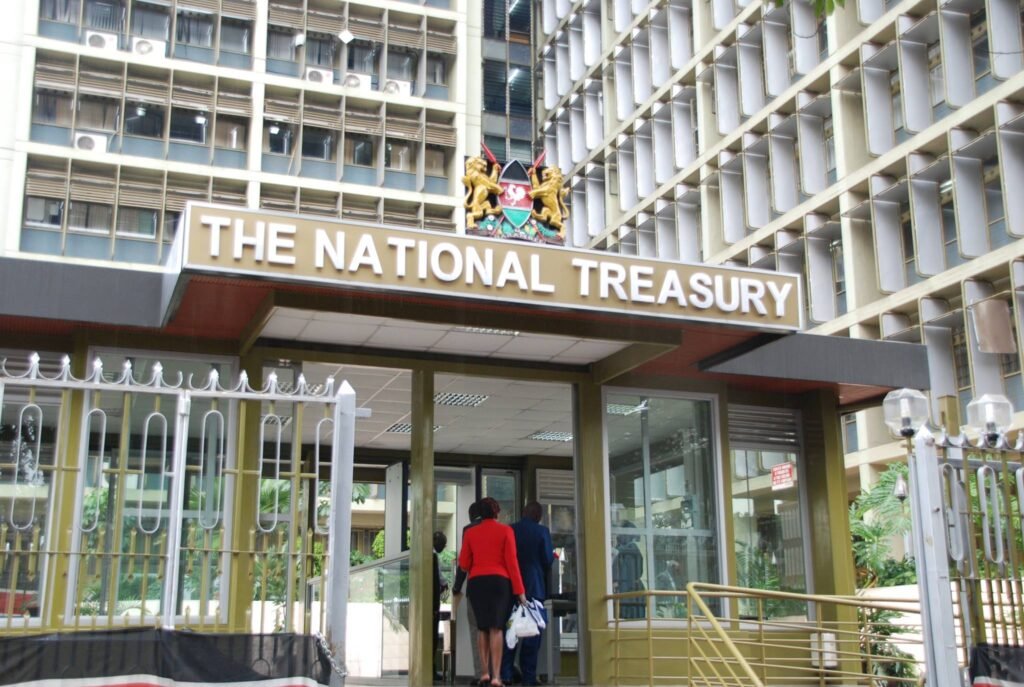
Institutions such as the National Treasury Kenya are under increasing pressure to ensure that debt levels remain sustainable, even as funding requirements grow. Domestic borrowing offers a more controlled environment compared to external markets, but it also requires careful coordination to avoid excessive strain on local financial systems.
You Might Also Like: NSE Blue Chips Lose Sh200 Billion as Iran War Triggers Investor Flight
The interplay between government borrowing and private sector activity is particularly contentious. As more funds are absorbed by Treasury instruments, banks may have less capacity or incentive to extend credit to businesses, potentially slowing economic growth. This dynamic underscores the importance of balancing fiscal needs with the goal of supporting private sector expansion.
At the same time, the trajectory of interest rates will play a decisive role in shaping outcomes. If rates remain elevated, the cost of borrowing for the government will increase, adding to fiscal pressure. Conversely, a gradual easing could reduce debt servicing costs but may also affect investor appetite for government securities.
Ultimately, Kenya’s Treasury bonds April 2026 represent more than a routine issuance. They are a reflection of the evolving financial landscape, where policymakers must navigate competing priorities of funding, stability, and growth. The market’s response will provide valuable insight into investor confidence and the direction of Kenya’s economic policy in the months ahead.
Related Posts


Previous Post
Next Post