Now Reading: Onafriq Pioneers Seamless Transborder Money Transfer in Africa
-
01
Onafriq Pioneers Seamless Transborder Money Transfer in Africa

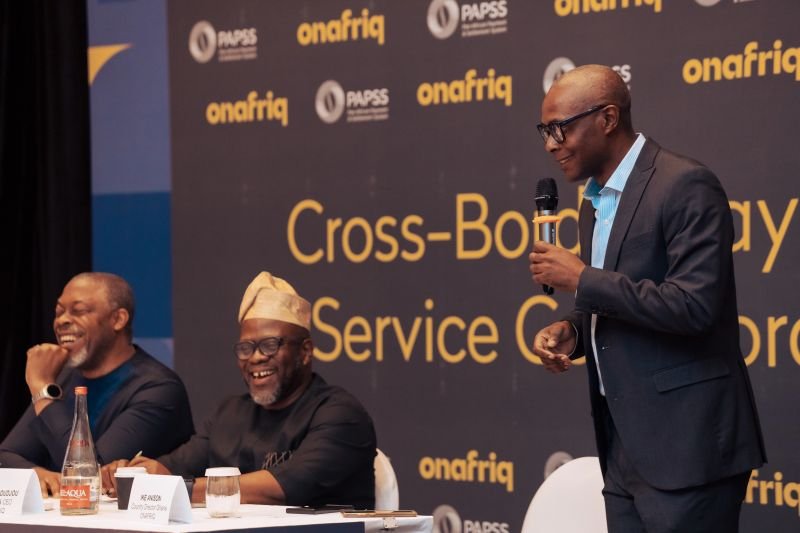

Onafriq, a digital payment tech-firm, is gradually reshaping Africa’s economic future by building a payments infrastructure that allows countries, businesses, and people to trade seamlessly across borders in their own currencies.
For years, making payments across its borders has been Africa’s biggest trade barrier, hindering smooth trade across the region.
Even today, money transfer across African borders remains sluggish, costly and overly complicated compared to transactions between Africa and the rest of the world.
To bridge this gap, Onafriq, Africa’s largest digital payments network, is building a continental payments infrastructure that connects banks, mobile wallets, and settlement systems into one interoperable network.
The company’s latest partnership with the Pan-African Payment and Settlement System (PAPSS) captures this development.
Together, they have piloted Africa’s first wallet-based outbound payments corridor between Nigeria and Ghana, which allows users to send money instantly between the two countries in Naira.
This allows for transactions to be conducted in local currencies rather than having to convert to foreign currencies like the dollar or euro.
While the corridor itself is narrow, the economic signal is wide. It shows that cross-border African trade may no longer be predominantly mediated through external currencies or offshore systems.
Connecting Africa’s Fragmented Systems
Africa’s payments ecosystem has grown rapidly, but remains greatly fragmented.
Some countries are bank-dominated, others, like Kenya, are mobile-money-led, and many operate parallel systems that barely synchronise with each other. Therefore, Onafriq’s core value proposition is interoperability.
By linking more than one billion mobile wallets, over 500 million bank accounts, and hundreds of thousands of agents across more than 40 markets, Onafriq is building what it describes as a “network of networks.” The idea is simple: payments should work regardless of platform, provider, or border.
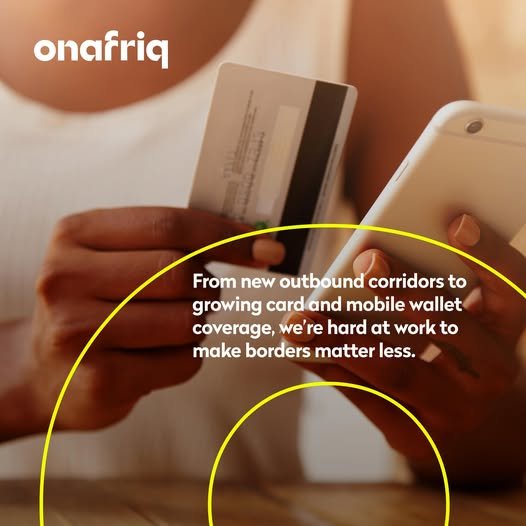
This approach matters because most African trade is conducted by small and medium-sized enterprises and informal traders who cannot afford delays, high fees, or complex compliance processes.
For them, a payment that takes days can mean lost inventory, missed opportunities, or broken supply chains.
“Seamless connections between banking systems and mobile money ecosystems are essential if African enterprises are to trade confidently in local currencies,” according to Mxolisi Msutwana, Onafriq’s Managing Director for Anglophone West Africa.
By leveraging PAPSS’s central bank-backed settlement framework, with Afreximbank as the settlement entity, Onafriq is also addressing a persistent liquidity challenge that has constrained cross-border payments across the continent.
Money Transfer asPart of AfCFTA Infrastructure
Onafriq’s expansion aligns closely with the ambitions of the African Continental Free Trade Area (AfCFTA).
While AfCFTA focuses on reducing tariffs and regulatory barriers, the payments infrastructure determines whether trade can actually happen at scale.
Removing tariffs is only half the job if businesses still face high transaction costs when moving money.
“Too often, borders are seen as obstacles rather than opportunities,” said Ositadimma Ugwu, Chief Information Officer at PAPSS. “Our partnership with Onafriq is about making borders invisible to payments,” he added.
Afterall, this invisibility is critical for AfCFTA’s success.
Intra-African trade remains significantly lower than in other regions, not because of a lack of production, but because systems that enable trade-logistics, finance, and payments are underdeveloped or fragmented.
Onafriq’s technology effectively turns payments into shared continental infrastructure, much like ports or highways, but digital and instantly scalable.
Onafriq Beyond Nigeria and Ghana
The Nigeria–Ghana pilot is part of a broader continental roadmap.
Onafriq continues to expand remittance routes, integrate card-to-wallet and wallet-to-card services, and enable real-time disbursements for salaries, loans, grants, and merchant payments across Africa.
In markets like Ghana, these integrations give users the flexibility to move money across platforms without friction.
As African governments push for greater regional trade and reduced reliance on external markets, Onafriq’s model supports economic resilience.
Local-currency settlement reduces exposure to foreign exchange shocks and limitations, currency volatility, and rising global financial tightening.
A Gradual but Powerful Shift
Unlike consumer-facing fintechs focused on apps and branding, Onafriq operates mostly in the background. Its focus is infrastructure: building systems that others rely on. But this quiet work could have a lasting impact.
By reducing payment costs and delays, Onafriq is helping African economies rely more on regional trade and less on distant markets. It also reduces exposure to global currency shocks and tightening financial conditions.
As Africa continues to look inward for growth and resilience, the ability to move money quickly and affordably across borders will be just as important as roads, ports, or power lines.
Onafriq is proving that when payments work, trade follows, and when trade flows, opportunity spreads.
Read Also: Nigeria secures landmark electric vehicle manufacturing deal with South Korea
Related Posts


Previous Post
Next Post