Now Reading: Top 10 African Countries Investors View as High-Risk in 2026
-
01
Top 10 African Countries Investors View as High-Risk in 2026
Top 10 African Countries Investors View as High-Risk in 2026

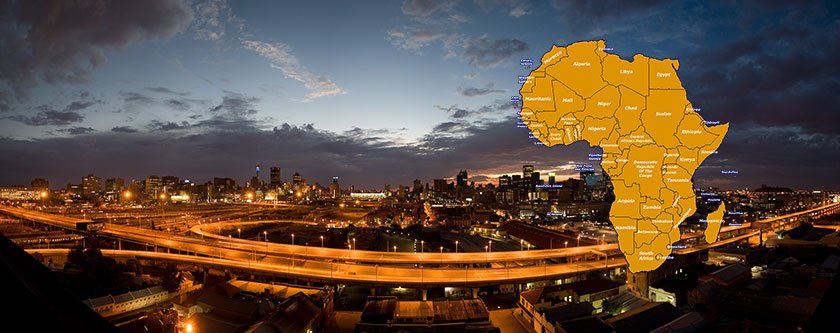

Global investors are increasingly drawing sharper distinctions between markets as economic and political conditions diverge, with Africa showing some of the widest gaps in perceived investment risk.
New analysis based on equity risk premiums reveals that while some countries are attracting capital with improving business environments, others are struggling with instability, weak institutions, and macroeconomic fragility.
Equity risk premiums, the additional returns investors demand to compensate for country-specific risks, range from as low as 4–5% in stable economies to over 30% in the most volatile markets.
The figures, based on a methodology developed by NYU professor Aswath Damodaran, combine sovereign credit ratings with stock market volatility to produce a more realistic picture of investment risk, particularly in emerging and frontier markets.
At the top of the risk scale globally is Sudan, which posts an equity risk premium of 30.9%, reflecting ongoing conflict and deep political instability. The country shares this level of risk with other crisis-hit economies such as Lebanon and Venezuela, underscoring the severity of its economic and governance challenges.
Somalia and Niger also rank among Africa’s riskiest investment destinations, largely due to persistent insecurity and fragile political systems.
In both countries, weak state capacity and ongoing security threats continue to deter long-term capital despite underlying resource potential.
Mozambique, another high-risk market, remains exposed to insurgency in its gas-rich northern region. While the country holds significant energy potential, security concerns and project disruptions have complicated investment prospects in recent years.
Beyond conflict-driven risks, several African economies are flagged for macroeconomic vulnerabilities. Malawi and Ethiopia, for instance, are grappling with currency pressures, high debt levels, and inflationary stress.
These factors increase uncertainty for investors, particularly in sectors reliant on stable exchange rates and predictable fiscal policy.
Political uncertainty is another key driver of risk. Gabon and Guinea have both experienced coups or contested political transitions in recent years, raising concerns about governance continuity and policy predictability. Such disruptions often lead to delayed investments and higher financing costs.
Liberia, while relatively stable compared to conflict zones, remains structurally vulnerable due to its narrow economic base and reliance on external support. Limited diversification and institutional capacity continue to weigh on investor confidence.
The growing divergence in risk profiles across Africa reflects a broader global trend. Investors are no longer treating emerging markets as a single category but are instead pricing risk with greater precision, taking into account governance quality, macroeconomic stability, and geopolitical conditions.
In contrast, advanced economies such as Germany, Switzerland, and Singapore maintain equity risk premiums of around 4.2%, highlighting the premium investors place on stability, strong institutions, and predictable policy environments.
The United States, at approximately 4.5%, remains firmly within the low-risk category.
For Africa, the implications are clear. While the continent continues to offer some of the world’s highest growth potential, it also demands significantly higher risk premiums in many markets. This dynamic shapes not only where capital flows, but also the cost of financing for governments and businesses.
However, the picture is not uniformly negative. Countries that are improving governance, strengthening financial systems, and reducing regulatory friction are gradually lowering their risk profiles and attracting more investment.
Ultimately, the 2026 rankings highlight a defining reality for investors: Africa’s opportunity is substantial, but so is the need for careful risk assessment.
As global capital becomes more selective, the ability of countries to stabilise their economies and build resilient institutions will determine whether they can convert potential into sustained investment inflows.
Read Also: Top 10 Most Promising Investment Destinations in Africa – Business News
Previous Post
Next Post