Now Reading: Why AI Fails in the Real World Despite Perfect Demos
-
01
Why AI Fails in the Real World Despite Perfect Demos



The AI context problem in business is becoming one of the most critical yet overlooked reasons why artificial intelligence initiatives fail to deliver real value. While organizations often attribute poor performance to technical limitations, the underlying issue is frequently far more fundamental: a mismatch between how AI systems are trained and how they are used in the real world. Most models are built on standardized datasets—predictable language patterns, uniform behavior, and controlled environments. But real customers are anything but standard. This growing gap between controlled training environments and real-world diversity is exposing a structural weakness in how businesses approach AI deployment.
As companies accelerate their adoption of AI across customer service, operations, and decision-making systems, the AI context problem in business is becoming increasingly visible. Systems that perform flawlessly in demonstrations often struggle when exposed to diverse accents, unpredictable inputs, and edge cases that were never accounted for during development. The result is a breakdown in performance that undermines trust, limits scalability, and ultimately reduces return on investment.

AI Context Problem in Business Emerges from Standardized Data and Limited Training Scope
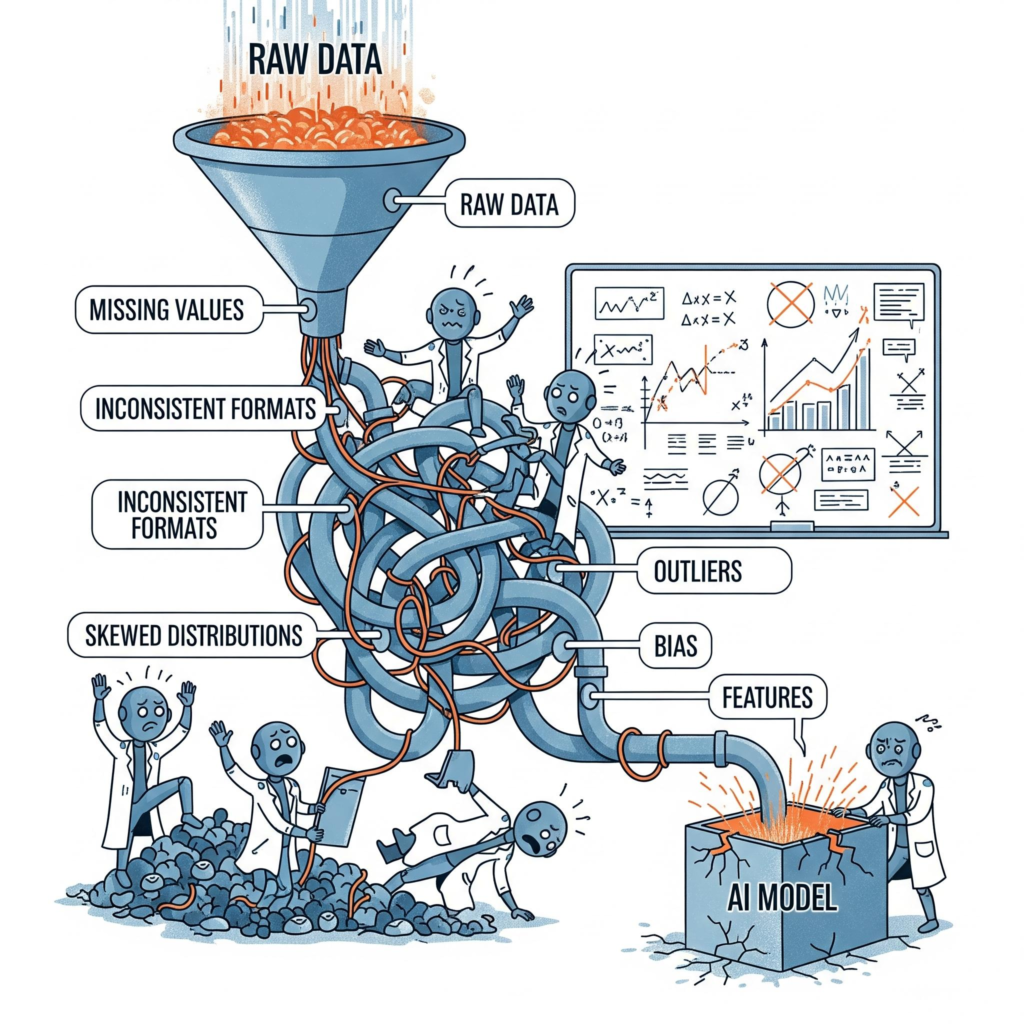
At the core of the AI context problem in business is the reliance on standardized training data that fails to reflect the complexity of real-world users. Many AI systems are optimized for efficiency and speed during development, leading to datasets that prioritize common patterns over diversity. While this approach can produce impressive results in controlled environments, it creates blind spots that become evident once the system is deployed at scale.
Edge cases—those uncommon but critical scenarios—are often ignored during the training process. These can include variations in language, cultural nuances, regional behaviors, or atypical user journeys. When these scenarios arise in live environments, the AI system may fail to respond accurately, creating friction for users and operational challenges for businesses.
This is particularly relevant in global and emerging markets, where diversity is not the exception but the norm. A system trained primarily on “standard” inputs may struggle to interpret local dialects, informal communication styles, or context-specific behaviors. As a result, the AI context problem in business becomes a barrier to expansion, limiting the effectiveness of AI solutions across different markets and user segments.
Inclusive Systems and Real-World Data Define Next Phase of AI Utilization in Business
Addressing the AI context problem in business requires a fundamental shift in how organizations design, train, and deploy AI systems. Rather than optimizing solely for speed and initial performance, companies must prioritize resilience and adaptability. This means incorporating diverse datasets, continuously updating models based on real-world interactions, and actively testing systems against a wide range of scenarios.
The concept of scale is also being redefined. Traditionally, scaling AI meant increasing the number of users or expanding deployment. However, the AI context problem in business highlights that true scale is about handling variation. A system that works for one type of user cannot be considered scalable if it fails for others. Companies that understand this distinction are better positioned to build AI solutions that perform consistently across different environments.
You Might Also Like: AI Business Strategy Shift: Why Focused Automation Is Beating “Do Everything” Approaches
From a strategic perspective, this shift has significant implications for competitive advantage. Businesses that invest in inclusive, context-aware AI systems are likely to achieve higher adoption rates, improved customer satisfaction, and more reliable outcomes. In contrast, those that continue to prioritize rapid deployment without addressing contextual diversity risk deploying systems that underperform in real-world conditions.
Ultimately, the AI context problem in business is not a limitation of technology but a reflection of how it is applied. The companies that succeed in the next phase of AI adoption will not simply build smarter models—they will build systems that understand the complexity of the environments in which they operate.
As AI continues to integrate into core business functions, the question is no longer whether the technology works in theory, but whether it works in reality. And in that reality, diversity, variation, and context are not edge cases—they are the standard.
Related Posts



Previous Post
Next Post