Now Reading: Inside Nairobi’s Most Exclusive Business Social Circles
-
01
Inside Nairobi’s Most Exclusive Business Social Circles




In Nairobi, influence often travels quietly. It is less about spectacle and more about access. While public discourse focuses on shareholder meetings and government policy briefings, another layer of economic conversation unfolds behind guarded gates and polished wooden doors.
Institutions like Muthaiga Country Club and Karen Country Club are not merely recreational spaces. They function as informal policy corridors, networking hubs, and trust-building environments where business leaders exchange ideas away from cameras and public scrutiny.
A senior executive in the banking sector, speaking off record, explains, “Deals rarely start at the office. They start in spaces where people feel relaxed enough to speak freely.” In these environments, hierarchy softens and relationships strengthen.
The Currency of Access
Membership in Nairobi’s elite social spaces is less about wealth alone and more about social vetting. Sponsorship by existing members, reputation, and professional standing determine entry. Once inside, however, the returns can be significant.
Investment partnerships are often seeded over lunch. Joint ventures emerge after golf tournaments. Policy insights circulate in hushed conversations long before formal announcements. “You hear the direction of regulation months before it hits the press,” says a corporate lawyer who frequents these spaces.
Access becomes currency. It shapes who is informed, who is positioned, and who moves first. In a competitive economy, information asymmetry can define success.

The Unwritten Code
What distinguishes Nairobi’s exclusive business circles is not extravagance, but discretion. Conversations remain private. Photos are limited. Public displays of wealth are understated. The code is clear: influence should not be noisy.
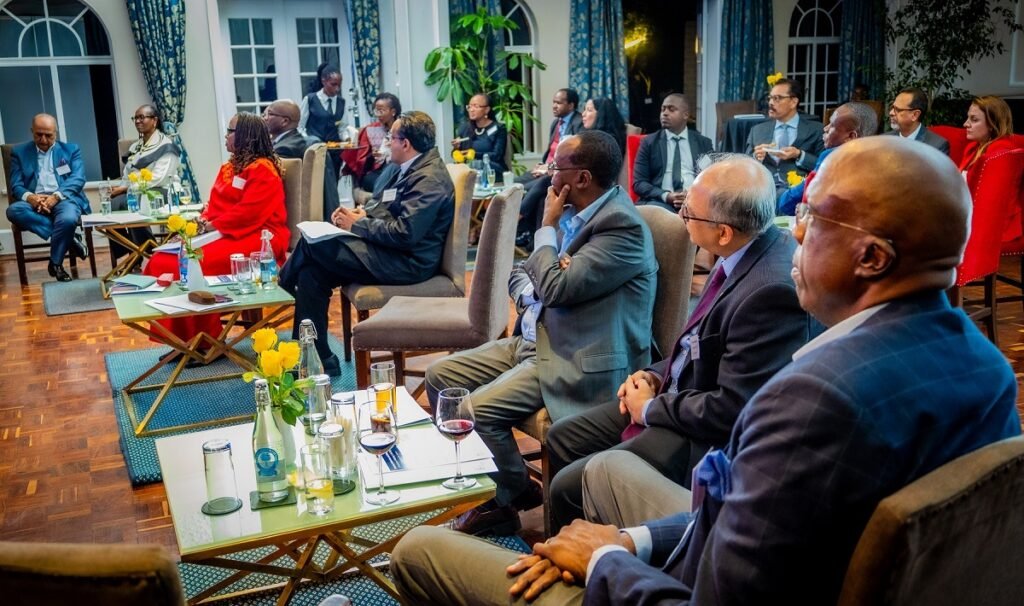
A hospitality consultant familiar with high-end events in Westlands notes that “The most powerful rooms in Nairobi are often the quietest.” Invitation-only dinners, curated policy roundtables, and philanthropic galas attract CEOs, industrialists, diplomats, and occasionally senior political figures.
These gatherings blend social warmth with strategic calculation. They are designed to build familiarity, reduce friction, and create alignment.
Weekend Rituals of the Elite
Weekends in Nairobi’s upper economic tier are structured, not idle. Golf tournaments double as networking arenas. Polo matches provide both spectacle and subtle positioning. Private charity dinners offer opportunities to reinforce social capital.
In neighborhoods such as Karen and Runda, gatherings shift from corporate strategy to family-centered hosting, where business partners become social acquaintances. “Trust deepens when families meet,” says a manufacturing executive. “It changes negotiation dynamics.”
These rituals cultivate continuity. Relationships move beyond transactional frameworks into long-term alliances.

Power Without Headlines
Unlike global cities where wealth is often publicly displayed, Nairobi’s elite tends toward calibrated visibility. Luxury exists — high-end vehicles, international travel, private security — but it is rarely amplified publicly.
Sociologist Dr. Esther Mburu argues that “Kenyan business elites operate within a cultural context that values respectability over flamboyance.” In this environment, quiet credibility carries more weight than overt opulence.
The result is a networked ecosystem where corporate leaders, investors, and policymakers intersect in semi-private spheres. Decisions are not made there in official terms, but trust — the precursor to decision-making — is built there.
Why These Circles Matter
Understanding Nairobi’s exclusive business social circles is not voyeurism. It is economic literacy. These environments shape investment flows, partnerships, and sometimes even regulatory conversations. They influence which sectors attract capital and which entrepreneurs gain mentorship.
At the same time, the exclusivity raises questions about access and equity. If influence concentrates within tight networks, how easily can new entrants penetrate them? How inclusive are these spaces in a rapidly evolving economy?
Yet for many within them, the circles are less about exclusion and more about alignment. “You gravitate toward people who understand scale,” says one tech founder who recently entered these elite spaces. “It’s about speaking the same language.”
In Nairobi, that language is measured, strategic, and relational. It is spoken over espresso on shaded verandas, on manicured greens at sunrise, and across candlelit tables where tomorrow’s business landscape is quietly mapped.
Previous Post
Next Post