Now Reading: Severe Funding Shock as Global Aid Pullback Tests Kenya’s Circular Economy Ambitions
-
01
Severe Funding Shock as Global Aid Pullback Tests Kenya’s Circular Economy Ambitions
Severe Funding Shock as Global Aid Pullback Tests Kenya’s Circular Economy Ambitions



Kenya’s sustainability efforts are under significant pressure as a decline in international aid tests the country’s circular economy goals. This reduction in donor funding threatens the financial stability of vital recycling and waste management initiatives. Additionally, green enterprise programs that previously relied on external support now face an uncertain future. Consequently, Kenya must find new ways to sustain its environmental programs amidst this shrinking global financial backing.
Donor retreat exposes structural vulnerabilities in green financing
Kenya’s circular economy agenda — which promotes recycling, waste reuse, sustainable production, and resource efficiency — has in recent years been buoyed by international development funding. However, the global shift in aid priorities and tightening fiscal conditions among major donor nations are now creating financing gaps across environmental initiatives.
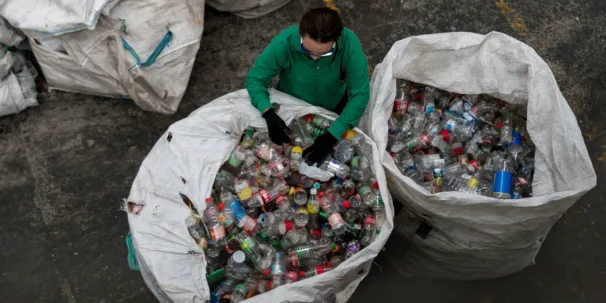
Programs supporting plastic recycling, waste segregation, climate-smart agriculture, and green enterprise incubation have depended significantly on grants and concessional financing from multilateral and bilateral partners. As these funding streams slow, project continuity and expansion plans are increasingly uncertain.
Industry observers note that while policy frameworks promoting sustainability remain intact, the financial scaffolding underpinning implementation is weakening. This is particularly critical for early-stage green startups and community-based recycling enterprises that lack access to commercial financing.
“Kenya’s circular economy ecosystem has grown quickly, but much of that growth has been grant-driven,” says environmental finance analyst Rose Muthoni. “With global aid tightening, the transition to blended finance and private capital becomes urgent.”
The funding contraction also risks slowing progress toward national climate commitments and sustainable development targets. Waste management reforms in urban areas, especially those aimed at reducing landfill dependence and increasing material recovery rates, require sustained capital investment in infrastructure and technology.
Without predictable financing, stakeholders warn that gains achieved in plastic waste reduction, sustainable packaging, and green manufacturing could stall, undermining both environmental and economic benefits tied to circular practices.
Private capital and policy reform emerge as critical lifelines
The current funding headwinds are prompting policymakers and industry players to rethink the financing architecture supporting Kenya’s circular transition. There is growing consensus that long-term resilience will depend less on grants and more on mobilizing domestic private investment, impact funds, and green bonds.
Kenya’s financial sector has shown rising interest in environmental, social, and governance (ESG) investments. However, translating this interest into scalable funding for circular economy ventures requires clearer regulatory incentives, risk mitigation mechanisms, and commercially viable project pipelines.
You Might Also Like: Gulf Meat Strategy Flops as Kenya Hits Reset Button
Blended finance models — combining public funds, concessional capital, and private sector investment — are increasingly viewed as a sustainable path forward. By de-risking projects through partial guarantees or performance-based incentives, policymakers hope to crowd in institutional investors.
Moreover, stronger enforcement of extended producer responsibility (EPR) regulations could create revenue streams that sustain recycling ecosystems without heavy reliance on foreign aid. If producers bear greater responsibility for post-consumer waste, circular systems may become more self-financing.
Despite the funding strain, analysts emphasize that Kenya retains structural advantages: a vibrant startup ecosystem, progressive environmental legislation, and rising consumer awareness around sustainability. These fundamentals could attract climate-focused investors seeking emerging market opportunities.
Still, the immediate challenge remains liquidity. Many grassroots recycling initiatives operate on thin margins, and any abrupt withdrawal of donor support could disrupt operations, employment, and supply chains within the informal waste sector.
The broader economic implications extend beyond environmental policy. The circular economy supports thousands of jobs in collection, processing, manufacturing, and logistics. Reduced funding could therefore affect income stability in vulnerable communities.
As global aid recalibrates, Kenya’s ability to pivot toward diversified financing will determine whether its sustainability ambitions accelerate or stall. The coming months may prove decisive in shaping whether circular economy progress becomes self-sustaining or remains donor-dependent.
Related Posts

Previous Post
Next Post