Now Reading: The bigger investment opportunity hiding behind Africa’s aviation boom
-
01
The bigger investment opportunity hiding behind Africa’s aviation boom
The bigger investment opportunity hiding behind Africa’s aviation boom

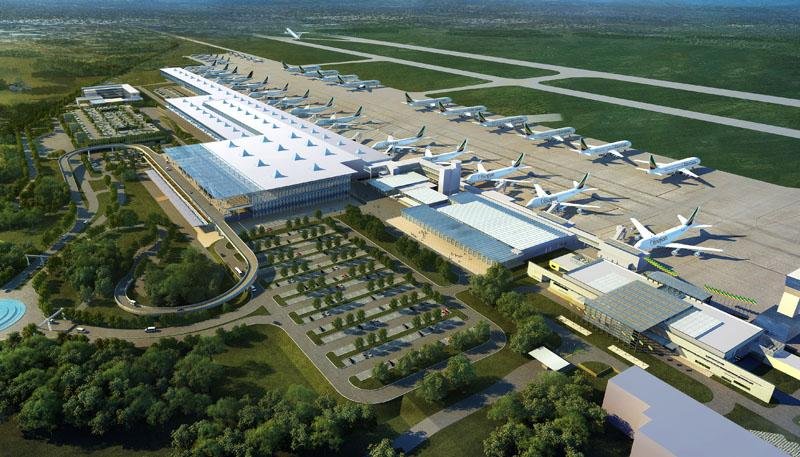

Africa’s aviation opportunity is much larger than the number of aircraft crossing its skies. As passenger demand, tourism, trade, and regional mobility expand, Africa’s aviation industry is creating an interconnected market stretching from airports and cargo networks to aircraft maintenance, training, technology, and hospitality. The opportunity is significant because aviation sits at the center of several economic systems: it moves people, connects businesses to markets, and allows high-value goods to cross borders quickly. But the next phase of growth will require more than adding flights. The real opportunity lies in building the infrastructure and services around aviation that allow the entire ecosystem to scale sustainably.

Africa’s aviation industry growth is creating opportunities beyond airlines
The strongest investment opportunities in the Africa’s aviation industry may sit outside the cockpit.
Airports need modern terminals, efficient ground handling, passenger-processing systems, and reliable infrastructure. Growing trade creates demand for air cargo facilities, cold-chain logistics, and specialized freight services. Airlines require maintenance, repair, and overhaul capacity, while the industry needs engineers, pilots, technicians. and other skilled professionals.
Technology adds another layer. Digital booking systems, biometric processing, predictive maintenance, aviation data platforms, and automated airport operations can help African operators improve efficiency while reducing costs.
The economic logic is straightforward. An aircraft creates value when it is flying, but the ecosystem around it determines how efficiently it can operate.
That makes aviation an infrastructure story as much as a transport story.
For countries such as Kenya, Ethiopia, Rwanda, and South Africa, stronger aviation ecosystems could also improve their ability to function as regional business and logistics hubs. Better connections can reduce the friction involved in moving executives, tourists, cargo, and investment across borders.
For smaller economies, improved regional connectivity could be equally important. Reliable air services can connect businesses to larger markets without requiring expensive road or maritime journeys, particularly where geography makes surface transport difficult.

Africa’s aviation industry needs smart capital, not growth at any cost
Yet the expansion of the Africa’s aviation industry comes with risks that investors cannot afford to ignore.
Airlines operate in a capital-intensive industry exposed to fuel prices, currency movements, financing costs, infrastructure constraints, and regulatory changes. Airports face their own challenges, from construction costs to passenger volumes and operational efficiency.
That is why smart capital should follow the value chain rather than simply chase passenger growth.
An investor examining an airport expansion, for instance, needs to understand not only projected passenger numbers but also airline economics, cargo potential, connectivity, regulation, and the surrounding tourism and business ecosystem.
The same principle applies to aviation technology and maintenance. A company selling aircraft components or digital systems may have a compelling opportunity if regional fleets are expanding, but the commercial case depends on procurement structures, technical standards, skilled labor, and long-term demand.
The most valuable businesses could ultimately be those that solve the bottlenecks preventing African aviation from reaching its potential.
That includes training institutions producing skilled professionals, maintenance centers reducing dependence on overseas facilities, logistics companies connecting airports to inland markets, and technology firms making aviation operations more efficient.
See Also: Why AI is raising the stakes for East Africa’s digital economy
Tourism provides another important multiplier. More reliable and affordable connectivity can make African destinations easier to reach, while stronger aviation infrastructure can support hotels, tour operators, restaurants, and local businesses.
The opportunity is therefore not simply to fly more passengers.
It is to build an aviation economy around them.
Africa’s aviation industry could become one of the continent’s most important infrastructure and connectivity stories over the coming decades. But capturing that opportunity will require governments, airlines, investors, and technology companies to think beyond individual projects.
The critical question is no longer whether Africa needs more flights.
It is who will build the ecosystem—and who will capture the value it creates?
Related Posts


Previous Post
Next Post