
Now Reading: Africa cannot afford to secure AI with outdated cyber defenses
-
01
Africa cannot afford to secure AI with outdated cyber defenses
Africa cannot afford to secure AI with outdated cyber defenses

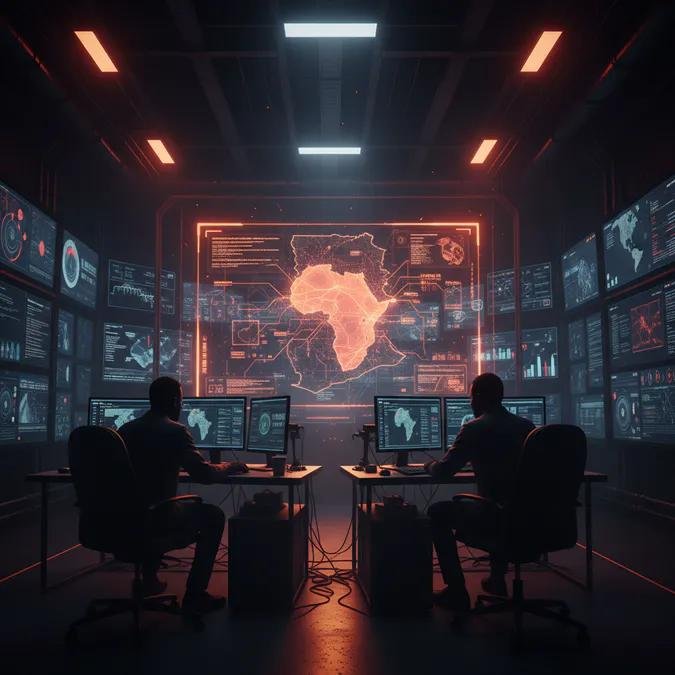

Artificial intelligence is giving African businesses a new source of productivity, but it is also creating a cybersecurity problem that conventional defenses were never designed to handle. Agentic AI security in Africa is becoming increasingly important as autonomous systems move beyond generating content to making decisions, interacting with software, and taking action on behalf of organizations. The risk is amplified because cyber attackers can use the same technology to automate attacks at machine speed, potentially increasing the scale and sophistication of threats. For businesses adopting AI faster than their governance frameworks are evolving, the question is no longer simply how to deploy intelligent systems, but how to ensure those systems remain trustworthy when they can act independently.

Agentic AI security in Africa must evolve beyond traditional defenses
Traditional cybersecurity was largely designed around human behavior. Security teams monitored systems, investigated alerts, and responded to attacks based on what people could realistically accomplish in a given period.
Autonomous AI changes that equation. Agents can reason, adapt, and execute tasks independently, while malicious actors can use AI to generate exploits faster, scale campaigns, and operate continuously. That means the volume and velocity of potential attacks can rise at precisely the moment organizations are adding more autonomous systems to their own operations.
The adoption is already moving quickly. An MIT Sloan Management Review and BCG survey found that 82 percent of African respondents viewed AI agents more as colleagues than tools. Meanwhile, adoption in markets including Kenya, Nigeria, and South Africa is advancing faster than many governance frameworks can evolve.
For companies, agentic AI security therefore cannot simply mean adding another cybersecurity product to an existing technology stack. The architecture itself needs to change.
Businesses need systems capable of continuously interpreting signals from identities, devices, applications, data, and user activity. AI models can then analyze that context and agents can help determine appropriate responses, while automated controls translate those decisions into action.
The objective is not to generate more alerts. It is to reduce risk faster.
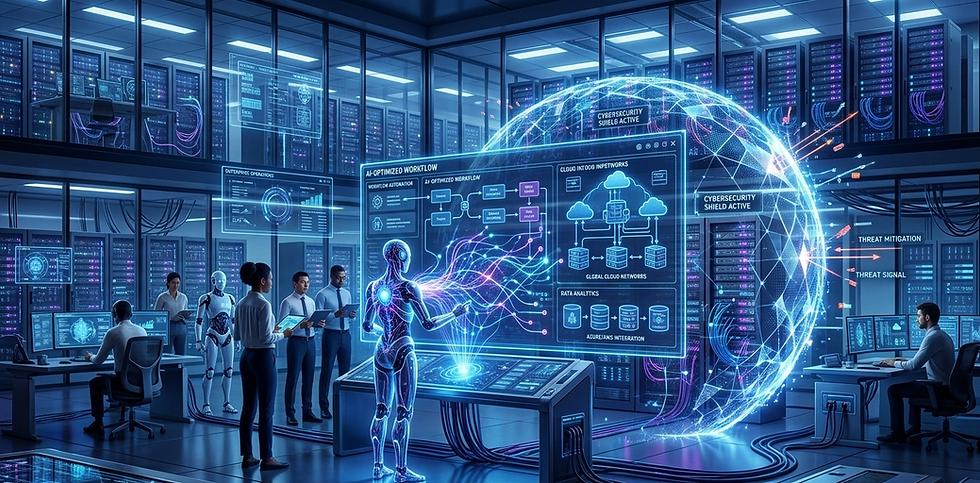
Agentic AI security in Africa will make governance a business priority
The harder challenge is deciding how much autonomy businesses should actually give machines.
An AI agent connected to a company’s financial systems, customer records, or operational infrastructure can become extremely useful. It can also become extremely dangerous if it has excessive permissions, makes an incorrect decision, or is manipulated by an attacker.
That makes agentic AI security inseparable from governance. Organizations will need clear boundaries around what agents can access, which actions they can take automatically, and when a human must intervene. Decisions also need to be explainable and auditable, particularly in sectors such as banking, healthcare, logistics, and government where errors can carry significant financial or social consequences.
See Also: AI is changing how Kenya sells its tourism experience
The opportunity, however, is substantial. Properly secured agents could help African businesses detect threats faster, investigate suspicious activity continuously, and automate routine defensive responses, allowing human security professionals to concentrate on complex incidents.
This creates a new competitive distinction. The companies that benefit most from AI may not simply be those that deploy the most agents, but those that build the strongest environments around them.
Africa’s digital economy is expanding rapidly, and autonomous AI could accelerate that transformation. But the security model must evolve at the same speed.
The future of cybersecurity will not be about defending yesterday’s software from yesterday’s attackers.
It will be about securing machines that can think, act, and adapt—while ensuring humans remain firmly in control.
Related Posts



Previous Post
Next Post




Pingback: Broken healthcare systems are quietly draining time and money