Now Reading: Broken healthcare systems are quietly draining time and money
-
01
Broken healthcare systems are quietly draining time and money
Broken healthcare systems are quietly draining time and money



Hospitals can invest millions in sophisticated technology and still lose valuable time to problems that appear deceptively ordinary. Healthcare operational efficiency is often undermined not by a lack of technology, but by the small gaps between systems, people, and processes that force clinicians to rely on spreadsheets, phone calls, paper schedules, and workarounds. A recent analysis by Healthcare experts describes this accumulation of inefficiencies as “operational debt” — a hidden burden that can increase staff frustration, delay communication, and ultimately affect patient care. For healthcare organizations facing staffing shortages and rising demand, eliminating these hidden inefficiencies could become as important as deploying the next generation of clinical technology.
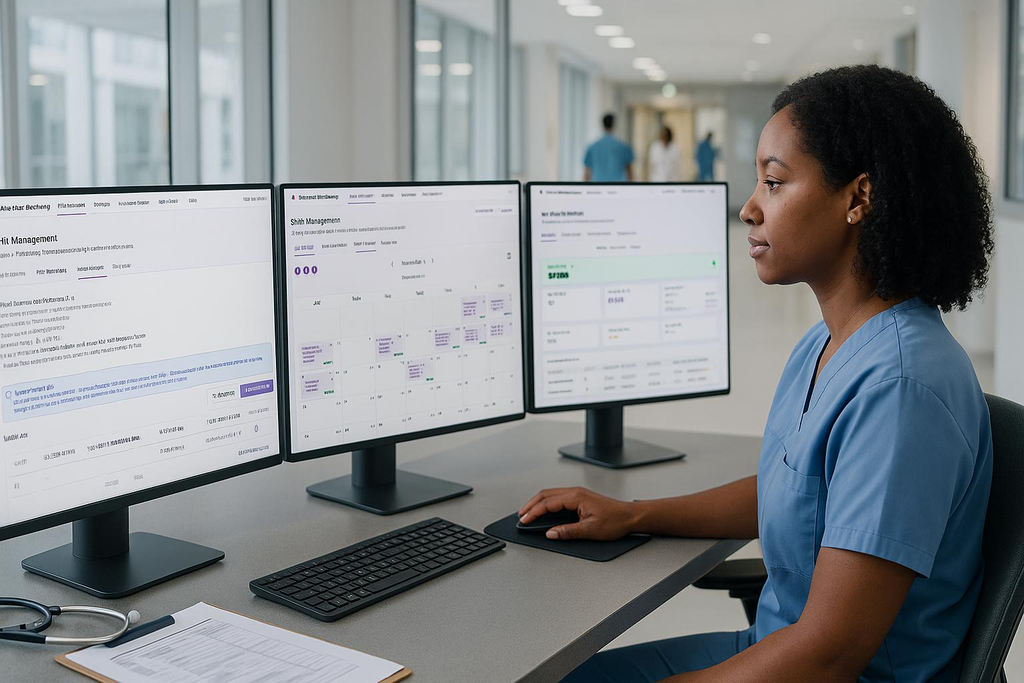
Healthcare operational efficiency is being lost in everyday workflows
The scale of the problem becomes clearer when seemingly minor administrative problems are examined collectively. A 2025 survey of more than 340 clinicians found that 70% said their organizations’ scheduling processes contained manual elements that contributed to persistent problems, while more than 85% identified at least one recurring flaw in how schedules were created. Only 15% considered their schedules well balanced.
Communication is another source of hidden operational costs. 87% of respondents reported at least one recurring point of friction during their shifts, while only 46% were very confident they could reach the right person when needed. Just 38% said their communication systems consistently allowed them to prioritize urgent messages.
These are not simply technology inconveniences. Every unnecessary call, delayed response, or manually rebuilt schedule consumes time that could otherwise be directed towards patients.
The consequences become particularly significant when healthcare organizations are already struggling with workforce pressure. A 2025 American Medical Association survey found that 41.9% of physicians experienced a great deal of job-related stress, while projections point to substantial future shortages of doctors and nurses.
In that environment, wasting skilled professionals’ time on avoidable administrative friction becomes an economic problem.

Healthcare operational efficiency depends on connected systems
The problem becomes even more pronounced when hospital technology systems cannot communicate with one another. A 2026 survey of 105 healthcare IT and operations leaders found that only 40% said their switchboards were connected to electronic health records, while the average contact center operated five or more technology systems that did not communicate with each other.
That fragmentation effectively turns employees into the integration layer. Operators may have to move between scheduling, messaging, and EHR systems simply to coordinate a single interaction.
For healthcare providers, improving healthcare operational efficiency therefore requires more than purchasing additional software. It requires connecting existing systems and redesigning workflows around the people who actually use them.
See Also: Africa cannot afford to secure AI with outdated cyber defenses
The starting point may be surprisingly simple: listen to frontline staff.
Nearly 39% of clinicians surveyed said their leadership had never asked for their input about shortcomings in operational tools, while only 33% said they had seen changes made as a result of their feedback.
That represents a missed opportunity. Nurses, doctors, technicians, and administrative staff encounter operational problems every day. Their workarounds can reveal precisely where technology and processes are failing.
For hospitals, the business case is compelling. Better scheduling can improve workforce utilization. Faster communication can reduce delays. Integrated systems can reduce repetitive administrative work. And giving clinicians better tools can improve job satisfaction at a time when retaining experienced professionals is becoming increasingly important.
The lesson extends beyond healthcare.
Every organization accumulates operational debt when inefficient processes become normal simply because employees learn to work around them.
The companies that create the greatest value from digital transformation may therefore not be those that buy the most technology.
They will be those that identify the friction everyone has learned to ignore—and remove it.
Related Posts


Previous Post
Next Post