Now Reading: Inside Kenya’s Model ‘Sovereign Wealth Fund’ for Managing Resource Revenues
-
01
Inside Kenya’s Model ‘Sovereign Wealth Fund’ for Managing Resource Revenues
Inside Kenya’s Model ‘Sovereign Wealth Fund’ for Managing Resource Revenues

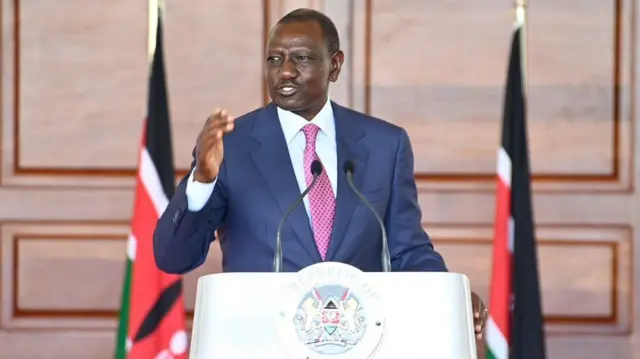

Kenya has formally outlined the structure and operational details of its newly approved sovereign wealth fund, a landmark initiative designed to manage future revenues from oil, gas, and mineral resources while strengthening fiscal stability and long-term investment planning.
The fund introduces a three-account model that separates resource revenues into distinct components: Stabilisation, Strategic Infrastructure Investment, and Future Generations, each with a specific economic role.
At the core of the framework is a centralised system for handling resource income.
All proceeds from petroleum profits, mining royalties, licensing fees, and government stakes in extractive projects will first be deposited into a Central Bank holding account before being transferred to the three funds within 10 days.
The Stabilisation component is designed to act as a financial buffer, helping the government manage short-term revenue volatility caused by fluctuations in global commodity prices. It is capped at KSh 10 billion, although the Treasury Cabinet Secretary retains the authority to revise this limit if necessary.
The Strategic Infrastructure Investment component is expected to play a central role in financing priority national projects. Funds allocated to this account will support sectors such as transport, energy, housing, and health, providing a structured pipeline for long-term development spending.
Withdrawals from this component are tied to the performance of the Stabilisation account, reinforcing fiscal discipline and ensuring that infrastructure investments remain sustainable.
Meanwhile, the Future Generations component is aimed at preserving national wealth over the long term. At least 10 per cent of all transfers into the sovereign wealth fund will be directed into this account, which is designed to build savings that benefit future generations.
The investment strategy of the fund is deliberately conservative.
All three components are restricted to foreign, liquid, and investment-grade assets, including internationally rated debt instruments, deposits with global financial institutions, and obligations issued by organisations such as the International Monetary Fund and the World Bank.
The framework explicitly prohibits investments in domestic securities, private equity, real estate, commodities, and other high-risk or illiquid assets.
This approach is intended to protect the fund from domestic political pressures and reduce exposure to market volatility, while ensuring that assets remain secure and easily accessible.
The fund is also legally insulated from government borrowing.
It cannot be used as collateral or provide loans to the government, state agencies, counties, or private entities, a safeguard designed to maintain its independence and prevent misuse of public resources.
Governance of the sovereign wealth fund will be overseen by a seven-member board comprising senior government officials, including representatives from the Treasury, petroleum and mining sectors, as well as the Central Bank Governor. Additional members will be competitively appointed to enhance transparency and professionalism.
Strict accountability measures have been built into the framework.
Officials found to have misused the fund’s resources face severe penalties, including repayment of twice the amount lost, fines of at least KSh 10 million, and imprisonment for up to five years.
To further safeguard the fund from political interference, the law restricts withdrawals and transfers during election periods, with a complete freeze on activity within three months of a general election.
The framework also includes contingency provisions for extreme scenarios. In the event of a sustained 90 per cent decline in resource revenues over two years, the three accounts would be merged into a single fund, with withdrawals limited to investment income in order to preserve capital.
The establishment of the sovereign wealth fund comes at a time when Kenya is seeking to strengthen fiscal resilience amid rising public debt and fluctuating global commodity markets.
By ring-fencing resource revenues and directing them into structured investment channels, the government aims to create a more stable and predictable system for managing natural resource wealth.
The fund is also expected to complement other financing mechanisms, including the National Infrastructure Fund, in supporting long-term economic development without increasing reliance on borrowing.
As implementation begins, attention will shift to how effectively the governance framework is enforced and whether the fund can deliver on its dual objectives of economic stability and intergenerational equity.
Related Posts

Previous Post
Next Post