Now Reading: Kenya, China Deepen Trade Ties Through Specialised Business Forum in Nairobi
-
01
Kenya, China Deepen Trade Ties Through Specialised Business Forum in Nairobi
Kenya, China Deepen Trade Ties Through Specialised Business Forum in Nairobi

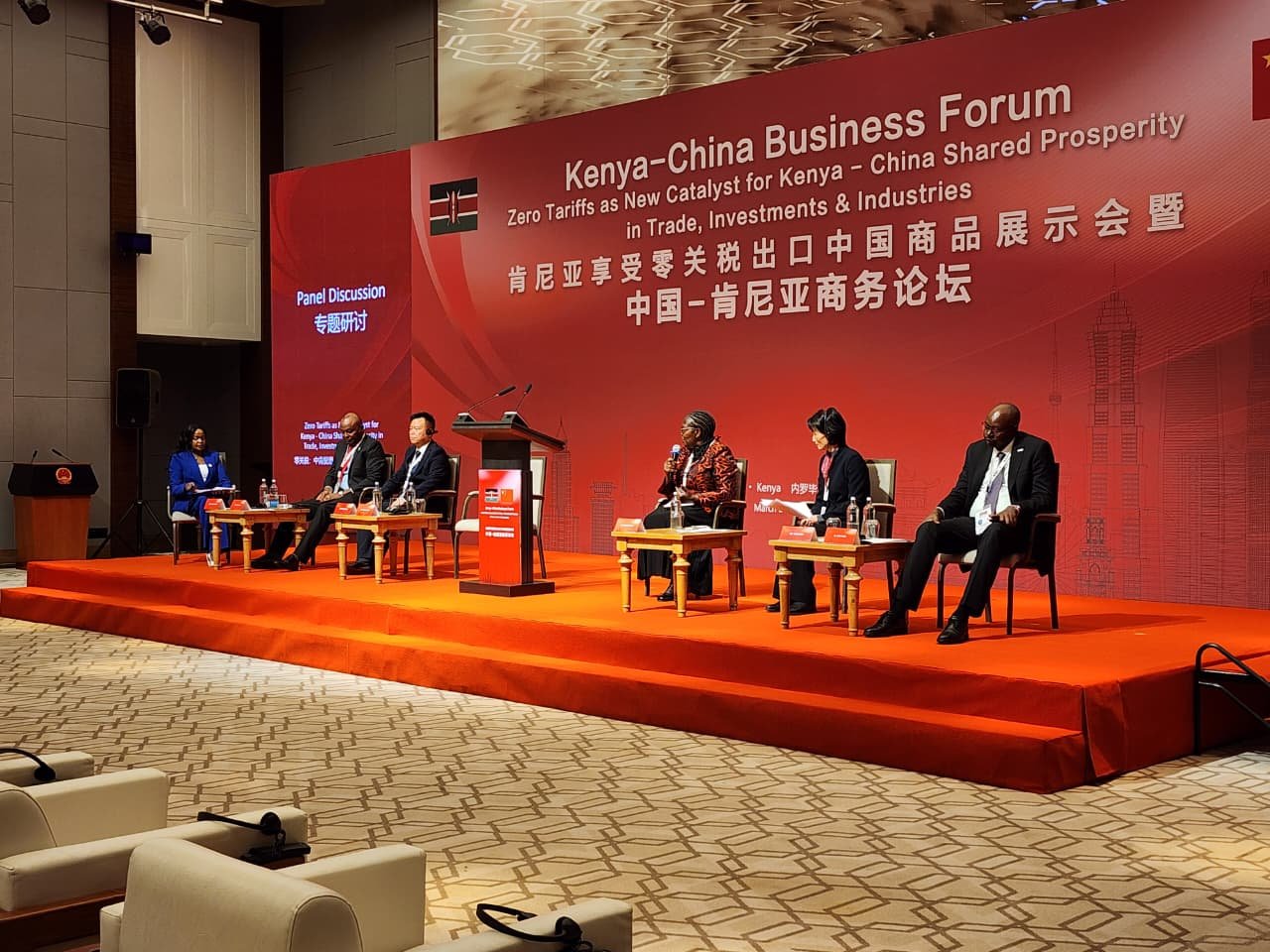

Kenya and China have stepped up efforts to strengthen bilateral trade and investment following a high-level business forum in Nairobi that brought together more than 350 government officials, investors, and business leaders from both countries.
The China-Kenya Business Forum, held on March 23, focused on unlocking new trade opportunities, particularly ahead of China’s planned implementation of a zero-tariff policy for 53 African countries starting May 1.
The event, jointly organised by the China Council for the Promotion of International Trade (CCPIT) and the Kenya Export Promotion and Branding Agency, highlighted the growing economic partnership between the two nations and the potential for expanded market access for Kenyan goods.
Kenyan Deputy President Kithure Kindiki, China’s Vice President Han Zheng, and Cabinet Secretary for Investment, Trade and Industry Lee Kinyanjui were among key officials who addressed the forum, underscoring the importance of deepening trade ties.
The zero-tariff policy is expected to provide a major boost for African exporters, allowing duty-free access to the Chinese market, one of the largest consumer markets globally.
“China will implement zero-tariff treatment for 53 African countries, which will provide more opportunities for exporters to access the Chinese market,” said CCPIT Chairman Ren Hongbin during the forum.
For Kenya, the development comes at a critical time as the country seeks to narrow a significant trade imbalance with China. Kenyan exports to China currently lag far behind imports, creating a deficit that policymakers are keen to address.
Officials say expanding exports of value-added agricultural products will be central to closing the gap.
Products such as coffee, tea, avocados, macadamia, and minerals were among the key sectors highlighted during the forum as areas with strong export potential.

At the event, 25 Kenyan companies showcased a range of products eligible for zero-tariff access, while business matchmaking sessions facilitated partnerships across sectors including agriculture, manufacturing, energy, mining, finance, and technology.
A total of 64 Chinese enterprises participated, exploring procurement agreements and investment opportunities with Kenyan counterparts.
The forum also featured discussions on improving logistics corridors, strengthening agricultural cooperation, and enhancing trade infrastructure to support growing commercial ties.
Experts say improved logistics and transport networks, such as those supported under China’s Belt and Road Initiative, will be crucial in enabling Kenya to fully benefit from expanded trade opportunities.
The zero-tariff arrangement is expected to particularly benefit Kenya’s agricultural sector, where value addition remains a key policy priority. By exporting processed goods rather than raw materials, Kenya stands to capture higher value and increase foreign exchange earnings.
However, analysts caution that simply gaining market access may not be enough.
To fully capitalise on the opportunity, Kenyan producers will need to scale production, meet international quality standards, and improve supply chain efficiency.
There are also concerns about whether local industries can compete effectively in a market as large and demanding as China, particularly given challenges such as high production costs and limited access to financing.
Still, the government remains optimistic.
Officials say the forum represents a step forward in building more balanced trade relations and creating new opportunities for Kenyan businesses.
The discussions also reflect a broader shift toward strengthening South-South economic cooperation, as African countries seek to diversify trade partnerships and reduce reliance on traditional markets in Europe and North America.
For businesses, the message from the forum was clear: the zero-tariff window presents a rare opportunity to scale exports and tap into a vast consumer base.
As implementation of the policy approaches, attention is now turning to how quickly Kenyan exporters can position themselves to take advantage of the new trade landscape.
If successful, the initiative could mark a significant milestone in Kenya-China relations, transforming trade flows, boosting exports, and setting the stage for deeper economic integration between the two economies.

Also Read: China Grants Kenya Duty-Free Market Access for Agricultural Exports From May – Business News
Related Posts



Previous Post
Next Post