Now Reading: Kenya Opens $62B Rare Earth Project in Kwale to Global Investors
-
01
Kenya Opens $62B Rare Earth Project in Kwale to Global Investors

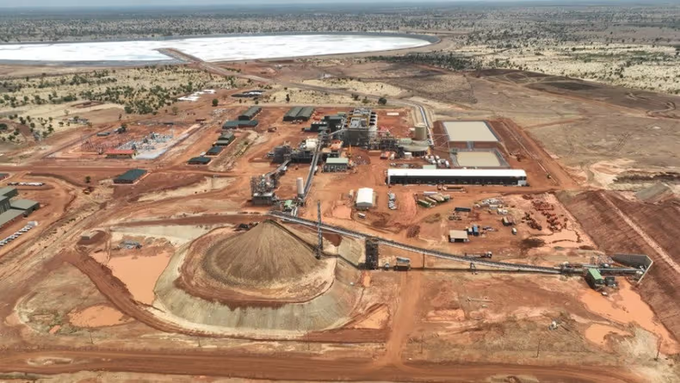

Kenya has launched a high-stakes global tender for the development of the mineral-rich Mrima Hill in Kwale County, a site valued at an estimated $62.4 billion and increasingly central to the global race for critical minerals.
In a gazette notice dated March 24, Mining Cabinet Secretary Ali Hassan Joho invited qualified investors to submit expressions of interest to commercialise deposits of niobium and rare earth elements, minerals essential for advanced electronics, clean energy technologies, and defence systems.
The move positions Kenya at the centre of growing geopolitical competition between the United States and China, both of which have shown strong interest in securing access to critical mineral supply chains.
Mrima Hill has long attracted international attention, but renewed interest reflects the accelerating global demand for rare earth elements, driven by the transition to clean energy and digital technologies.
China currently dominates the sector, accounting for roughly 90% of global rare earth processing, while Western nations are increasingly seeking alternative sources.
Recent geological surveys conducted by the Kenyan government have confirmed the presence of five key minerals at the site: niobium, yttrium, thorium, strontium, and lanthanum.
However, officials note that a full economic viability assessment is yet to be completed, leaving significant exploration work for prospective investors.
“The Ministry of Mining now has the latest radiometric and magnetic data over the project area,” the notice stated, adding that the data will form the basis for detailed exploration by the winning bidder.
Unlike previous extractive approaches, the government is pushing for a value-added model that prioritises local processing and industrial development.
Investors will be required to demonstrate technical expertise, strong financial capacity, and clear plans for beneficiation, processing minerals within Kenya rather than exporting raw materials.
The tender will be conducted under the Mining Act and 2017 regulations, which also mandate compliance with environmental standards, community engagement, and Kenya’s framework on state participation in strategic mineral projects.
The shift reflects a broader trend across Africa, where governments are seeking to retain more value from their natural resources amid rising global demand for critical minerals.
From lithium in Zimbabwe to cobalt in the Democratic Republic of Congo, countries are tightening regulations and pushing for in-country processing to maximise economic returns.
In Kenya’s case, the Mrima Hill project is seen as a potential game-changer for the mining sector, which has historically played a limited role in the country’s economy.
By leveraging new geological data and improved regulatory frameworks, authorities aim to attract long-term investment while avoiding the pitfalls of past resource extraction models.
The site’s strategic importance is further amplified by its location and accessibility, as well as its potential integration into global supply chains for green technologies and advanced manufacturing.
However, the tender also comes with significant challenges. Investors must navigate regulatory requirements, environmental considerations, and the absence of a completed economic viability study, which adds a layer of uncertainty to the project.
At the same time, geopolitical dynamics are likely to shape the outcome. The United States has advocated for a value-driven approach that includes local refining, while China, already deeply embedded in Africa’s mining and infrastructure sectors, has traditionally favoured an extract-and-export model.
As competition intensifies, Kenya is increasingly positioning itself not just as a resource holder, but as an active negotiator seeking better terms and greater participation in global value chains.
The outcome of the Mrima Hill tender will therefore be closely watched, not only for its economic implications but also for what it signals about Africa’s evolving role in the global critical minerals economy.
For Kenya, the stakes are high: the project represents an opportunity to unlock billions in value, attract strategic investment, and establish a foothold in one of the world’s most important emerging industries.
Related Posts
Previous Post
Next Post