Now Reading: Safaricom Share Sale: Parliament Urged to Favour Kenyan Buyers
-
01
Safaricom Share Sale: Parliament Urged to Favour Kenyan Buyers



Pressure is mounting on Parliament to redesign the government’s planned sale of part of its stake in Safaricom, with business groups, professional associations and market players urging lawmakers to prioritise Kenyan investors over a direct sale to Vodacom Group.
The GEMA Cultural Association, through its professional arm Ndari Kirimaini, has told a parliamentary committee that local retail investors, pension funds, insurance firms and other domestic institutions should be given the first right of refusal in acquiring the State’s proposed 15 per cent shareholding in the telecom giant.
In its submission, GEMA warned that selling the shares directly to Vodacom would shift future dividend income and long-term value out of the country at a time when domestic capital markets have sufficient liquidity to absorb the transaction.
“Prioritising Kenyan investors ensures that dividend income and long-term value remain within the domestic economy rather than flowing abroad,” the association said, framing its position as pro-Kenyan economic empowerment rather than opposition to foreign investment.
The government currently owns 35 per cent of Safaricom and plans to sell 15 per cent in a deal expected to raise about Sh204 billion.
If approved, the transaction would reduce the State’s holding to 20 per cent while increasing Vodacom’s stake to roughly 55 per cent, with public shareholders retaining 25 per cent.
GEMA cited repeated oversubscriptions in Treasury bond auctions as evidence that local institutional investors have excess liquidity and the financial capacity to participate meaningfully in the share sale.
It argued that wider local participation would deepen capital markets, broaden ownership and recycle dividend flows back into the domestic economy through reinvestment.
The association’s views add to a growing chorus of voices calling for greater public involvement in the divestiture.
Stockbrokers and fund managers, under the Kenya Association of Stockbrokers and Investment Banks (KASIB) and the Fund Managers Association (FMA), have separately urged Parliament to approve the sale of an additional five per cent stake to the public through the Nairobi Securities Exchange.
According to KASIB, selling the extra five per cent to retail and institutional investors could raise an additional Sh68 billion, pushing total proceeds from the Safaricom divestiture to about Sh312 billion.
The groups argue that a public offering would boost market liquidity, attract domestic and regional investors, and restore confidence in Kenya’s capital markets, which have seen subdued activity in recent years.
“This promotes wealth democratisation, economic participation and financial inclusion,” says KASIB chief executive Willie Njoroge, adding that a public sale would signal strong government commitment to capital market development.
The Law Society of Kenya has also weighed in, calling for at least half of the planned 15 per cent stake to be allocated to retail investors via the NSE. LSK warned that a direct sale to Vodacom could undermine national interest by weakening public control and reducing future dividend income to the Exchequer.
At the heart of the debate is how Kenya balances urgent fiscal needs against long-term market development. Treasury has defended the divestiture as part of a broader non-tax revenue strategy aimed at easing borrowing pressures and funding infrastructure, energy and water projects.
However, the proposal has attracted legal challenges and petitions questioning valuation, transparency and process. Some lawmakers have also raised concerns about national security, given Safaricom’s role in communications infrastructure, financial transactions and election-related systems.
Public participation forums held across the country have revealed sharply divided views. While some Kenyans support the sale as a way to fund development without raising taxes, others question the wisdom of disposing of a dividend-paying asset that generates billions of shillings annually.
As parliamentary hearings continue, lawmakers are being asked to decide not only who buys the Safaricom shares, but also what the sale says about Kenya’s approach to privatisation, market inclusion and economic sovereignty.
The final structure of the transaction is expected to shape investor confidence, public trust and the future direction of Kenya’s capital markets for years to come.
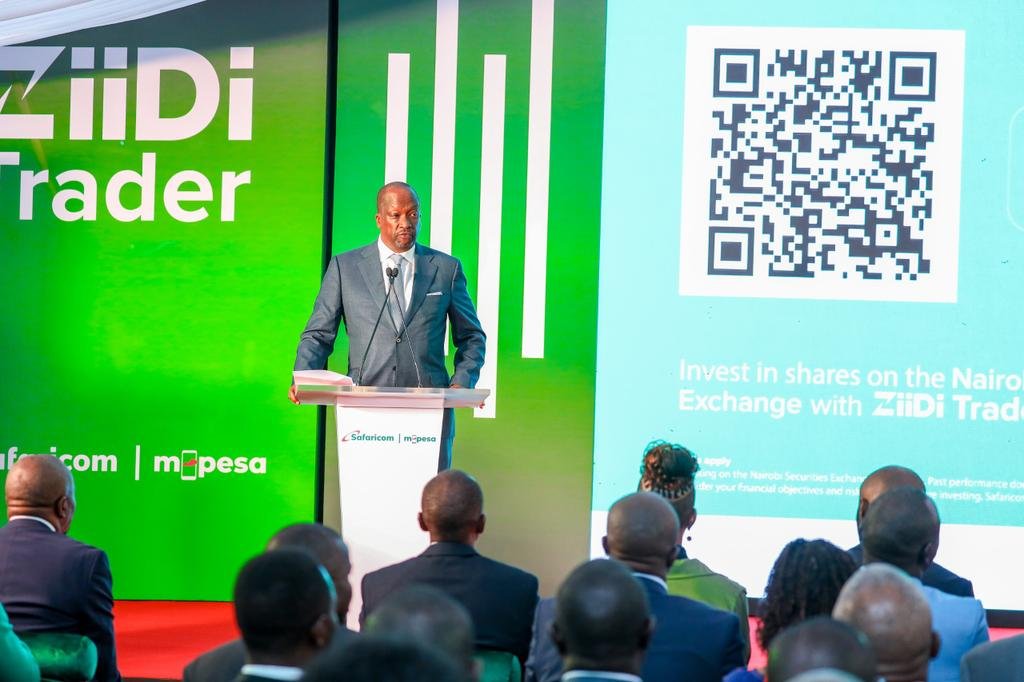
Also Read: How M-Pesa’s Ziidi Trader Unlocks NSE Investing for Kenyans – Business News
Related Posts

Previous Post
Next Post