Now Reading: Habitat for Humanity Launches Campaign to Tackle Kenya’s Growing Housing Crisis
-
01
Habitat for Humanity Launches Campaign to Tackle Kenya’s Growing Housing Crisis
Habitat for Humanity Launches Campaign to Tackle Kenya’s Growing Housing Crisis

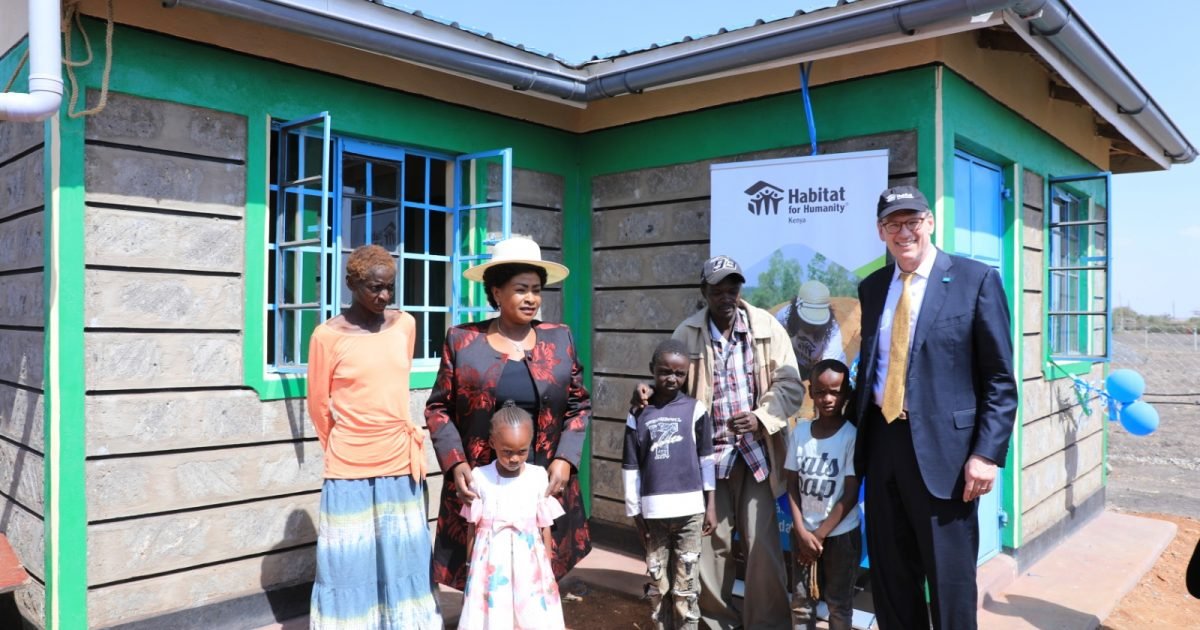

A new global campaign aimed at addressing the worsening housing crisis has placed Kenya at the centre of urgent calls for action, as rapid urbanisation and rising costs continue to lock millions out of decent housing.
Habitat for Humanity has launched the “Let’s Open the Door” initiative, a worldwide campaign designed to raise awareness and mobilise governments, private sector players, and communities to close the growing housing gap.
The campaign comes at a critical time for Kenya, where access to safe and affordable housing remains a major challenge, particularly in urban centres such as Nairobi, Mombasa, and Kisumu.
According to Habitat for Humanity, the scale of the crisis is global, with one in three people lacking access to adequate housing. In Africa, the situation is even more difficult, with an estimated 62 per cent of urban dwellings classified as informal settlements.
These conditions expose millions of people to risks, including poor sanitation, climate vulnerability, and economic instability.
In Kenya, the problem is being driven by rapid urban population growth that continues to outpace housing supply. As more people move to cities in search of economic opportunities, demand for housing has surged while formal supply has struggled to keep up.
The result has been the expansion of informal settlements, characterised by overcrowding and a lack of basic infrastructure.
Limited access to affordable mortgages has further compounded the problem, making home ownership unattainable for many low- and middle-income earners. High construction costs and land constraints have also slowed the delivery of new housing units.
Habitat for Humanity International Chief Executive Officer Jonathan Reckford said the campaign seeks to galvanise collective action across sectors.
“Housing has been the core of Habitat’s work for 50 years. With the support of our partners, this campaign will create awareness of the need to increase access to affordable and sustainable housing,” he said.
The organisation is marking its 50th anniversary this year, using the milestone to amplify its advocacy for inclusive housing solutions.
The “Let’s Open the Door” campaign will run in more than 60 countries and feature a mix of activities, including community construction projects, pop-up installations, and digital storytelling aimed at highlighting the human impact of the housing crisis.
In Africa, Habitat says the housing deficit is widening as cities absorb millions of new residents annually without corresponding investment in infrastructure, housing finance, and planning.
Mathabo Makuta, Habitat for Humanity Africa Senior Director for Programmes, stressed the need for coordinated efforts.
“We need policy, finance and community action moving together. This is a call for everyone to get involved, whether by giving, volunteering or speaking up, to help close the housing gap,” she said.
In Kenya, the campaign is expected to complement ongoing government initiatives, including the Affordable Housing Programme, which aims to deliver thousands of housing units each year.
However, stakeholders have raised concerns about the programme’s effectiveness, citing issues such as financing models, land availability, and the actual affordability of units for ordinary citizens.
Experts argue that addressing the housing crisis will require more than construction alone. Broader reforms in housing finance, land policy, and urban planning are needed to create sustainable, long-term solutions.
Beyond shelter, advocates emphasise that access to decent housing has far-reaching implications for health, education, and economic well-being.
A stable home environment is linked to improved health outcomes, better educational performance for children, and increased economic productivity for households.
As the campaign gains momentum, Habitat for Humanity is positioning housing not just as a social issue but as a critical driver of economic resilience and development.
For Kenya, where millions continue to live in inadequate housing, the initiative represents both a wake-up call and an opportunity to rethink how housing is delivered.
Whether the campaign translates into tangible change will depend on how effectively stakeholders, from government agencies to private developers and communities, work together to turn awareness into action.
Read Also: How Sweden is Helping Kenya Strengthen Maternity Healthcare in Kenya – Business News
Related Posts



Previous Post
Next Post