Now Reading: Kenya’s Economic Growth 2026 Signals Cautious Recovery
-
01
Kenya’s Economic Growth 2026 Signals Cautious Recovery

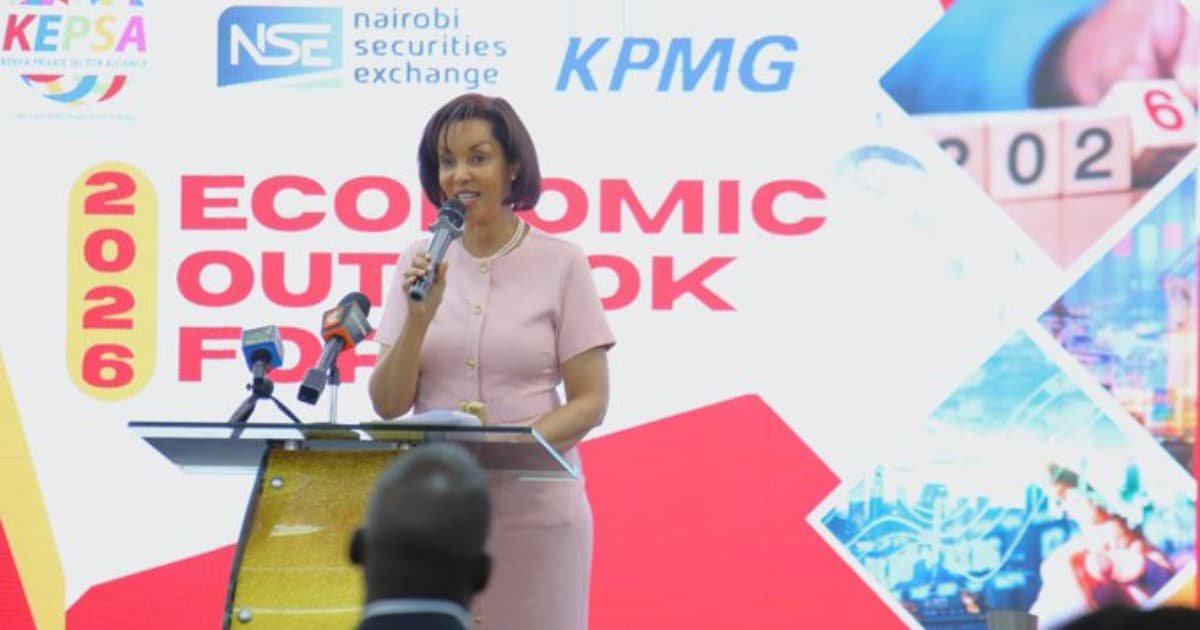

Kenya is projected to experience an economic growth of between 4.9% and 5.2% in 2026, pointing to a cautious but broad-based recovery attributed to easing inflation, a stabilising currency, and renewed private sector investments.
Forecasts presented at the 2026 Economic Outlook Forum by the Kenya Private Sector Alliance (KEPSA), in partnership with the Nairobi Securities Exchange (NSE) and KPMG, suggest that the economy is regaining momentum after a period of slower expansion marked by inflationary pressure, tight credit and external shocks.
While the outlook remains below Kenya’s historical growth average of about 6%, analysts say the trajectory reflects improving macroeconomic stability rather than a sharp rebound.
Drivers Behind Kenya’s Economic Growth 2026
The projections are built on recent data showing real GDP expansion of about 4.9 per cent in the third quarter of 2025, up from 4.2 per cent a year earlier.
Agriculture, construction and transport emerged as the strongest contributors, benefiting from favourable weather, resumed infrastructure activity and recovering domestic demand.
At the same time, inflation has moderated significantly, easing to a six-month low of 4.4% in January 2026. This is within the Central Bank of Kenya’s (CBK’s) target range of between 2.5% and 7.5%, and reduces the burden on households while allowing firms to plan with greater certainty.
Also Read: Kenya Inflation Eases to 4.4%: What It Means for Consumers and Investors – Business News
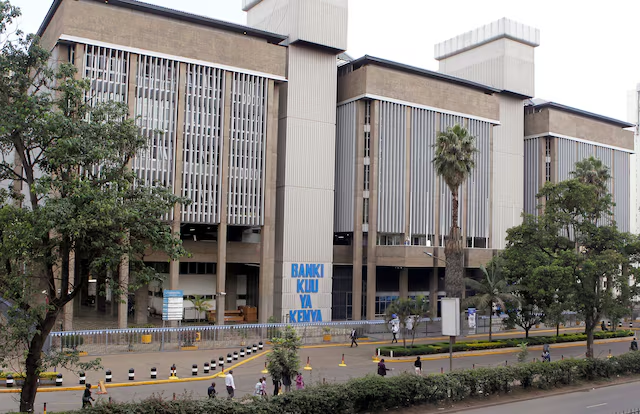
Monetary policy easing has also begun to unlock credit flows after a prolonged slowdown. Private sector credit growth, which had previously contracted, is gradually recovering as lending rates decline, offering relief to sectors such as agriculture, retail and small manufacturing.
Going forward, sustained access to affordable credit will be critical in converting macro stability into real economic activity.
Currency stability has further strengthened confidence. A more stable shilling and stronger foreign currency reserves mean Kenya is less exposed to sudden spikes in import costs, easing pressure on manufacturers and industries that rely heavily on imported fuel and raw materials.
What the Outlook Means for Businesses and Investors
For businesses, Kenya’s economic growth in 2026 presents a mixed operating environment. Consumer-facing sectors are expected to benefit first, as lower inflation supports spending on essential goods and services.
On the other hand, trade, logistics and transport firms may see gains from higher domestic output and regional commerce under frameworks such as the African Continental Free Trade Area.

Similarly, banks could grow their lending as demand for credit picks up. However, high levels of unpaid loans and cautious lending standards may slow that growth. Capital market leaders have urged firms to diversify funding sources, noting that equity and bond markets remain underutilised despite growing financing needs.
Overall, manufacturing and export-oriented firms face a more complex outlook. While domestic conditions are improving, global uncertainty, stemming from geopolitical tensions and volatile trade policies, continues to rattle supply chains and competitiveness.
This may call for targeted policy support, or Kenya risks missing opportunities to deepen industrial growth.
Therefore, despite the improving outlook, Kenya’s economic growth could be constrained by elevated public debt and a widening fiscal deficit. A significant share of government revenue is allocated to debt servicing, limiting fiscal space for development spending and social support. This raises concerns about the government’s ability to stimulate growth without crowding out private investment.
A Recovery That Demands Policy Discipline
International institutions, including the IMF and World Bank, broadly align with KEPSA’s outlook, projecting growth close to 5 per cent while cautioning that reforms remain essential. They argue that sustaining Kenya’s economic growth through 2026 will depend on fiscal discipline, continued monetary easing where inflation allows, and structural reforms that boost productivity and competitiveness.
For policymakers, the message is clear: stability has created an opportunity, but translating it into durable growth will require careful management of debt, stronger revenue mobilisation and policies that crowd in private investment. For businesses and investors, the year ahead offers cautious optimism, less about rapid expansion and more about consolidation in a more predictable economic environment.
Related Posts


Previous Post
Next Post