Now Reading: Kenyan businesses face a bigger growth test: building people
-
01
Kenyan businesses face a bigger growth test: building people



For a business, growth is often measured in sales, factories, market share, or profits. But the more difficult measure is what happens to the people who make that growth possible, particularly in an economy where the need for productive employment is rising faster than the formal job market can absorb workers. The story of Pwani Oil Products offers a striking example of how employee development in Kenya can become inseparable from corporate expansion, as a small coconut oil mill established in 1981 grew into a major manufacturer employing nearly 2,000 people. The lesson extends well beyond one company: for Kenya’s private sector, building capable people may ultimately be one of the most important forms of investment a business can make.

Employee development is becoming a business growth imperative
The transformation from a three-person operation into an organization of nearly 2,000 employees illustrates the organizational complexity that accompanies scale. A company can manage people informally when everyone fits around one table. Once the workforce reaches thousands, however, personal relationships alone cannot carry the organization. Systems, managers, training, processes, and leadership structures become essential.
That transition is becoming particularly important for Kenya because economic growth is not automatically translating into enough formal employment. The Kenya National Bureau of Statistics says the economy expanded by 4.6 per cent in 2025, while 822,100 jobs were created during the year. Yet 87.2 per cent of those jobs were generated in the informal sector, leaving only a fraction in modern wage employment.
That imbalance gives employee development a strategic dimension. Businesses capable of moving from small-scale survival into larger, productive organizations can create more stable employment while building the skills their industries need.
The manufacturing sector provides a particularly important example. KNBS reported that private-sector manufacturing remained the leading industry by share of private-sector employment in 2025, while manufacturing wage employment also expanded. The implication is clear: when companies invest in production capacity, they simultaneously create a demand for better supervisors, technicians, sales professionals, engineers, finance teams, and operational managers.
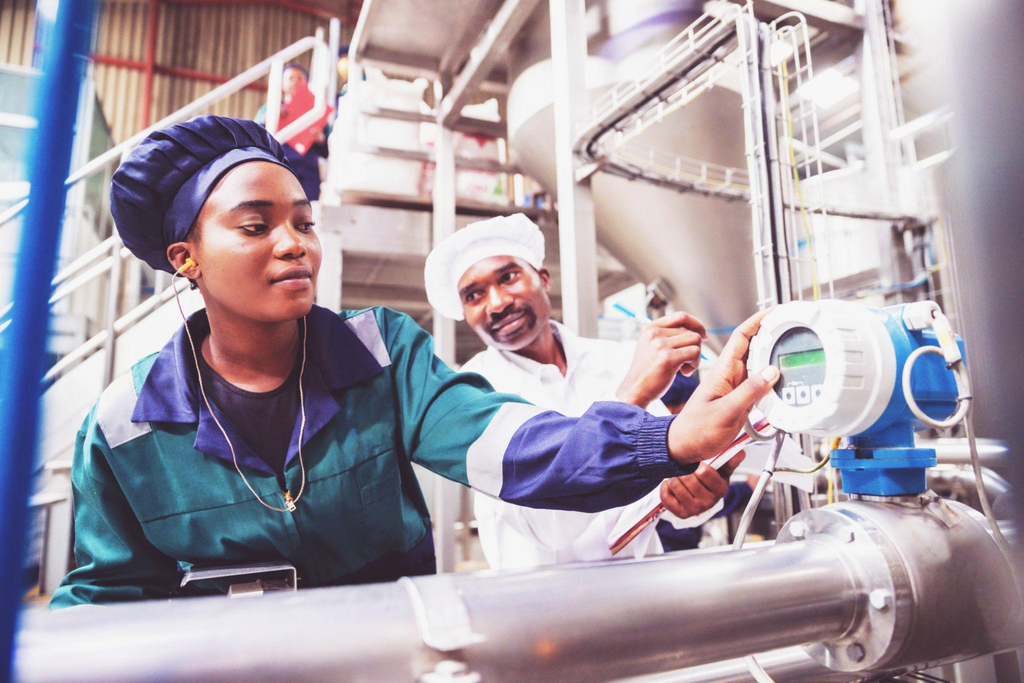
Employee development can turn companies into economic multipliers
The economic effect of that investment reaches beyond the factory gate. Pwani Oil’s experience, as described by Commercial Director Rajul Malde, shows how employment at scale supports entire households. Using an average household size of 3.9 people, the company estimates that its direct workforce represents the livelihoods of nearly 7,000 people.
That is why employee development should not be viewed simply as a human-resources function. It is part of the country’s broader economic infrastructure. A worker who acquires technical expertise, management capability, or commercial skills becomes more productive, while a company with stronger managers becomes more capable of expanding into new markets and sustaining growth.
Pwani Oil’s own corporate history reinforces that relationship. The company describes its origins as a small coconut mill in the early 1980s and says it has since developed into an East African consumer-goods manufacturer with a modern production facility in Kikambala, Kilifi. Its facility has capacity to refine more than 1,000 metric tonnes of oil daily and serves markets across East and Central Africa.
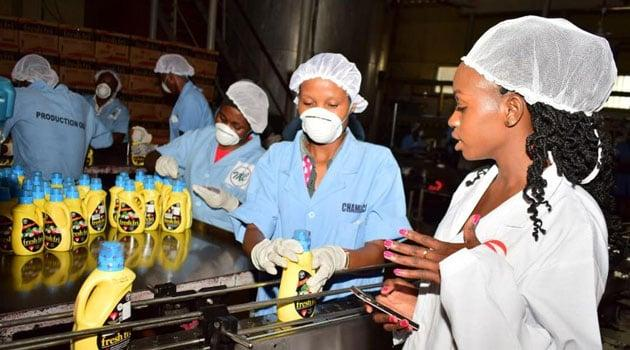
The broader lesson for Kenyan entrepreneurs is that hiring should not be treated merely as an expense that rises with revenue. The strongest companies build systems that allow employees to become more valuable as the organization grows.
For policymakers, the message is equally important. Government can improve the environment for investment, but businesses ultimately have to convert capital into factories, services, skills, and jobs. With Kenya still generating the overwhelming majority of new employment through the informal economy, the country needs more enterprises capable of crossing the difficult boundary between small business and scaled employer.
That makes employee development a question of national competitiveness as much as corporate culture. Companies that build people build institutional capacity, and businesses with stronger institutional capacity are better positioned to invest, export, and survive economic shocks.
For executives, the ultimate measure of growth may therefore need to change. Revenue shows what a company has sold. Profit shows what it has retained. But the number of people whose skills, incomes, and opportunities have improved can reveal something deeper: whether a business is merely becoming larger, or becoming an institution capable of creating lasting economic value.
Related Posts



Previous Post
Next Post