Now Reading: The JOOTRH Kisumu replaces asbestos roofing in fresh infrastructure upgrading plan
-
01
The JOOTRH Kisumu replaces asbestos roofing in fresh infrastructure upgrading plan
The JOOTRH Kisumu replaces asbestos roofing in fresh infrastructure upgrading plan



By Correspondent
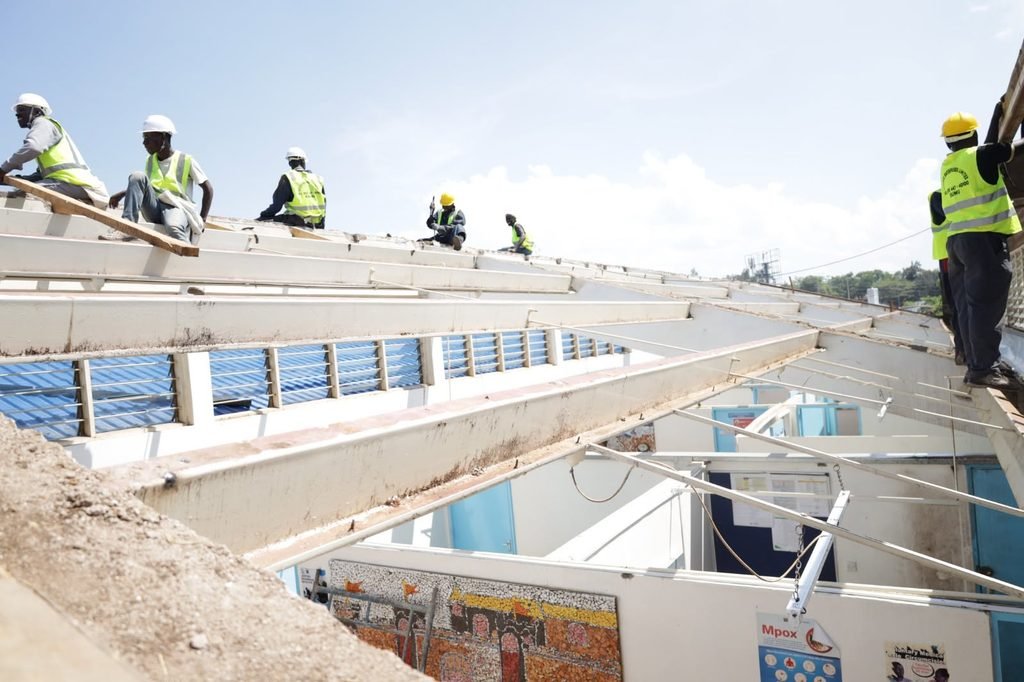
Jaramogi Oginga Odinga Teaching and Referral Hospital (JOOTRH) is replacing its old asbestos roofs with modern roofing as the facility upgrades to its new status and in line with the ministry of environment’s directive.
The Acting Chief Executive Officer of JOOTRH Dr. Joshua Okise said the ongoing works are in compliance with the health requirements and directive from the that outlawed asbestos as roofing.
He as well attributed to the removal of the asbestos to the ongoing transformation of the hospital to fit its elevated status of a level C5 parastatal; a status previously reserved for public universities, marking a transformative milestone for the institution and healthcare delivery in the Nyanza and Western Kenya regions.
“We want our healthcare workers and staff to work in a safe environment and our clients to feel satisfied by the services that we are improving in all facets including replacement of asbestos with more health friendly roofing,” said Dr. Okise.
In 2024, the then Environment Cabinet Secretary Aden Duale on ordered the removal of asbestos roofs from all buildings in the country within three months. He cited health risks and warned of potential prosecutions for non-compliance.
Duale directed the National Environment Management Authority to write to the institutions to dispose of the hazardous fibrous minerals.
Asbestos fibres may cause serious lung diseases, including asbestosis and cancer. Smoking also increases the risk of developing illness from asbestos exposure.
Currently, the people most heavily exposed to asbestos are those in the construction sector and most occupational exposures occur during the repair, renovation, removal or maintenance of asbestos.
Asbestos is a group of six fibrous minerals occurring naturally in metamorphic deposits worldwide.
In the 1960s and 1970s, asbestos was a material of choice in the construction industry.
Several facilities including food manufacturing industries and residential homes used asbestos roofing material due to its durability and fire resistance characteristics.
Asbestos fibres are strong and have properties that make them resistant to heat. Many other products contain asbestos.
Nema first developed national guidelines on the safe management and disposal of asbestos in 2011 before they were revised in 2013.
The guidelines were produced through consultative and collective efforts of Nema and lead agencies such as the Ministry of Health, the Directorate of Occupational Safety and Health Services and the then City Council of Nairobi.
The need to safeguard human health and the environment from adverse impacts of asbestos materials necessitates the guidelines.
The guidelines say waste generators must secure the site when removing asbestos to prevent unauthorized persons and to restrict movement. Before removal, the asbestos sheets should be wet.
“If asbestos sheets begin to crack or crumble, wet the cracked or broken areas with a pintsize spray bottle or garden pump sprayer,” part of the guidelines say. It adds that breakage releases asbestos fibres.
Principal Secretary (PS) for Medical Services, Dr. Ouma Oluga, during a visit to the hospital described the elevation as a critical step in aligning JOOTRH with national healthcare reforms and positioning it as a centre of excellence in clinical care, research, and community engagement.
“JOOTRH is no longer a county government hospital,” Dr. Oluga told the hospital’s leadership, urging them to adopt the discipline and strategic outlook expected of a national institution.
He noted that while the administrative transition from county to national status is ongoing, the mindset shift must begin immediately.
Dr. Oluga explained that the elevation will not only enhance JOOTRH’s prestige but also enable it to attract and retain highly skilled health professionals, a vital element in improving clinical outcomes.
The PS emphasized a “people-first” strategy that prioritizes staff welfare, patient experience, and clinical effectiveness. He highlighted the need for stronger governance and follow-up care, cautioning that service delivery must focus not only on processes and equipment but also on restoring dignity and long-term health outcomes.
He also called for a deliberate public health approach that addresses root causes of preventable diseases within the community, warning that without such measures the hospital risked being overwhelmed.
Related Posts
Previous Post
Next Post