
Now Reading: Hospitals face a new question as AI starts taking action
-
01
Hospitals face a new question as AI starts taking action
Hospitals face a new question as AI starts taking action



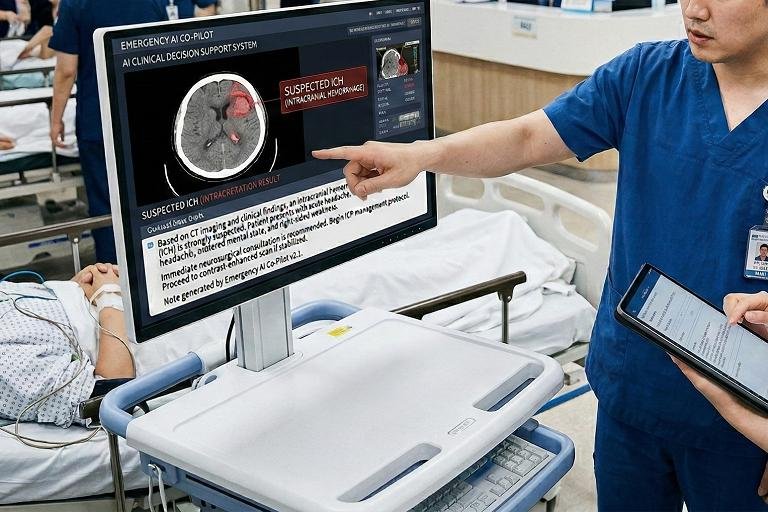
Artificial intelligence is moving from advising clinicians to taking actions on their behalf, creating a new question for the healthcare industry: how much autonomy should a clinical AI agent have? The answer could determine whether agentic AI becomes a trusted productivity tool or another source of operational and clinical risk. Clinical AI agent autonomy is particularly sensitive because an error is no longer confined to an incorrect recommendation; an autonomous system can send a message, alter an appointment, initiate an authorization, or change a workflow before a clinician has an opportunity to intervene. Healthcare leaders are therefore being pushed towards a risk-based model in which AI receives greater freedom for reversible administrative tasks while consequential clinical decisions remain under human control.

Clinical AI agent autonomy should depend on the risk of the task
The business case for clinical AI agent autonomy is compelling. Healthcare organizations are under pressure to control costs, reduce administrative workloads, and make scarce clinical time more productive. An agent that can retrieve medical records, check whether tests have been completed, organize information, route messages, or prepare documentation could remove repetitive work without requiring a clinician to approve every minor action.
But autonomy becomes considerably more complicated when an action can directly affect patient care. Starting or stopping medication, changing treatment, making a diagnosis, or providing consequential clinical advice requires substantially greater oversight because mistakes may be difficult to reverse. The principle emerging from healthcare researchers is therefore straightforward: permissions should be attached to individual tasks rather than granted universally to an AI model.
That distinction could become crucial as hospitals integrate AI into more workflows. A system capable of retrieving a pathology report does not automatically deserve permission to interpret it and alter treatment. Technical capability, in other words, should not be confused with operational authority.

Clinical AI agent autonomy will require stronger governance
The next challenge is creating infrastructure that allows healthcare providers to supervise agents without turning automation into another administrative burden. Clinical AI agent autonomy will require visible action logs, review queues, override controls, and an immediate way to pause systems when something goes wrong. Low-risk actions could run automatically, moderate-risk activities could enter review queues, while high-risk clinical decisions would require explicit clinician approval.
That framework also changes the investment equation for health systems. Buying an AI agent is only the beginning. Organizations will need governance teams, monitoring systems, cybersecurity controls, audit trails, and clear accountability for errors. They will also need to test agents using real clinical workflows rather than relying solely on vendor demonstrations, because performance can change when systems encounter incomplete records, conflicting information, unusual cases, or identity errors.
See Also: Africa’s health sector is becoming a critical economic investment
For healthcare technology companies, this creates an opportunity to compete not simply on intelligence but on control, transparency, and reliability. Vendors that can demonstrate measurable performance, explainable actions, and effective escalation mechanisms may have an advantage over systems that promise maximum autonomy without sufficient safeguards.
The broader lesson extends beyond healthcare. As AI agents begin acting rather than merely advising, businesses will have to rethink the boundaries between automation and human responsibility.
In medicine, however, that boundary carries an unusually high price.
The winning model is unlikely to be AI that acts without humans.
It will be AI that knows when it can act, when it must ask, and when it must stop.
Related Posts


Previous Post
Next Post



Pingback: AI must move beyond summaries to improve clinical decisions